Showing posts with label Philosophy. Show all posts

Thursday, September 3, 2026

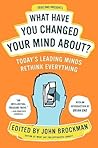
Review 733: What Have You Changed Your Mind About?

What Have You Changed Your Mind About?: Today's Leading Minds Rethink Everything – 150 Influential Thinkers on God, Love, and Evolution What Have You Changed Your Mind About?: Today's Leading Minds Rethink Everything – 150 Influential Thinkers on God, Love, and Evolution by John Brockman
My rating: 4 of 5 stars


This book came out of a question from the Edge website by John Brockman. A question per year with many responses making up the book. (The project has now ceased 2005-2018) This book was from 2008's question. I thought it was an interesting idea and realized now eighteen years later this book may be getting old and outdated. Yes, some of the answers are, but the majority were not.

There were 131 answers, or essays. Each entry was short, just a couple of pages. The answers come from a variety of people, but the majority were scientists. Also, the majority were associated with a university and had a book published. It was rare that an entry was written by someone without a published book. The few that weren’t were associated with a magazine or journal.

The scientists who contributed were from a variety of fields such as physics, computer science, biology, neuroscience, chemistry, and more. There was science adjacent, such as science writers and science historian There were mathematicians, psychologists, sociologists and philosophers. And for the random factor a musician, popular magazine editor and a few others not fitting into those categories. And, of course, there was overlap with 131 different people contributing to this book.

It can be a very thought-provoking book. I mean it was for me, but I did read it fairly quickly and probably would have been better to slow down and contemplate each entry more fully than I did. A few were a bit too deep into their field for me to fully understand what was being discussed. I could have stopped and looked up more information, but instead I just moved on. I only paused on a few that impressed me.


Thursday, August 27, 2026

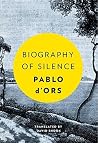
Review 730: Biography of Silence

Biography of Silence: An Essay on Meditation Biography of Silence: An Essay on Meditation by Pablo d'Ors
My rating: 3.75 of 5 stars


This is a very short book. It is a series of very short essays from the author about his experience with meditation. Overall, the book was good, but I did have some confusion as well.

He says at first he was not trained, just started doing it. But later he talks about having a teacher or meditating with others. The blub says he’s a Spanish priest and Zen disciple, but he does not come across as a priest, or at least a traditional one. Mostly it seems he talks about wanting to be a writer, not being a priest, so that’s confusing. In the end, that doesn’t matter really if he is a priest or a writer. Although having written this book he is at least a writer…

The very short essays are like vignettes into his life around meditating. Some of the short essays morph into why it is good to meditate, what can be expected, although he also says do not start to meditate with any goals in mind. The book was not about how to meditate either, although perhaps a few hints can be gleaned. The book mostly discusses how paying attention and being in oneself can enhance your life.


Friday, June 13, 2025

Review 593: Notes to Myself

Notes to Myself Notes to Myself by Hugh Prather
My rating: 3 of 5 stars


Hugh Prather decided to be a writer, while his wife supported them on her teaching salary. Back in the late 60’s this may have been an usual set-up. After a few years he wasn’t getting very far, so he gleaned statements from his journal and the result was this book

They are mostly notes of helping him become a better person. They can be philosophical, or help you think about ways to approach life. It's not quite self-help. I feel like my description here is faulty.

The book has a lot of white space. The notes can be a sentence or two, often longer to a paragraph or more. In-between there is a small graphic of two leaves, at least in my copy of the book.
This book did well for him and these notes became very popular in the 1970s. It started him on a series of a similar theme.

I bought a used copy of the book when I was in my early-twenties and read about half of the book. I liked it at the time, thought it was profound. Not sure why I didn’t finish, but I always wanted to return to it.

Now many years later, I’m trying to get to some of these older books. Started over and read through in a couple of days, and, well it was okay. Didn’t find it amazing or anything. Perhaps the book was more profound while young or the intervening years I’ve lived more. Not sure.

I expect this may be one of those books that when it finds you at the right time it very good, but if not it’s just okay.

Friday, December 8, 2023

Review 447: Breakfast with Buddha

Breakfast with Buddha Breakfast with Buddha by Roland Merullo
My rating: 3.5 of 5 stars


A typical family Christian man gets trapped into taking a spiritual man, Volya Rinpoche across the country. Otto was going to drive his sister, whom he does call flakey, to their parent’s farm in North Dakota to sell the place after their parents sudden death in a car accident. Instead, the sister says she wants her spiritual leader Rinpoche to have her part of the farm so he could set up a retreat. Otto is furious but takes him along on the ride. Slowly as the days eek by Otto relaxes and opens up to the teachings of Rinpoche.

It was an okay book, it felt preachy at times to me, or maybe forced is a better word. This is not my first foray into Zen, Buddhism, or anything along those lines, so I’m no opposed to the message, just in the delivery how it came across. I do have another book, the third in the series. I may just skip the second and go straight to that one, not sure yet. In any case, won’t be in the immediate future.

Sunday, November 26, 2023

Brief Review 444: Jonathan Livingston Seagull

Jonathan Livingston Seagull Jonathan Livingston Seagull by Richard Bach
My rating: 3 of 5 stars


Short read. Heard about this book for years, finally decided to find out for myself what all the talk is about. It's okay.  Good message, just not subtle.  Maybe more spectacular when it came out in 1970?


Tuesday, October 31, 2023

Brief Review 439: The Cosmic Drama

The Cosmic Drama The Cosmic Drama by Alan W. Watts
My rating: 4 of 5 stars


From the Illustrated Series - The Essence of Alan Watts
Book IX


A view of how this cosmic play may be running.


I only have a few of the books from the series:
Book I  - God 
Book VII  - Philosophical Fantasies 
Book VIII  - Ego 
Book IX  - Cosmic Drama

Review 438: Ego

Ego Ego by Alan W. Watts
My rating: 4 of 5 stars


From the Illustrated Series - The Essence of Alan Watts
Book VIII


Ego – what is the I, what is me.

According to Alan Watts is more than your thoughts, your body. But we often distance ourselves from the body parts. We typically mean I as in the brain, our thoughts and thinking selves. We feel outside of our bodies, not a part of the world. Watts says this is image is an hallucination of ego. We are the sum of our body, inside and out, and the environment that we live in. Yes, we need the environment too, it is part of us.

The rest of the book discusses how we came to this false identity, this symbolism of ego and I as separate from everything.


I only have a few of the books from the series:
Book I  - God 
Book VII  - Philosophical Fantasies 
Book VIII  - Ego 
Book IX  - Cosmic Drama

Review 437: Philosophical fantasies

Philosophical fantasies Philosophical fantasies by Alan W. Watts
My rating: 4 of 5 stars


From the Illustrated Series - The Essence of Alan Watts
Book VII


In this book Watts proposes three different fantasies – which at the end he asks, now maybe isn’t this what is going on right now?

The first is about reproduction. Technology has advanced: first we had paintings, then realism style. Photographs were then invented, first as plain black and white, and so on until movies and television. Watts then proposes that someday we will see these images without a tv, but in three dimensions say in your living room. And as technology advances first your hand will go through this image, but then it will be solid, and you do something like dance with this image. Then you could interact and there will be a way that the movie and you are interacting as one, you control the outcome of what happens next, and then the realism becomes perfect. At this point the question arises – is this where we are now?

The second philosophical fantasy is about how every living thing on this earth is the center of it. You are the center, and so are rabbits and a fish and a fly, right in the middle of everything.

The last is about a cycle of everything, somewhat like the chicken and egg. The big bang started everything and the stars, planets everything was formed. But here Watts case is slightly smaller, just a star and planets. Life developed and kept on developing until there is an intelligent species, like us and goes on until boof they blow everything up and then it starts again.

One reason I like Alan Watts is that he has you think about the state of things, ponder this.


I only have a few of the books from the series:
Book I  - God 
Book VII  - Philosophical Fantasies 
Book VIII  - Ego 
Book IX  - Cosmic Drama

Review 436: God

God God by Alan W. Watts
My rating: 4 of 5 stars


From the Illustrated Series - The Essence of Alan Watts
Book I


A short excerpt book on some of Alan Watts teachings, adapted from transcripts recorded in the last years of his life. A series of nine books were published, this is the first book.

The book is small, very easily read within one reading session. One page has an image, mostly derived from Japanese images. The other page is a short paragraph. The content is to have you think about God, how to represent the image. The viewpoint is mostly from the Christian religion, although others are mentioned. Letting go is the fundamental aspect of faith. To believe is from the root word lief, which means wish, so to believe is a strong wish. Faith is what is needed. Do not cling; but have faith.


I only have a few of the books from the series:
Book I  - God 
Book VII  - Philosophical Fantasies 
Book VIII  - Ego 
Book IX  - Cosmic Drama


Monday, October 23, 2023

Review 433: Elizabeth Costello

Elizabeth Costello Elizabeth Costello by J.M. Coetzee
My rating: 3.5 of 5 stars


Perhaps if I knew what I was in for with this book the rating would be higher...there is little to no plot or character development. It is barely a novel, instead many texts of essays written out, but put into the mouth of the main character, Elizabeth Costello.

The last "lesson" or chapter was the most interesting to me, despite agreeing with several of the premises put forth in the previous "lessons". This last makes you really consider all that she has said before, and so it seemed with sincere conviction. This is a book that will make you think, it does not give you everything. That I do like, just wasn't quite what I was in the mood for when I started reading.

Monday, September 19, 2022

Review 344: There Is Never Anything But the Present

There Is Never Anything But the Present: And Other Inspiring Words of Wisdom There Is Never Anything But the Present: And Other Inspiring Words of Wisdom by Alan W. Watts
My rating: 4 of 5 stars


Alan Watts is someone I’ve heard before; listened to hours of his lectures and read a few of his books. I was interested when I saw something by him on NetGalley, not realizing it was only a collection of quotes.

While the quotes are good, and interesting on their own, I will say that his full lectures and books are better if you want to understand what Watts is about, his philosophy and take on the world. Also, Watts has a fantastic sense of humor, and it doesn’t seem to come across with these short sections. While I was reading, I had to remind myself of his voice, his way of speaking, then in hearing that I was able to feel the humor and lightness.

The book could easily be read in a day, being small, but I didn't, nor would I recommend that method. These quotes are something to ponder and sit with a while. Good for contemplation, not racing through.

Thursday, April 21, 2022

Review 315: Bittersweet

Bittersweet: How Sorrow and Longing Make Us Whole Bittersweet: How Sorrow and Longing Make Us Whole by Susan Cain
My rating: 3 of 5 stars


I’m in the middle on this book. On one hand I enjoyed listening to Susan Cain’s narration and exploration of this topic, but on the other hand it got a little too deep into self-help and spirituality than I expected. It felt there was more Cain could do to delve deep into this topic without resorting to telling us readers how we can do this or that, such as meditative practices. The book had much more of a memoir aspect than expected as well, explaining how this topic is something she has thought about for much of her life.

Despite the expectations being different I did not dislike the book. Her narration really did pull the book forward. I listened at first for a couple of hours and was a little thrown by what was going on. Then I returned a week later and listened to the rest fairly quickly, accepting what the book now was.

I connected more to the material when she discussed her own personal life, and her experience in doing research for the book. She attended several workshop types and a conference, RAADfest on life extension. How longevity and living forever fits in with bittersweet has to do with accepting, or not, the inevitability of death.

I expect this book will be more polarizing and less successful than her book on introversion, but the topics do seem related. And if you enjoyed Quiet, you may find something here to connect to as well.

Friday, February 5, 2021

Review 194: You're It!

You're It! On Hiding, Seeking, and Being Found You're It! On Hiding, Seeking, and Being Found by Alan W. Watts
My rating: 5 of 5 stars


15 sessions, or talks. Although two are broken into to parts, so one could say it's 13 sessions.


session 1: Spiritual Authority (heard this talk before)
session 2: Mysticism & Morality (portion)
session 3: The Game of Yes and No
session 4: On Zen
session 5: The Art of Controlled Accident (part 1)
session 6: Uncarved Block, Unbleached Silk
session 7: An Introduction to Hinduism
session 8: Oriental Philosophy in the West (part 1)
session 9: The Art of Controlled Accident (part 2)
session 10: Oriental Philosophy in the West (part 2)
session 11: Introduction to Buddhism
session 12: The Veil of Thoughts
session 13: Mind Over Mind
session 14: What is Reality
session 15: Not What Should Ne, Not What Might Be, But What Is

I've heard many talks by Alan Watts for many years. For me many of these are repeats, but with his lectures they hold up to multiple listening. I find it relaxing and calming. Perhaps not for everyone, and he isn't a spiritual advisor, philosophy and some teachings of what is Hinduism, Zen, etc. as in the 60s this was new to the West. Of course some of his thoughts are flawed, as we all are, and he would be the first to admit it. Take it or leave it. I enjoy the humor.


Here's one of his sayings: "You cannot lift yourself up by your own bootstraps. It's impossible, you cannot do it. You cannot physically lift yourself from the floor."

Monday, July 27, 2020

Review 150: Slam

Slam Slam by Lewis Shiner
My rating: 2.5 of 5 stars


For much of this book I kept asking myself, why am I reading this book? Somewhere I had a recommendation for the book, which became the hook. The book was short enough that I wanted to see where it would lead.

Dave is released out of prison as the book opens after serving six-months for evading taxes, not paying them, somewhat out of principle. Dave comes across as someone who just floats through life, see what happens next and doesn't have any ambition to speak of, and is running up to aged forty.

There is some weird stuff that happens, weird people show up, while Dave tries being a caretaker of 23 cats all in this one house. I found myself being reminded me of the movie Pulp Fiction, although this book really is completely different. I guess it was the odd stuff that kept happening. Dave hooks up with a grocery store clerk who is half his age, and squatting in an abandoned art house with a few other runaway skaters. Dave befriends one of them too.

Things seem full of despair in this story, but somehow Dave starts to do the right things, by some accounts. There is some philosophy about how to live, and society, and a couple other ideas that actually saves the book. Yet it comes so late in the book that it’s a slog to get there.

Monday, May 4, 2020

Review 131: Reincarnation Blues

Reincarnation Blues Reincarnation Blues by Michael Poore
My rating: 3 of 5 stars

A soul named Milo, has been reborn nearly 10,000 times. Once your soul gets to that many lives it will be annihilated forever, ceased to exist. The goal for a soul is to reach perfection. Once you reach perfection your soul goes to join the oversoul. Milo also has this problem of loving Death, who is also named Suzie. Suzie has decided she no longer wants to be Death. Over the long 8,000 plus years, of Milo being reborn, they grow to be lovers while Milo hangs out in the afterlife, between being dead and being born down below again.

The book highlights some of the lives Milo lived, going forward and back in time, although generally when reborn you do go forward in time, although not always. Just the story didn’t always stay linear in that way.

Something in this tale clicked for me. There is the overall relationship, trying to find a way to have their love, and the universe finds it out of balance. They are rebels, both of them. Plus Milo doesn’t seem to know what exactly he is doing wrong so he cannot reach perfection. Suzie and Milo have a plan, when he finally does reach perfection he will refuse to join the oversoul so they can stay together. In his last five or six lives, he finally does really try hard to get to that perfection.

It is a goofy book, for sure. And it goes to the far future, so there’s weird sci-fi kind of things, but not much.

The more I think about this book, the less I appreciate it. Yes, I did find enjoyment within the pages, but there were some areas that bothered me, and it looks like they are being highlighted when I think of the book. There are some extremes here, where it did not need to go. Why did we have this seemingly okay guy go out and shoot at people on a highway? This is just one example, others are even worse. So there’s that aspect. Major discomfort with aspects in the book, and I think it was there on purpose. It bothers me. Another part that bothers me is why does Milo live all these lives and we mostly get the character as a straight male. Once, very briefly we get a female life, but she dies young. We are told in passing his soul was a female many times, but we don’t see that in the book.

I downgraded my initial rating of stars. And now feel somewhat chagrined I did enjoy the book more than I expected, and particularly now with hindsight. Its now short-lived enjoyment. I think the tone reminded me of a couple of authors I like when I was younger. It's been years since I read those books, and now wonder if some flaws there would stand out. Although, those books were written in an earlier time.


I received a free copy of this book at a library conference. I was not required to write a review, but felt like it and, of course, the above opinions are my own.


Friday, May 31, 2019

Review 38: The Doomsday Calculation

The Doomsday Calculation: How an Equation that Predicts the Future Is Transforming Everything We Know About Life and the Universe The Doomsday Calculation: How an Equation that Predicts the Future Is Transforming Everything We Know About Life and the Universe by William Poundstone
My rating: 5 of 5 stars

There have been people saying the end is coming since, well, for a very long time. In this book we find out how soon that end might be. Well...there isn’t just “one” doomsday calculation. There are several approaches, with different assumptions, and of course differing dates of doom. The ways of our demise are seemingly endless.

The first half of the book is the more difficult part, easier if you’re math or statistical inclined. Once you grasp all the concepts and thought experiments you move on to contemplating some interesting thoughts, questions that seem to plague us. Poundstone uses those probability calculations for why we don’t hear from alien life, what about artificial intelligence taking over; oh, and are we actually in a simulated reality? The singularity is near.

This is a good book for people who like to ponder the philosophical questions of life, the universe, and everything. Turns out the answer isn’t 42 but 1/137.

Thankfully there are several think tanks like the Future of Humanity Institute, and the Future of Life Institute, with the goal to prevent the end of the world as we know it. I feel fine.


Thanks to Little, Brown Spark and NetGalley for an uncorrected electronic advance review copy of this book.

Previous Popular Posts