Showing posts with label Anthology. Show all posts

Wednesday, February 11, 2026

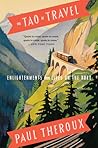
Review 662: The Tao Of Travel

The Tao Of Travel: Enlightenments from Lives on the Road The Tao Of Travel: Enlightenments from Lives on the Road by Paul Theroux
My rating: 4 of 5 stars


This book is not a narrative of travel, instead filled with quotes and excerpts from many different travel writers. Early on I decided to not be disappointed with this format, but to use it as a way of discovering travel writers I was not yet aware of, particularly women.

Made the mistake of trying to read the book in audiobook form. The beginning of the book has the most short quotes, as Chapter 1 is “Travel in Brief” and switched frequently from various people and topics, which made it very difficult to follow along in pure audio format. So I switched to a print book and my enjoyment increased. The audio format may work better later in the book when the passages are longer.

This is a personal anthology of Paul Theroux. He curates the quotes and excerpts, adding a short paragraph or two. Each chapter is organized around a particular topic such as length of time traveling, or travel as an ordeal. In between some chapters a particular author is featured with their “travel wisdom”.

The format is one that lends toward sampling or reading bits here and there. This is not the type of book I tend towards, but I was able to take something out of it.

Monday, August 25, 2025

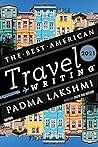
Review 613: The Best American Travel Writing 2021

The Best American Travel Writing 2021 The Best American Travel Writing 2021 by Padma Lakshmi
My rating: 3.5 of 5 stars


While I haven’t fully read a book yet in the “Best American Travel Writing” series, I was curious to read the final book in the series. The essays are all published during the year prior, so these are from 2020 when the world was not traveling so much. Was it a coincidence? Beginning in 2024 it was merged with another series, so going forward as “Best American Food and Travel Writing”. Both topics go well together and this last contained several essays that seemed more about food than travel.

Happily not all of the essays were lamenting about cancelled travel and pandemic related issues. The editor of the series and editor of this year both were heavily into that topic, as the foreword and introduction. I was ready to move on by that point. Yet the book opened with several more pandemic stories. The first one about being trapped in a cruise ship during the beginning, following several different groups of people. (Inside the Nightmare Voyage of the Diamond Princess by Doug Bock Clark) The story was well written, so I continued reading it.

Several more essays in we finally veer away from pandemic stories. Good Bread by Bill Buford was well done. He is living in Lyon, France looking for work as a cook and not having any luck. But the story is about the baker Bob, he makes the best bread in Lyon according to Buford. Buford spends some time working for him, learning Bob’s secrets and what makes good bread.

Several essays hardly seemed to be about travel at all. As mentioned food was prevalent in some essays, but there were other outliers. One about climate change being seen by a changing landscape of the coast off Louisiana (The Losing Coast by Elizabeth Miller), and another about fires in marijuana growing country in California (California's Weed Country is Lit by Jackie Bryant), among others. Maybe they were considered as travel since the writers of these essays weren’t from that area?

The book seemed short in comparison to other books in the annual “The Best American” series, such as the Science and Nature or the Essays. I’m not that much into food that I'd love reading about it, doubt I will read any of the new series. Instead I will read the prior years, especially the ones I own and have not yet read.


Friday, April 25, 2025

Review 573: A Sand County Almanac: with other essays

A Sand County Almanac: With Essays on Conservation from Round River A Sand County Almanac: With Essays on Conservation from Round River by Aldo Leopold
My rating: 5 of 5 stars


Many years ago I read about half of this book, the first Part – A Sand County Almanac, for an Environmental Literature class while doing my undergraduate studies at University. The professor said the rest of the book wasn’t worth reading, as it wasn’t his best work. But I had always wanted to get back to the book and finish the rest of it. Now, I finally have.

Perhaps he was right in that the first portion is very good, but the other essays were very much worth reading.

Aldo Leopold died in 1948 and this book was first published shortly after his death, being over a decade before Rachel Carson’s Silent Spring. Leopold’s book then being the first to warn of the ecological damage.

The book is broken into 4 Parts:
Part I: A Sand County Almanac
Part II: The Quality of Landscape
Part III: A Taste for Country
Part IV: The Upshot

Each part is then divided into many more sections and subsections. Part I is broken down to each month, with some further subsections. Part II is divided by some geographic regions. Part III is the only one that doesn’t have subsections. The last two parts are essays, all with the same theme as the rest of the book. My print book is accompanied by line drawings throughout the book. Sometimes the bird or animal doesn’t quite match what is being discussed, but still it is a nice accompaniment.

I listened to an unabridged audiobook for much of this, but it was lacking many of the essays, such as the entire part 3 of my print book. Perhaps there are different versions of this book of what is included.

The author is a hunter, but you can see by the end of this book that he begins to think that taking photographs is perhaps a better way to hunt. Other than the pro-hunting aspects, this is an excellent book. There are many well-turned sentences and passages that make this one of those books you can return to time and again. I’m glad to have finally read the entire book.


Prior to this latest reading:
Read the first half - A Sand County Almanac portion, the other two shorter portions I haven't yet read: Sketches Here and There, and The Upshot. Keep meaning to get back to it.


Friday, February 21, 2025

Review 551: The Best American Essays 2024

The Best American Essays 2024 The Best American Essays 2024 by Wesley Morris
My rating: 5 of 5 stars


As with most collections not all will feel like the best, even though this series purports to be as such. I found only a small few that I did not care for as much as the others. Overall, I am happy to have read the entirety, even the ones I didn’t care for.

In general, I would say this year collection of essays are autobiographical in nature. Not all, but mostly, or close to, such as mostly about a family member. There are exceptions, of course.
A few, maybe three, essays played with the format, which I did not particularly enjoy, such as the essay: Because: An Etiology (by Richard Prins). Every sentence started with the word because, which was repetitive. Yet, the story itself was moving. The essay did work due to the format, yet not my favorite.

The Ones We Sent Away (by Jennifer Senior), Woodstove (by Brock Clarke), and The Anatomy of Panic (by Michael W. Clune) are among my favorite essays. Not for the subject manner per se, but the way they were written. They drew me in. It felt like the author was in the room talking to me, sometimes anyway. And yet, there are others I could also say were my favorite.

There are many annual “best of” series, but this is the first I read via audiobook. That may have been one reason why I finished this entirely. There were several narrators used, which helped keep the essays differentiated.

I have partially read several other “Best American” annual collections, but only completed in full several of the “Best Technology Writing.” These are from a different publisher, and short lived, although a very similar format. (do wish they would be published again.)

From what I’ve seen, these series books are quite long, with the page numbers being deceptive for the length. The print typically being small with little room between sentences so the text is jammed packed, with one page being more like two or three of a typical book. Yet there is something of these series that appeals to me. If I had infinite time I would read more of the backlog of these annual collections, particularly the Essays, Science & Nature Writing, oh and Travel writing.


Book rating: 4.25
(rounded up because I like the series)

Monday, February 10, 2025

Review 549: Green Festival Reader

Green Festival Reader Green Festival Reader by Kevin Danaher
My rating: 4 of 5 stars


Having attended two Green Festivals in San Francisco in the early 2000s, I was interested in reading this book when it came out later that decade. My library had a copy, I read a few essays before it was due back. Later I bought my own copy later with the intention of reading it in full. Finally, last week I returned to this book and read every essay. 

I was worried these would be a little outdated by now, but for the most part that isn’t the case. Instead reading the hope and ambition of nearly 20 years ago is a little heartbreaking at how little has been done since the book was published. There are some advances towards being more carbon neutral, and public awareness is much better than it used to be. But with the new US administration saying things like “Drill baby, drill!” it’s very disheartening.

The essays here express hope and excitement. Sure, the environmental situation is discussed and there are discussions about how action is urgently needed. But overall, what is discussed are solutions; ways that anybody and everybody can contribute to making the world a habitable place now and in the future.

We don’t have to burn it all.


Friday, December 6, 2024

Review 534: The Glorious American Essay

The Glorious American Essay: One Hundred Essays from Colonial Times to the Present The Glorious American Essay: One Hundred Essays from Colonial Times to the Present by Phillip Lopate
My rating: 5 of 5 stars


This collection of essays exceeded my expectations. They were in fact glorious. There were only a small few that I did not enjoy, and some were just amazing, absolutely amazing.

One of my favorite essays is a long one by Wallace Stegner (1980): The Twilight on Self-Reliance: Frontier Values and Contemporary America. In this essay he covers with the early start of the Americas, with conquest and plundering of resources; then came the colonists, values and the “new” cheap land. The history of the United States is here comprehensively in this one essay that explains nearly everything. I was absolutely astonished by this essay.

Only one essay per writer, the essays are of varying lengths, a few very short just a couple of pages and several that are over twenty. Included are many, many familiar names, and many that are not. Even with the familiar the essays chosen are not the typical ones found in anthologies.

The book is dense, tiny print hardly any spaces and shrank the book to 900 pages, what a normal printing book might reach 1,500. When I started I quickly realized it would take some months. It did, just over three months for me with fairly consistent reading, but I had expected it to take longer. This book takes some considerable time to get through, but it was worth it.


Wednesday, August 28, 2024

Review 510: Banthology: Stories from Unwanted Nations

Banthology: Stories from Unwanted Nations Banthology: Stories from Unwanted Nations by Sarah Cleave
My rating: 4 of 5 stars


A very short anthology with seven short stories each from a different author from a different country. These countries all appeared on the "Muslim ban" in January 2017 for the newly sitting United States President at that time. The author countries are: Sudan, Syria, Iran, Libya, Somalia, Iraq and Yemen.

This book shows that people from around the world are more alike than dissimilar. We may have different customs and beliefs, but we all have same emotions. And same desires, such as wanting freedom to be yourself and not be hungry, be safe.

This was a very quick read, easily read in a few hours. Most of the stories are translations. There is only one story from each country. The book feels way to short.

Monday, June 3, 2024

Review 489: Get Me Through the Next Five Minutes

Get Me Through the Next Five Minutes: Odes to Being Alive Get Me Through the Next Five Minutes: Odes to Being Alive by James Parker
My rating: 3 of 5 stars


This book is a collection of short essays each on a subject as an “Ode”. They are a positive reflection, a way of acknowledging something in a positive light in a light-hearted and quirky way. Most of these first appeared in the Atlantic magazine are collected here for publication as a book.
I had not read anything by James Parker before but the idea and the cover hit my funny-bone for a moment so I picked up the book. I read a few “Odes” a day which is a good way to get through this book.

As with other collections, some are better than others, some will appeal to one or other. I didn’t like the ones that delved deep into soccer and sports, but some fans will likely appreciate that more than myself.

These daily things one would not expect to appreciate held a wide range an example of some - an Ode to: Middle Age, Rushing, Sitting There, Not Meditating, and so on.


Thanks to W.W. Norton and NetGalley for an uncorrected electronic advance review copy of this book.

Thursday, April 4, 2024

Review 477: The Secret Lives of Booksellers and Librarians

The Secret Lives of Booksellers and Librarians: True Stories of the Magic of Reading The Secret Lives of Booksellers and Librarians: True Stories of the Magic of Reading by James Patterson
My rating: 4 of 5 stars


This book is like a very long love letter to Librarians and Booksellers, the people who try to get books into the hands of everyone. I work in a library and used to long to own a bookstore, so this book is very much something I should love. It did help me understand a little more on what it takes to run a bookstore, and maybe that’s what this book is really about – helping people who love to read if a job as a bookstore owner or a librarian is for them.

Readers may find some interesting bits here, but more likely this is a book for those who work in those jobs, or are curious about it.

While every person has their own unique story, there are striking similarities, unfortunately, after a while it became a little repetitive. It’s understandable not wanting to cut any one of these stories. And yet…it would be a better book being shorter.


Thanks to Little, Brown and Company and NetGalley for an uncorrected electronic advance review copy of this book.

Friday, March 15, 2024

Review 472: The Mysterious Life of the heart

The Mysterious Life of the heart The Mysterious Life of the heart by Sy Safransky
My rating: 4 of 5 stars


The writing is of a good quality throughout. The introduction says the selections when read front to back follow a journey. There is a sense of that, with more innocent and new love in the early selections, with later in love type love, following a terminal illness or death.

Overall the entries felt more geared towards the sad part of love. The love being focused on here is romantic love just about exclusively. Other types of love do seep into the stories, but it is the pairing up that is the theme.

Perhaps it was my wish for more on the new love, the joy of love and less on the disaster of love, and the pain of love lost. Yet I’m not sad to have read these stories and essays, and the poems interspersed were just right.

Of course, with all collections a few were more enjoyable than others, although with the quality of writing here none are poorly written. It is just my personal preference for maybe two or three that I did not enjoy as much, which is far fewer than found in most collections.


Saturday, December 9, 2023

Review 448: Timber Wars

Timber Wars Timber Wars by Judi Bari
My rating: 4 of 5 stars


Judi Bari was an activist for saving old growth redwoods. She worked within the group Earth First! and helped to organize non-violent actions and protests to save the forests from the continuing of clear-cut practices. Of course, doing this caused a ruckus and as a result she was bombed. This bomb was a small personal bomb placed underneath her car seat, and it’s surprising she even survived. She nearly didn’t. Instead, she had a painful recovery and permanent disability afterwards.

What becomes more amazing is the first instinct for the FBI is that she and her passenger Darryl Cherney must have been transporting the bomb for nefarious activity and so arrested them, while still in the hospital for the bombing. After not enough evidence was ever discovered to charge them, the case was dropped against Bari and Cherney. However, neither the FBI nor the Oakland Police, where the bombing occurred, seriously looked into who may have actually done this.

Through the Freedom of Information Act Bari was able to get hold of her FBI files and they showed that the FBI used this bombing to investigate all the environmental activists they could. Digging into phone records they also looked into anyone who may have been contacted, which included family members. It is utterly surprising there was no serious investigation into who actually committed the crime.

So, this book is a compilation of articles Bari wrote, mostly newspaper articles, along with a few interviews with the media. The focus is quite often on the bombing. It does get to be repetitive with the same information going over time and again, but I don’t blame Bari, if I was bombed, I’d be talking about it every chance I got, especially when nothing was being done to find the culprit.

The articles are in chronological order, from October 1989 to the last in February 1994 as a lengthy article that appeared in Earth First Journal covering specific details on the bombing and investigation, which included several photos. The most mainstream publication Bari had an article published was with Ms. Magazine, where she focused on feminism and bringing that to environmental activism.

The thrust of the book is about the car bombing and Bari suggests a few culprits, starting with the FBI as the prime suspect. She also discusses evidence that the officials never investigated, such as a letter sent to the local newspaper that took responsibility for the bomb and included details about it that was not public knowledge. This letter also matched another that was sent by someone Bari knew which told the Oakland police he would be an informant against Bari.

Anyway, the book goes into these details, and more, many times. Also included is the local organizing and demonstrations against the corporate companies that were doing the clear-cutting. Bari makes it clear she was for the loggers, the individuals who lived in the area, but was against the destroying of the forest and the jobs for these loggers. Without using the word sustainable, this is what she was striving for, sustainable logging. Then loggers would have employment and people would have the wood they need.

It's a fascinating history, and the work Bari, Earth First!, and other activists did stopped the logging and saved the final areas of old growth redwoods. In the late 1980s there was only 5% left in the world still standing and the corporations wanted to take that too. Today they are still there. A paltry 120,000 acres, but at least it is still there.

Tuesday, May 2, 2023

Review 399: L.A. Exile

L.A. Exile: A Guide to Los Angeles Writing 1932-1998 L.A. Exile: A Guide to Los Angeles Writing 1932-1998 edited by Paul Vangelisti with Evan Calbi
My rating: 4 of 5 stars


Generally, collections that feature excerpts from longer works I do not enjoy, but this one is a bit of an exception.

Reading one entry after another with a focus on Los Angeles brings forth some semblance of coherent structure that forms a picture the editors are attempting to portray, that Los Angeles is a place of exile. Not that I agree, although…the size of the place does make it challenging.

The geographic locations of where these writers lived are within the boundaries of the county, not all firmly set within the city limits. It is a sprawling metropolis, where San Francisco is more contained. Why compare to “The City”? Well, the editor does, and it was the most populous city in the state until the 1930s.

One major complaint is the amount of space given to the women writers. Of course, there are fewer in number (5 out of 38), but the space devoted to each woman was quite small too. Each entry is as follows: a picture of where the writer lived, a short biography that typically focused on explaining their time living in L.A., then a selection of their writing. This selection was usually around 7 pages, but for the women it was usually 3.

The quality of the writing was quite good. If you compare the writing of today, it is vastly different than what is found in this book. While the book subtitle states up to 1998, most of the selections are mid-century, and the writers themselves older, generally born around the last decade of the 19th century, into the first few decades of the twentieth. The entries are listed alphabetically by last name, with about half of the writers being unknown to me.

A common theme among the writers was being associated with movies. Often, they came to L.A. to make some money scriptwriting then went back to live where they enjoyed. One writer even mentioned this era of writers were involved with the pictures instead of teaching, which today is where many writers earn their living, with a university. The other grouping are poets, eleven of them (although a couple wrote more than poetry, but that was featured).

A few surprises for me of writers living in the LA area of note: John Steinbeck, Gore Vidal, William Faulkner, F. Scott Fitzgerald, just to name a few. And yes, all were here to write for movies, except Steinbeck who lived through a stipend by his father. Quite a few that are well known were a surprise to me, as I always associated their lives with another location, but most of these writers didn’t stick around. A few did, Upton Sinclair and Thomas Mann did.

One final note, I got this book as a gift many years ago and was reluctant to read it as I mentioned above. Then, the first entry was a difficult starting off point. Maybe it seemed great to the editors, but for me that almost made me not read this book ever. Now that I finished, I’m glad I took the time with it.

Wednesday, November 9, 2022

Review 356: The Ecopoetry Anthology

The Ecopoetry Anthology The Ecopoetry Anthology by Ann Fisher-wirth
My rating: 4 of 5 stars


Reading this book was my year-long project, although I finished a bit quicker than expected, reading it over just under ten months. I’m happy there is a book like this, yet I didn’t love it as much I hoped. 

It was nice to have a large selection of poets, and limiting the more well-known poets to a few, when their works could take much more space. Coming across a name of someone I’ve read and enjoyed before was like finding a friend in a crowded room with strangers, a moment to feel comfortable before heading off to meet new people.

I do wish the editors included dates the poems were written or published, as these poems span over decades and a date would help place the moment in which they were conceived. Breaking the book into two parts – historical and modern, was a good way in, but each section was organized differently; historical was chronological while the modern was alphabetical by last name. My preference would be for both sections to be organized the same, actually - chronologically.

A few of my favorites, but by no means all that spoke to me:

Stephen Vincent Benét : Metropolitan Nightmare 
Julianna Baggott : Living Where They Raised Me  
Peter Gizzi : Human Memory is Organic 
Louise Glück : Witchgrass 
Mary Oliver : Wild Geese  (a longtime favorite)
Ed Roberson : To See the Earth before the End of the World 
Ira Sadoff : I’ve Always Despised the Wetlands 
Gary Snyder : Riprap 


Historical section:

Stephen Vincent Benét : Metropolitan Nightmare – long but amazing!

Modern section:

Julianna Baggott : Living Where They Raised Me  (this poem spoke to me as it mentioned a film she saw as a child that affected her, and me as well…about a woman with no arms and making do, going to the grocery store, writing checks, etc. In the poem the author says she tried to do the same “practiced the barefoot art/of turning pages, scrawling my name.”  And yes, me as well, in only that I used to try to write with my feet.)

Peter Gizzi : Human Memory is Organic (maybe) doesn’t speak to me strongly today, but I do like it. Likely it stood out among the other poems before.

Then – Louise Glück : Scilla – on the opposite page of Gizzi, and okay, the next one that scrolls over to the following page – Witchgrass is good too.

Mary Oliver : Wild Geese – ah, homecoming. This poem I should memorize. I have read it many times and enjoy it every time. I feel at home with this one. A friend in the weeds of strangers.  (her other poems are good too!)

Ed Roberson : To See the Earth before the End of the World – now this is sad, and quite modern (where is the date??) and I really connected with this poem. “people chasing glaciers” and “watched ice was speed made invisible, / now –  it’s days, and a few feet further away,”  Sad! On many levels.

Ira Sadoff : I’ve Always Despised the Wetlands – funny one

Gary Snyder : Riprap – well, I’m not completely on the Snyder team…his poems are somewhat revolutionary for the time, being so placed in nature and the environment, and he has such specificity of place names and names of nature, but he has a side that I don’t like much. The selections here are good, this one I enjoyed the most of the group.

Monday, November 7, 2022

Review 355: Other People's Rejection Letters

Other People's Rejection Letters: Relationship Enders, Career Killers, and 150 Other Letters You'll Be Glad You Didn't Receive Other People's Rejection Letters: Relationship Enders, Career Killers, and 150 Other Letters You'll Be Glad You Didn't Receive by Bill Shapiro
My rating: 4 of 5 stars


Read over one day: Sunday, November 6, 2022
Wasn’t feeling too well that day and read it off and on over the day.


Is it sad to have enjoyed reading these rejection letters other people received? Some were truly sad, but others a bit funny, and a couple a bit shocking. The book is very colorful, images of the original letters. I've wanted to read this book for a long while, and glad I finally did. It was a short read.

Wednesday, May 4, 2022

Review 318: Alien Nation: 36 True Tales of Immigration

Alien Nation: 36 True Tales of Immigration Alien Nation: 36 True Tales of Immigration by Sofija Stefanovic
My rating: 3 of 5 stars


This book seems perfect for audio, a compilation of personal short stories, tales of their lives that showcases being an immigrant. Some are humorous, some serious, many filled with poignant moments. I found they are just a little too short, these glimpses into their individual lives. Unfortunately, I did not have an audio copy, I read the print instead.

It’s easy to set the book down, I felt like I read enough about half-way through but would return now and then to read one or two more of the essays. I’m glad I did, because some of my favorite selections were near the end of the book. The illustrator for the cover is one of them, and he is the last entry.

There is an advantage to print, you can skip around easily. The book is grouped together in sections, seemingly tied together with a similar theme.

With my strong desire to hear the voices, not just what was in my head, I searched the internet and found a video with some of the included authors at a New York Public Library Live event reading part of their essays, which is found here: https://youtu.be/LmNjumtemEA

Sadly, these are even shorter versions, snippets of the short essays, but happily, they are the authors speaking. There are around twelve people showcased in the video compared to the 36 authors included in the book.

There is an audiobook version, that has two narrators, so it isn’t the writers themselves reading their works.

Monday, January 24, 2022

Review 292: The Contemporary American Essay

The Contemporary American Essay The Contemporary American Essay by Phillip Lopate
My rating: 5 of 5 stars


This is one volume of three of collected American essays all edited by Philip Lopate, the other two books being: The Glorious American Essay: One Hundred Essays from Colonial Times to the Present and The Golden Age of the American Essay: 1945-1970.

This book includes 49 essays and an introduction by Lopate. All were published in the last two-decades, with the oldest being published in 1999.

While most follow the traditional form of an essay, several do not. It is the exploration of the form as well as subject matter that makes up this volume, being quite diverse. Two of the inclusions were excerpts from larger works, and many, if not most, are pulled from a book of essays (according to the copyright permissions listed in the back.) I did wish that information was included with the title, year and where the work first appeared, instead of relying on flipping back to the end with each entry.

As with most anthologies there are some entries that speak to the reader more than others. The essays were also of varying lengths, with some being just a few pages and others reaching over twenty. Generally the average was closer to fourteen pages, which was long enough to dive deeply into a topic for a moment. Some are striking and will stay with you for a while.

I look forward to reading the other two volumes in the series.

Friday, December 31, 2021

Review 287: Daily Observations: Thoreau on the Days of the Year

Daily Observations: Thoreau on the Days of the Year Daily Observations: Thoreau on the Days of the Year by Henry David Thoreau
My rating: 4 of 5 stars


Started reading February 04.  
Had to catch up to the days in the beginning, but by end of month was on track.


Daily entries by calendar date. I read each to match the day, more or less, and starting late. I expected a couple of the entries to mark the holiday, such as Christmas or even Independence day, but that wasn't the case. Some entries seemed like an odd choice.

I picked this up in October 2008. I enjoyed the way I read the book but would not have expected it would take me to 2021 until actually reading it through. I had a great year with reading it.

Overall an enjoyable experience to have throughout the year. I have a journal of his that I'd like to do the same, just read each day's entry as the year goes by. Decided not to do that for 2022, but maybe for 2023.

Saturday, November 21, 2020

Review 177: Desert Oracle: Volume 1

Desert Oracle: Volume 1: Strange True Tales from the American Southwest Desert Oracle: Volume 1: Strange True Tales from the American Southwest by Ken Layne
My rating: 3.5 of 5 stars


The book starts out very wisely in letting you know how to survive the desert – bring lots of water, more than you think you need. If you get lost, or your car breaks down, stay by your car! There are brief mentions of those who didn’t make it out…

The next section is about the Yucca Man, and other very short tales of a creature seen in the desert called by many names, such as Bigfoot.

A little boy is lost. A scout leader failed in his job.

It goes from there….

These are little vignettes…tales of quirky people and tales of mysterious things that may be true, or not (ghost bighorn sheep).

Most of the entries read like snippets, not complete stories, and the writing tends to jump from one thought to another, then end abruptly. But don’t let that dissuade you from reading this. It adds to the sense, a layer to the oddness that are desert dwellers.

As a compilation, there tends to be a few places where something is repeated. For myself, too much on UFO’s and aliens when considering the whole work, would have liked more on history of place, or characters, those were the better entries. The snippets are of varying length with one section about cowboy music being very long. The writing isn’t polished either, you take what you can get when you’re out on the desert.

The book also contains photos and line drawings, which adds to the character of the book.

You don’t have to love the desert, but if you do this book will thrill you!


I'll read a volume 2, if/when that comes out.


Thanks to Farrar, Straus and Giroux and NetGalley for an uncorrected electronic advance review copy of this book.

Friday, February 21, 2020

Review 114: Know Your Place

Know Your Place Know Your Place: Essays on the Working Class by the Working Class by Nathan Connolly
My rating: 5 of 5 stars

Great essays. Of course some better than others, but overall excellent. Love hearing from different voices and backgrounds.

Thought listing the authors and essays contained would be useful, and listed below.

Introduction
1. Abondance Matanda – The First Galleries I Knew Were Black Homes
2. Laura Waddell – The Pleasure Button: Low Income Food Inequality
3. Yvonne Singh – More Than Just a Dream Land: Why the British Seaside Means So Much to the Working Class
4. Dominic Grace – The Death of a Pub
5. Sylvia Arthur – My Jobs, My Lives
6. Kit De Waal – An Open Invitation: What Happened to Working Class Writers?
7. Durre Shahwar – Navigating Space
8. Sam Mills – The Benefits Cut
9. Andrew McMillan – One of Us: Some Thoughts on Sexuality and the Working Class
10. Wally Jiagoo – Glass Windows and Glass Ceilings
11. Catherine O’Flynn – Heroes
12. Rebecca Winson – Disguised Malicious Murder: The Working Class and Mental Health
13. Ben Gwalchmai – Where There’s Shit, There’s Gold
14. Cath Bore – The Housework Issue (The Other One)
15. Gena-mour Barrett – Living on an Estate gave me a Community I Never Knew I Needed
16. Lee Rourke – Hotpicking: Forging a Path in the Edulations of Fiction
17. Kath McKay – Reclaiming the Vulgar
18. Alexandros Plasatis – The Immigrant of Narborough Road
19. Peter Sutton – Education, Education, Education
20. Sian Norris – Growing Up Outside Class
21. Rym Kechacha – What Colour is a Chameleon?
22. Kate Fox – The Wrong Frequency


Previous Popular Posts