Showing posts with label Nature. Show all posts

Friday, May 22, 2026

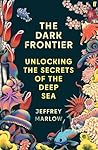
Review 696: The Dark Frontier

The Dark Frontier: Unlocking the Secrets of the Deep Sea The Dark Frontier: Unlocking the Secrets of the Deep Sea by Jeffrey Marlow
My rating: 3 of 5 stars


This book is full of scientific discoveries and information about the deep ocean. It also is a bit of an autobiography for the author, but mostly not. Several different people and aspects are discussed throughout the book. This is very cursory and not much of a review...

The last portion gets a bit too much in the weeds about treaty negotiations to protect the ocean floor. Unfortunately, too often money influences when instead an ecosystem should be looked at, or science.

I made a mistake in listening to this book via audio. The narrator was not a good fit for the book.
Normally I don't let a narration influence how I feel about a book, but this one is long, and I became annoyed. I really should have switched to print. Perhaps one day I will return and read a print version, but I don't expect that will happen anytime soon (if at all).


Monday, March 16, 2026

Review 675: The Last Season

The Last Season The Last Season by Eric Blehm
My rating: 5 of 5 stars


This book details the account of what happened when an experienced backcountry ranger went missing in July 1996. Randy Morgenson was a seasonal ranger for the Sequioa and Kings National Park in the Sierra Nevada mountains for 28 years. He grew up in Yosemite Valley and was one of the most capable people in wilderness. Yet he went missing on a routine patrol of his assigned around from the Bench Lake Ranger Station.

The book chapters alternate between the biography of Randy with the detail and action of the search and rescue effort for him.

A search and rescue operation started several days after later and they searched for two weeks and did not find one trace of Randy. There were several theories of what may have happened. Was it an accident, did he get attacked, or did he commit suicide? There was even the theory that Randy left the mountains entirely and disappeared. Those who were very close to Randy discounted this was a possibility, but all scenarios were considered.

Randy was in turmoil that season. He brought had divorce papers with him to his ranger station. In recent years had had an affair with another backcountry ranger. Randy and Gail had been married for over twenty years. But the months long absence had put a definite strain on their relationship. Randy was someone who could not live without the mountains and wilderness. Yet he started to question if his season employment was something that he should continue.

The detail in the book is extensive, his biography, the search and rescue, and the terrain of the mountains. It is clear in the beginning that Randy does not survive, so the main question remained if he committed suicide or had an accident of some sort. While I enjoyed the book, the one caveat is how the author put in this mysticism of the mountains, which was a bit heavy handed in the final portion of the book.

Wednesday, February 18, 2026

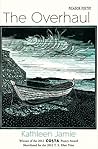
Review 664: The Overhaul

The Overhaul The Overhaul by Kathleen Jamie
My rating: 4.25 of 5 stars


Quite enjoyed most of these poems. They are descriptive, mainly of nature. A few were in what I took to be Gaelic, were the most difficult to follow. Not sure I fully understood those ones. I read this fairly quickly, as it's a short book, but likely better if read slowly to savor the imagery.


Tuesday, December 30, 2025

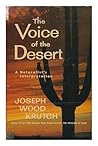
Review 652: The Voice of the Desert

The Voice of the Desert, a Naturalist's Interpretation.


My rating: 4.5 of 5 stars


In the decade or so before Rachel Carson wrote her seminal book, Joseph Wood Krutch started writing environmental literature. In this book Krutch describes in detail several plants and animals that are found living in the desert near his home in Tucson, Arizona. He starts with describing the desert in general terms then to what is a desert – the dryness. Then he starts with the animals, a desert toad that lives most of his life just under the surface until the summer thunderstorms when they come out to mate. Then onto the roadrunner.

In describing different cactus trees, and how it can grown into a forest, I was surprised to learn the saguaro is the quintessential cactus that symbolizes a desert with its upended arms. Despite that, the saguaros have limited range of where they grow.

The scorpion and tarantula are two unexpected animals described in the book. The scorpion is an ancient animal, one of the first animals to breathe air, and it hasn’t changed very much since those early days.

This leads Krutch into a discussion about evolution and contemplation of a guided approach. He leaves it mostly as questions. Going further he discusses if any animal has purposefully made a decision thus encouraging evolution a specific direction, as opposed to just purely nature making all movements and actions on the part of the animal. During this part Krutch was mostly talking about insects, such as a wasp.

Then there was the moments when he mentions the climate changing, which was a surprise to me for a book from the mid-1950s.

Overall this was a through provoking, packed book for under 225 pages, and included some black and white photographs. The author is not nearly as known, nor popular as other environmental writers, but I don’t think Krutch should be overlooked.


Thursday, September 11, 2025

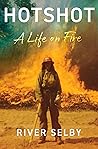
Review 619: Hotshot: A Life on Fire

Hotshot: A Life on Fire Hotshot: A Life on Fire by River Selby
My rating: 4 of 5 stars


This is the third book I’ve read this year about a hotshot firefighter, the second one about a woman (see: When it All Burns and Wildfire Days). There was also a fourth book about firefighting in general, just called Fire, which is fictional. It is hard for me to not compare this book with these other memoirs.

Here, Selby goes deeper into her own personal life than the other two, while weaving in the specifics of the history of an area of a current active fire. These three memoirs also discuss how damaging the total fire suppression activity is for the environment and health of the forest. Selby’s account seems to take on a more fervent tone of the damage this is doing, despite it being her job.

Not surprisingly, women are not common as hotshots. There are some, but it is a male dominated job. It is also one that tends undermine the women that do show up. Selby dives into this a bit more than Kelly Ramsey, likely due to her experience with men behaving badly. Ramsey had some of that too, but maybe minimized it. The guys on these crews are usually quite young, and are guided by their superiors, it appears this abusive behavior is systemic. Reporting it generally means losing ones job, as it becomes worse for the woman.

Selby spends quite a bit of time discussing her mom, and that relationship. Like Ramsey who also lost a parent while being a firefighter, they had a tough relationship. Selby didn’t have another parent to lean on though, and the result was a messy adolescence. Firefighting was a way out of some of that self-abuse and giving her a tough job that helped her. In some ways this book is much more about Selby than being a hotshot, unlike the other two.


I listened to the audiobook which was narrated by the author. She did a decent job of it, but honestly, I thought it was too slow and had to speed it more than I usually do to find a decent listening pace. Otherwise, it went well.


Thanks to Grove Atlantic/Atlantic Monthly Press and NetGalley for an uncorrected electronic advance review copy of this book. However, I listened to a published audiobook copy of the book.
Tuesday, July 15, 2025

Review 598: Wildfire Days

Wildfire Days: A Woman, a Hotshot Crew, and the Burning American West Wildfire Days: A Woman, a Hotshot Crew, and the Burning American West by Kelly Ramsey
My rating: 3.75 of 5 stars


This memoir details working as a hotshot and being a woman. Oh, and also being about a decade or so older than most hotshots. Kelly Ramsey found solace in pushing her body beyond the limits in physically. She combined her love of working outdoors with fighting fire and the elite hotshots were perfect for her for going the extra.

The book covered not only fighting fires, but also her relationship at the time and her father who was an alcoholic. book we have Ramsey’s personal life, such as her relationship Josh who was also a firefighter, but not a hotshot. We also get extensive details about her father and growing up. These personal details does make her a more fuller person on the page. Certainly being away from home for weeks at a time doing exhausting work takes a toll on relationships. It’s an unusual job from the regular 9-5 where you come home every day.

The subtitle implies some focus on the “burning American West” but that was only incidental as they were the fires Ramsey and her crew were battling. There was one fire she didn’t fight and that was one that threatened her home at the time. But there was little information about fire in general, just sparse moments.

This seems to be my year of reading these types of books, the second for a memoir of being a hotshot, and a fictional tale of a fire that blows-up written in the 1940s. I have another book or two on my docket of fire related books, next one is another woman hotshot. I’m interested in how their stories compare.


Thanks to Scribner and NetGalley for an uncorrected electronic advance review copy of this book. However, I listened to a published audiobook copy of the book.

Wednesday, April 9, 2025

Review 567: Uncertain Path

Uncertain Path: A Search for the Future of National Parks Uncertain Path: A Search for the Future of National Parks by William C. Tweed
My rating: 5 of 5 stars


A slightly academic book by someone who worked for the US National Park System for decades. After Tweed’s retirement he takes a month long hike through the Sierra Nevada mountains. This hike is used as the frame for the book in discussing how the national park’s underlying principles needs to change.

The key phrase used as the guiding principle since the agency was established in 1916 is that the parks will be preserved "unimpaired for the enjoyment of future generations." Tweed writes extensively about how there are several problems with this phrasing. The inability to change, the word even, unimpaired, is going to be nearly impossible with the effects of climate change. Already there are visible stressors to the forests from the warming climate and other pollution levels. The last chapter offers some solutions, even possible new wordings.

However, the bulk of the book is about Tweed’s hiking trip through the sierras. A friend joins him for several weeks. They encounter other park rangers and have discussions about how they are looking for a missing hiker or someone who was abusing the rules. It makes these vast parks seems smaller than they actually are. The hike also has a way of introducing some of the history of the park service. When he hikes up a peak the name naturally introduces the reason why that name adorns that mountain.

There are extensive sections about who uses the park. Stock users, those who use pack animals to get into the high country, have a long tradition but it can be damaging to the trails and the meadows. Contrast with the backpackers whose motto is leave no trace behind. Tweed also comments on the change in backpackers, fewer of the younger generations find their entertainment in the Sierras. Some who do look at it as solely a challenge, who can hike the trail the fastest, or bag the most peaks. Then there’s those people that have traditionally not looked at the forest as a recreational avenue for them.

Perhaps the book’s purpose could be summed up by these words: “The parks will have to undergo a metamorphosis that provides them with both new management goals in tune with our contemporary scientific knowledge and a redefined societal role that attracts new generations of users. Nothing less will succeed.”


Tuesday, April 8, 2025

Review 566: The Lost Trees of Willow Avenue

The Lost Trees of Willow Avenue: A Story of Climate and Hope on One American Street The Lost Trees of Willow Avenue: A Story of Climate and Hope on One American Street by Mike Tidwell
My rating: 5 of 5 stars


This book was a mix of personal story and climate change. Tidwell focuses on what was happening on his street and neighborhood, particularly the trees. The oaks dominated the streets, which had been thriving there for over a hundred years, and now were dying. Why? Tidwell finds out.
The answer to why happens to be yes from climate change, but not in a direct way such as it was hotter and the trees didn’t like the heat. No, instead it is a bit more complicated, and he shows the connections. It felt almost like a mystery the way it was laid out.

While the focus was on Tidwell’s neighborhood he isn’t entirely contained there, as he explores some of the science of solutions. The book is also fairly autobiographical, which makes it quite personable along with the other people who appear in his book, such as some of the neighbors.

Overall the book was quite readable and didn’t get bogged down with too many facts and figures or scientific jargon. One aspect that had me give this book a better rating was the book went beyond the effects of climate change and included solutions. Tidwell explored what is being done now to help get us out of this mess from all the carbon-dioxide that is already in our atmosphere, and how to prevent it from getting worse. There was a heavy focus on one of his scientific neighbors who won an X-prize for his idea of tree sequestration. This was a new concept to me, so I didn’t mind the extra pages devoted to this one solution.

I read this book from a published audiobook version that I got from my local library. The narrator did an excellent job and this could be a good way to read this book. However, I also had an eBook copy, which meant I got to see the images that are included at the beginning of each chapter. Some of the photos include his neighbors too.


Thanks to St. Martin's Press and NetGalley for an uncorrected electronic advance review copy of this book.


Monday, February 10, 2025

Review 549: Green Festival Reader

Green Festival Reader Green Festival Reader by Kevin Danaher
My rating: 4 of 5 stars


Having attended two Green Festivals in San Francisco in the early 2000s, I was interested in reading this book when it came out later that decade. My library had a copy, I read a few essays before it was due back. Later I bought my own copy later with the intention of reading it in full. Finally, last week I returned to this book and read every essay. 

I was worried these would be a little outdated by now, but for the most part that isn’t the case. Instead reading the hope and ambition of nearly 20 years ago is a little heartbreaking at how little has been done since the book was published. There are some advances towards being more carbon neutral, and public awareness is much better than it used to be. But with the new US administration saying things like “Drill baby, drill!” it’s very disheartening.

The essays here express hope and excitement. Sure, the environmental situation is discussed and there are discussions about how action is urgently needed. But overall, what is discussed are solutions; ways that anybody and everybody can contribute to making the world a habitable place now and in the future.

We don’t have to burn it all.


Tuesday, November 19, 2024

Review 530: Defending Giants

Defending Giants: The Redwood Wars and the Transformation of American Environmental Politics Defending Giants: The Redwood Wars and the Transformation of American Environmental Politics by Darren Frederick Speece
My rating: 4.25 of 5 stars


This is an in-depth look at the fight to save old growth redwoods on the California northern coast that are now known as the Redwood Wars. The redwood tree is known by several names, scientifically as Sequoia sempervirens, colloquially as coastal redwoods, California redwoods, or just plain redwoods. Their preferred habitat today is along the coast of Northern California reaching into Oregon. The old-growth trees that were at the heart of the redwood wars are forests and these giant trees which can live for two-thousand years.

With the narrow range of where these trees can grow, which like coastal fog, the 1.3 million acres of area from pre-Columbus days are now down to just 5% of the land. And to save that five percent was a hard fought battle that this book describes.

The main company involved is Pacific Lumber. It was founded in 1863 and was a family company that grew to be one of the largest in the area. The company policy in cutting trees was in a fairly sustainable manner with looking towards long term and generally did not clear-cut groves of tree stands. They were more selective.

Unfortunately, it didn’t stay that way. In 1985 the company was taken over by Maxxam Corporation run by Charles Hurwitz, who was known as a corporate raider and used the Michael Milken junk bonds. (see savings and loan crisis of the 1980s.) This is when the old-growth redwoods became extremely endangered. The plan by Maxxam was to reduce the inventory, i.e. trees standing, in order to increase profits as quickly as possible and clear-cutting began.

In order to make this shorter, let’s just say that didn’t happen, not entirely anyway. The book is detailed in explaining all the various steps and stages that took place during these years. There were many, many lawsuits, activists protests and actions all to raise awareness and save the last standing redwoods from being cut down. Environmental groups, forest plans and government agencies, along with the main environmental leaders are heavily features in the book. Several women took major roles as leaders, which needs to be acknowledged since the corporations, forest service and government were all men.

There aren't any close biographies of people involved, only cursory. Although the car bombing in 1990 of two prominent activists, Judi Bari and Darryl Cherny, does come up several times. It was a major point in the Redwood Wars.

The book is somewhat academic. Darren Speece wrote his PhD thesis on this topic being nearly the same length of this book. Certainly that was transformed into this book. The book comes with extensive section of notes (46 pages), Selected Bibliography (8 pages) and a very long index that is 31 pages.

Monday, November 18, 2024

Review 528: The Forester

The Forester The Forester by James Kraus
My rating: 1 of 5 stars

I read this book to about the half-way point. I almost stopped earlier, due to major plot holes, but decided to give it more room. Then another farcical moment arrived and after another unbelievable situation that I had to quit this book. The writing style wasn’t very good, but I was willing to overlook that a little, but with all the other problems with the book, no there are much better books out there to spend my time on.

Normally I don’t rate books I don’t finish because I think it’s more me than the book, my reading mood at the time or something. This time it is the book.

I was disappointed this didn’t work out better. The book cover is nice, the title sounds like something I’d be interested in, and the overall content is dealing with the environment. Oh, I didn’t even mention how there was this message, repeating how environmentalists are naïve and misguided in not wanting clear cutting a forest, or wanting wild animals to live.

I’m just glad I got the book for free instead of paying for this. I got it free from amazon back when I had prime and there are free monthly offerings, if I remember correctly.


Thursday, October 10, 2024

Review 521: Forty Years a Forester

Forty Years a Forester Forty Years a Forester by Elers Koch
My rating: 4 of 5 stars


This is an autobiographical account of Elers Koch who started working as a forester when the U.S. Forest Service begun near the beginning of the 20th century. Gifford Pinchot established the forest service, being the very first chief and perhaps the very first United States Forester. He hired the first group of young men, with Koch being among them, and the only one that grew up in the West.

While the book starts with his early days of growing up and college, there isn’t very much of his personal life, instead it is focused on being a forest ranger. The earliest days were taken up mostly as surveying the forests, drawing up maps then claiming them for protection. Then as inspector. The forest service also handled the logging, determining which trees should be cut and which should stay, so they were involved in managing the forest. And of course, there are forest fires. Several chapters discuss this and are among the most exciting passages of the book when escaping near death from the flames.

Koch occasionally compares how things were done in those early days to now, such as using airplanes and smoke jumpers helping out in fighting the forest fires. Of course his “today” is now many decades ago and things have changed even more. Koch advocated for sometimes not fighting a natural fire and letting it burn as the best way to manage the forest. That was not the policy at the time. Another thing Koch did not approve was in this all-out effort to save the forest from burning, roads were made and developed throughout the woodlands, thus ruining the pristine wide open lands and wilderness.

When the book was originally written in 1949 Koch could not find a publisher. He died before it was published, it took nearly 50 years before the book found a publisher. This is a very readable book and an fascinating account of what it was being a forester over a hundred years ago. Glad this book finally found a publisher.

I listened to the audiobook version but also had access to an eBook which I used to glance through and see the photographs and maps that were included. Those are always a nice addition to a non-fiction book, particularly an autobiography.


Friday, September 13, 2024

Review 514: Field Notes from a Hidden City

Field Notes from a Hidden City: An Urban Nature Diary Field Notes from a Hidden City: An Urban Nature Diary by Esther Woolfson
My rating: 5 of 5 stars


Quite enjoyed this book about urban nature. The book is more or less in a diary form, with dated entries and contains longer essays as well. Starting off with Snow, to Midwinter, and ending with Into Autumn. The weather is mentioned quite frequently, a main topic. The author lives in Aberdeen, Scotland and weather there can be quite severe and stark.

One striking passage was the description of taking a walk during some strong gale force winds. Not sure why she was out while winds were that strong, maybe it happened suddenly while already out walking.

However, the main discussions in the book are about the small animals around her garden and what is seen when out in the city. These are mostly birds, but a few other small creatures are discussed, such as the squirrels, red and grey. Long essays were devoted to these along slugs and spiders. The compassion for these living beings and their purpose provide a different way of looking at what is typically something grossed out by or frightened about.

Woolfson has had pets in her home, or maybe calling them pets is not quite the right term, but she houses animals that most would not, such as crows and rats, although pet rats are perhaps more common than a crow. Her children had some pets, and as they left the house the pets typically stayed behind.

Her garden is set up to help and encourage the local wildlife, mostly birds, but also encourages other small animals. She feeds the wild birds and helps with providing nesting materials, also houses some a few doves. I did appreciate how the animals she mentioned were always provided with their scientific names. It helped as then one can look it up easily and find what they look like if one wanted a picture. The book contained a few line drawings between sections, which were a nice addition.

Tuesday, May 14, 2024

Review 484: The Orchid Thief

The Orchid Thief The Orchid Thief by Susan Orlean
My rating: 3 of 5 stars


The book mostly followed a quirky character John Laroche who was arrested and charged with stealing rare orchids from the Florida swamp of Fakahatchee Strand State Preserve.

The book also has many details that are fillers and don't add anything to the overall story other than odd details. The book felt like it lost it's thread about mid-way or so, but did pull it back together for the closing.

I did learn there is a big trade in stolen rare plants, orchids in particular. Apparently some people go crazy for these plants.


Thursday, January 25, 2024

Review 460: Soul of Nowhere

Soul of Nowhere Soul of Nowhere by Craig Childs
My rating: 3.5 of 5 stars


The book is mostly a group of essays, no plot or forward movement. Each chapter is a new location, where Childs walks and climbs around these desolate areas, primarily in the desert, where people used to live. Sometimes one other person is with him, or several, occasionally he goes alone.

They find remnants of past lives, typically broken bits of pottery, and on a rare occasion a pot that is unbroken. There are other signs. It starts with the cliff dwellers, so they explore a few of these homes high up on the cliffs. They do not take these objects, they put back exactly as found when picked up. Only sketches are taken, some are replicated in the book.

Childs writing style is dense with imagery but sparse on story. We don’t know what he does for a living other than wandering around these desert locales. He goes out for not days, but weeks at a time, and occasionally alone. Sometimes he provides the smallest bit of information about who his companions are - his wife, a friend, but not himself; he purposefully wants the focus to be on the land and the past. The land is harsh, difficult terrain and finding a way through, or a path, that appears to be their purpose. They also battle extreme weather, cold or very hot, and often with little food or water.

The last essay Childs comes to the essence of himself, or the land, and he is changed. It’s one of those times he is alone, later his wife meets him with food, which he has been low on for days, and very little water which he’s been rationing so little that he has been having slight hallucinations.

There was something here that was missing, perhaps the autobiographical material, or what exactly was he doing out there? This lack, this elusive substance, made the writing hard to get into, or find a way in. The essays seem to be repeating the same scenario, except for the last one, although that one too has similarities to the others. I had attempted to read this book before, many years ago, but didn’t get past page 27. At least this time I completed it.

Friday, January 19, 2024

Review 459: The Living Mountain

The Living Mountain The Living Mountain by Nan Shepherd
My rating: 4.5 of 5 stars


Quite enjoyed the language and description of the Cairngorm Mountains in Scotland by Nan Shepherd.

This is listed as book four in a series, yet I'm not sure the connection between these four. I did read the first, and it was a fictional account, mostly biographical of Nan Shepherd growing up in a small village and misunderstood for wanting to be educated and literary. My understanding is this book is the only non-fiction book in the group, which puzzles me why it is included.

Nevertheless, this is a wonderful lyrical book about Shepherd's local mountains and what nature is there; how it changes during seasons, the light and water, the fauna, well everything you'd find there, and even of other people (briefly). While reading the book I could picture the place so well, nearly finding myself there in the mountains. The senses are fully described in her writing.

The publishers didn't want to touch the book when it was first written, they weren't sure what to do with it, apparently nature writing wasn't done. But years later in the late 1970s they did publish the book, thankfully. The edition I had was an audiobook with a long afterward written by Jeanette Winterson. The audiobook was narrated by Tilda Swinton which was just perfectly done.

The book is on the short side, but perhaps that will mean I will return and reread this book. It is another one of those books that you can enjoy multiple times and get more out of the rereading. I must try to do just that.

Thursday, January 18, 2024

Review 458: The Vaster Wilds

The Vaster Wilds The Vaster Wilds by Lauren Groff
My rating: 4 of 5 stars

Gorgeous writing in this book! Takes place in the pre-America time, when the first settlers came and tried to establish a colony. They are dying of starvation and disease. A girl escapes and runs, runs through the woods and the vast wilderness hoping to reach the French. The journey is the tale, nature was unknown to her and now in full force.

The girl is not named, later as she is running there is backstory, discovering the story of her life how she came to be in that dying fort. As a servant that came from an orphanage she had several names, but none she felt were true to herself.

As she runs and gets more injured and yet still carries on, it is amazing at the force of her own nature. She derives her will from nature as well.

There are layers within the book, and the ending provides several interpretations. I could see this being read again and getting more out of the material. I don’t reread often, there are so many other books…


Wednesday, December 27, 2023

Review 453: Open Throat

Open Throat Open Throat by Henry Hoke
My rating: 3.5 of 5 stars


This is a short book, I read it easily in one day. It takes the point of view of a mountain lion, who does understand English. He learns the words from hikers and a group of homeless people he lives with. The mountain lion lives in the wilderness area near the Hollywood sign, although he used to live in a different area.

Getting water and food to eat is a struggle. Humans have become interesting to him since he is so hungry, but it didn’t use to be that way.

An interesting take on the modern problems of the city (such as housing costs) and climate change.

I listened to the audiobook, which was well done by the narrator.


Tuesday, October 31, 2023

Review 435: The Stations of Still Creek

The Stations of Still Creek The Stations of Still Creek by Barbara J. Scot
My rating: 3.75 of 5 stars


I've had this book a long time, been meaning to read it right away for a long while, finally I did and now slightly disappointed. The writing style was okay, with some good descriptive scenes of nature.

The book was about Scot's time in living apart from her husband in a cabin in the Mount Hood National Forest. They owned this cabin for years, and she moved in one day to figure things out: her marriage, her writing, and contemplate death. Also, to heal physically as she had problems with her back and eye. Scot was a teacher and quit several times but kept going back as they needed money. It was her husband’s time to quit work for a while, instead she quit work again and went to the forest. They really don’t talk about important things.

What bothered me the most is how she approached nature. It was there for her, for personal use. When she described how she developed these stations, these places in the forest for her to stop and just sit, they were highlighted on how she fit in there. She tended to them, she created them and the paths by cutting out a lot, it is not nature as it is, but human involved. At least she would stop and just look and be.

Scot says that her goal after being healed was using her privileged time in the Mount Hood Forest to be an example of how nature can heal psychologically when you stop and just not do anything, not-doing.


Wednesday, February 22, 2023

Review 377: Vesper Flights

Vesper Flights Vesper Flights by Helen Macdonald
My rating: 4 of 5 stars


A series of essays, not all with the subject of birds. Well written essays. I listened to the audiobook that was narrated by the author. She does a fantastic job, and I think this is the best way to read her book.

There are 41 essays in this book, many short and none too long. Some of the pieces appeared in a magazine prior, but may have been reworked slightly for the book. Only once did there seem to be a repetition of material, found in back-to-back essays. Perhaps that should have been edited a bit more, but overall the essays do shine for the language and thoughts.

Animals, well birds more specifically, do come up frequently in most of the essays. She also wrote about her migraines, a refugee and a few essays were autobiographical.


Previous Popular Posts