Wednesday, July 29, 2026

Review 721: The Illustrated Man

The Illustrated Man The Illustrated Man by Ray Bradbury
My rating: 3 of 5 stars


This Bradbury book is a series of short stories. The opening, prologue has a man who meets the illustrated man who warns him not to look to closely. But of course, he does. The images on his skin move and talk and tell these stories... An interesting frame, except it doesn't hold up in the final story.

Then the stories themselves have not aged well. All the women hold traditional roles. Many stories feature rockets going to Mars, or other planets, and it is the men. They hold the jobs; women do the domestic work. I suppose it is to be expected for stories written in the late 1940s-50s, but I had hoped for more imagination.

As mentioned, a rocket was in most of the stories. It felt there wasn’t enough variation of the stories. A few of the stories tended towards horror, or somewhat odd. Although the book is clearly science fiction, the writing focus was on the people and relationships, as much as you can in a few pages. The setting of a rocket going to another planet was just transportation. It wasn’t described how it was possible, nor how the time to travel was quick. What mattered to the story was the man being away.

Overall, the book was not as spectacular as I had hoped, just okay.

Tuesday, July 28, 2026

Review 720: Interference

Interference Interference by Brad Parks
My rating: 2.5 of 5 stars


Matt Bronik is a quantum physicist; his wife Brigid is nearly deaf. They have a son together living near Dartmouth where they work. Brigid works in the library, Matt as a professor and researcher. Their life is unremarkable until Matt starts having a weird medical condition. It came on all suddenly, he passed out and was in a coma like state for several hours.

This happened twice. Brigid was on edge about her husband’s problems. What was going on? Perhaps it was his lab experiments, with a virus that he was working on. It sounded plausible. Matt was also stressed out since he couldn’t seem to get further in his research. He hadn’t published in a while; he needed to publish. Then a ultra rich businessman approached Matt with a crazy job offer. $1 million a year to work in his own lab, only doing research, no teaching, he could focus on research. When Matt refused, he upped the amount.

Then Matt had a third episode. This time it turns out that he was kidnapped. The rest of the book is about what happened to Matt. Naturally, a veteran detective gets involved and we get his POV. Through most of the book it switches between Brigid and the detective.

Brigid becomes way more involved in trying to find her husband than would happen in real life, her sister helps out with the son. A few of Matts colleagues become involved. All these people pose lengthy theories of what happen and how. Then a new fact arises and they switch the theories around and discuss at length. All of this with the how involved the wife is and all the discussions kinda bugged me. I know its fiction, but it was so far off from what would really happen. Brigid goes on scene to a spot they think Matt is being held. No police would allow the wife to wander around while they collect evidence.

Anyway, the book was okay. There are some twists, of course, and at least one, the most crucial seemed forced. The science was minimal I had hoped for more.

Saturday, July 25, 2026

Review 719: White Teeth

White Teeth White Teeth by Zadie Smith
My rating: 3 of 5 stars


An extensive book about two, then three families. The book is written with heavy amount of humor, tongue-in-cheek and outlandishness. This over-the-top style didn't vibe with me.

The first half or so of the book would jump from one person to the next without a seeming plot, so it was hard to get placed within the book. By the time the plot came out it was just ridiculous, and I could hardly care anymore.

I will say for a first book it is well done, there is writing skill. It just wasn't for me. I've had this book sitting on my shelf for so long, thinking I'd enjoy it more. At least I finally got to reading the book.

Book rating: 2.5 stars.
rounded up for the writing skill

Saturday, July 18, 2026

Review 718: The Whiskey Rebels


The Whiskey RebelsThe Whiskey Rebels by David Liss
My rating: 4.25 of 5 stars


Quite enjoyed this historical fiction book. Takes place in the 1780s to early 1790s, while the country is barely begun and still forming itself, particularly with banking. The book also is a bit of a mystery, but not quite either.

There are two main characters, both you cannot help but like despite their faults. Joan Maycott is a woman (gasp) and highly intelligent, the other, Ethan Saunders, being a drunk and falsely accused of being a traitor during the revolutionary war.

Their lives intersect with this banking business and trading of shares. It tended to go on slightly long, and I found some of all that trading got to be too much, otherwise I would have rated the full five stars. I did quite enjoy the humor though, somewhat deadpan humor mostly.

Thursday, July 16, 2026

Review 717: Fires in the Night

Fires in the Night: The Earth Liberation Front, the FBI, and a Secret History of Eco-SabotageFires in the Night: The Earth Liberation Front, the FBI, and a Secret History of Eco-Sabotage by Matthew Wolfe
My rating: 4 of 5 stars


The events discussed in this book took place mainly, but not entirely, in the Pacific Northwest by a group of young people called ELF, Earth Liberation Front during the 1990s. The first part of the book is more focused on several of the people involved in setting fires or actions to liberate animals. Law enforcement is peppered throughout the book but is discussed more thoroughly in the later part. The author Wolfe is neutral in this book, doesn’t provide opinions only facts of what happened or balanced, counterposing views. The writing was done well in making this a coherent narrative.

There was a good discussion on how these types of acts have become labeled as (incorrectly) terrorism, also known as eco-terrorism. There was a major shift after Sept.11, 2001 with Bush declaring a war on terror and including these types of groups with increased surveillance and infiltration.

The book was intriguing. These young people were working towards laudable goals, wanted to improve the world, but went about it entirely the wrong way. At least they were always mindful to harm only property, or seemingly help animals, and never purposefully harm people. Yet in the end, they had to ask themselves how much did their actions help in promoting their cause?


Thanks to Viking Penguin and NetGalley for an uncorrected electronic advance review copy of this book.

Wednesday, July 15, 2026

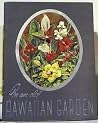
Review 716: In an Old Hawaiian Garden

In an Old Hawaiian Garden: An Album of Hawaii's Flowers In an Old Hawaiian Garden: An Album of Hawaii's Flowers by Don Blanding
My rating: 3 of 5 stars


This is a very short book, can easily be read in under an hour. Although if you’re one to peer for a long time at a drawing of a flower and contemplate the accompanying poem it may take longer.

There are under twenty of these flowers that can be found in Hawaii. The poems are six or eight lines which praise the flower on the opposing page. The poems are okay, nothing that seems remarkable. The images are done fairly realistically but have a sort of soft focus as well.

My copy, which came to me through generations of my family (my great-grandmother knew the author) also includes an insert about where you can buy the images for framing so as not to cut up the book itself. It also advertises other paper products with these images, like stationary or cards. I'm sure those are no longer available now since this was published in the 1940s.

The description in goodreads about this book is incorrect, as there are more than 8 flowers in the book, although maybe only that many are native to Hawaii and the others are not native. I’m not sure about the horticulture history.


Tuesday, July 14, 2026

Review 715: The Virgin of Waikiki

The Virgin of Waikiki: A Torrid Tragedy of the Tropics The Virgin of Waikiki: A Torrid Tragedy of the Tropics by Don Blanding
My rating: 2 of 5 stars


This is a very short book, a poem, only one, that can easily be read in just a few minutes of time. There is a very short introduction by the publisher which states the author delivered this poem at an event and, “It was felt that a number of appreciative souls who were not present…were deserving of the pleasure which this rare and piquant piece affords to Epicurean literary tastes.” The first printing was a small private batch, when quickly sold out there was another, then this third which seems to be the first to include the illustrations.

I am not a fan of the poem, the drawings that accompanied the text, however, I did enjoy. This was printed in 1933, so the humor and social mores were different during that time.

***Spoiler Alert: I do have a spoiler below***

The poem is about a “spinster” woman aged 40, living in Waikiki near the beach, who was still a virgin. She had a dour countenance. People made fun of her. The neighbor lady sought to change things and gave her a romance book. The spinster read it and was filled with passion at what she’s been missing in her life. In a crazed way, she goes out and seeks it. 

The very end of the book contained an envelop of types that covered up the last image, or maybe page. Since it was already opened, I cannot be certain of exactly what was hidden.

The poem was a simple rhyming scheme. I will hold out on my opinion on Blanding’s writing overall until I read a longer work of his. I do have several of those, as this book and several others belonged to my great-grandmother, who knew the author. They were in a writing group together, although she never published. The books have been handed down through the generations, with the latest from my dad to me a few years back.


Friday, July 10, 2026

Review 714: Glasses

Glasses Glasses by Adam Geczy
My rating: 3 of 5 stars


This short non-fiction book is in the Object Lessons series that focuses on a single object. I love the concept of these books, read quite a few and have many more to go.

As someone who needs glasses to see beyond the page I was interested to see what Geczy had to say. There is a lot about culture and how people are perceived. There are some possible hiccups with his text, as the exposition on how children are viewed with glasses by their peers. That felt more personal than universal. In discussing various people in pop culture that wear glasses it felt like Geczy was trying to be all encompassing, yet doubt that was the case, missing many examples that could be included.

The last chapter looks towards the future with augmented glasses that have been developed and those planned in the near future. Glasses that give you an overly of additional information, or record all that you see. Let alone other futuristic improvements that may be directly embedded in contact lenses or your eye.

Not much in the way of history other than the most basic. Nothing about how glasses are made, other than now they are part of fashion and all fashion lines must now have branded glasses on offer. However, there were musings and random moments about glasses that held my interest, which is why I keep coming back to this series.


Thanks to Bloomsbury Academic and NetGalley for an uncorrected electronic advance review copy of this book.

Tuesday, July 7, 2026

Review 713: Abigail and John

Abigail and John: Portrait of a Marriage Abigail and John: Portrait of a Marriage by Edith B. Gelles
My rating: 5 of 5 stars


Highly enjoyed this biography of Abigail and John Adams. The book perhaps was more of a biography of Abigail than of John.

Both Abigail Smith and John Adams came from pious backgrounds with families well established in America before the revolution. They married while John was 29 and Abigail just 19. And quickly after their marriage their lifelong habit of letter writing began, as John being a lawyer, would travel to the various colonies for work. This also established a pattern for their marriage with John being absent from home much of the time.

Since they were great letter writers and their correspondence survives, even to their numerous relatives and friends, it enables books like this. The book was not so narrow to only discuss their marriage. It is a wider biography which discusses their entire lives. Such as how John became involved with the revolution, and the long years apart while he was in Europe serving the new country while Abigail dealt with living in a revolutionary war zone, while managing a farm. During this time women did not own property or assets, yet to keep the family afloat Abigail bought land and other assets in John’s name. She even started trading goods to keep the family afloat during this time of struggle.

There is a lot of material here in the book. To note, one surprising fact is how their young boys spent many years apart from one parent or another, or often both. The family believed in Duty and their children learned the lesson well. Duty to others came before self. The youngest boy barely knew his father as John was in Europe for much of his life.

It was noticeable the author’s opinion that John Adams was not a monarchist, as many of his detractors, and historians state. She proves this several times in the book. This being the only book about him I’ve read, I cannot say, but she makes a convincing argument.

Their lives are quite detailed, until we get to the post-presidency of John Adams and near the end of their lives. Other than discussing the renewed friendship with Thomas Jefferson, the latter era is glossed over. Now I would like to read a biography of their eldest son John Quincy Adams, he had an unusual childhood.

I had this book for many years, not sure why I waited so long to read it. This year of a focus on American history finally gave me the impetus needed.


Monday, July 6, 2026

Review 712: The Ephemera Collector

The Ephemera Collector The Ephemera Collector by Stacy Nathaniel Jackson
My rating: 3 of 5 stars


This was an unusual and unexpected book format, reminded me of a post-modern style book, but it wasn’t that. It is not a straightforward book by any means.

There are pages of images, some that repeat are a timeline that I found helpful to understanding the full story. There are other images, maybe some from a dream journal. There are poems and excerpts, from a journal maybe. It’s not very clear where these textual parts.

There are two stories here. The main frame of the book is with Xandria Anastasia Brown, who is an archivist at Huntington Library, Art Museum, and Botanical Gardens. In 2035 she's been having health issues, particularly memory lapses, and passing out, when an event happens at the library. It has to do with BlackoutWika, which she established but wasn’t involved in this event. She became locked in her office, which happily contains essentials for surviving for a few days. Xandria doesn’t understand what is going on. Yet she still strives to continue working with the archives, she is focused on the work.

The very opening of the book has Xandria talking in an interview on her 300th birthday. Something happened to her medically that caused her to stop aging.

The second story takes place further in the future, at Diwata, an underwater community that was built to escape the devastation on the surface. While other communities went into outer space, this group, the Black Reconstruction Collective, established themselves off the coast of California.

There is an audiobook for this but I’m not sure if that would translate well as there is much here that is visual, not just what was mentioned above, but also with the formatting. There are bots that communicate which is identified by brackets, maybe audio can adapt that part. Anyway, not sure this is one to attempt in audio.

Overall, there were parts of this book I liked, some I did not. There was some repetition, which I didn’t like, and some parts of the book were confusing. I found the bot named sassafras interesting.


Sunday, July 5, 2026

Review 711: Cleanup on Aisle Five

Cleanup on Aisle Five: Essential Work, Poverty Wages, and the View from Behind the Supermarket RegisterCleanup on Aisle Five: Essential Work, Poverty Wages, and the View from Behind the Supermarket Register by Ann Larson
My rating: 4 of 5 stars


The author, Ann Larson, found herself needing a job just as the pandemic began. Despite having several degrees no one was hiring, except at essential places like the grocery store. Larson was able to hire in at a supervisor level for the front-end, overseeing the cashiers.

What started as an article turned into this book. Which means the book is not quite the cohesive narrative with a driving force of a premise. Larson provides instead a retelling of her own experiences working at a grocery supermarket.

There are many interesting points in the book about how people are treated, how the job affects them physically, and the author's response to demands by management. Larson sides with the workers whenever possible. It's a low paying, high turnover job that's very demanding, particularly physically. One cannot help but sympathize with the employees trying to manage pain while doing a job that is physically demanding.

Larson ends the book with ways that grocery stores can do better for their employees. Better pay to start with, but also better health care would certainly help as well. It’s hard to say what customers can do to help, but perhaps not using the self-checkout machines? It’s worth reading this book just for her experiences with these machines. Unfortunately, they seem to be multiplying instead of diminishing.


Thanks to Atria-One Signal Publishers and NetGalley for an uncorrected electronic advance review copy of this book. However, I listened to a published audiobook copy of the book.

Wednesday, July 1, 2026

Review 710: This Land Was Saved for You and Me

This Land Was Saved for You and Me: How Gifford Pinchot, Frederick Law Olmsted, and a Band of Foresters Rescued America's Public LandsThis Land Was Saved for You and Me: How Gifford Pinchot, Frederick Law Olmsted, and a Band of Foresters Rescued America's Public Lands by Jeffrey H. Ryan
My rating: 4 of 5 stars


This book provides the history of how land in the United States became preserved for future generations. Nothing in the book addressed deserts, it was very tree oriented.

U.S. Forest Service, National Parks, Wilderness Preserves, and other public lands have a history, and part of that history is told in this book. Its focus is on some of the men that fought the land and forests.

The book begins with Frederick Law Olmsted, managing a mining operation in the California Sierra Nevada. Needing a break, he wanders to the Yosemite area and is astonished by its beauty. Olmsted realizes this land needs to be protected before it is destroyed by commerce, either mining, clear-cutting timber or some other extraction method that destroys beautiful landscapes.

There are more biographical details of Olmsted for the page length of this book than he deserves. I didn’t mind too much since I’ve been interested in learning more about the guy. Yet it did detract from the premise of this book.

From Olmsted the book discusses Gifford Pinchot. I found it interesting that Pinchot was groomed by his father to become a forester, and good thing he liked it. Pinchot saw opportunity to make his mark with forestry. Like all early foresters he got his forestry education in Europe, then back to the United States, first working with Olmsted then quickly becoming the lead man on forestry management.

At this point there was a lengthy discussion about the development of schools for forestry and development of an agency within the federal government. Pinchot was quite influential with both aspects, even being underhanded towards people he previously worked with.

Pinchot’s view towards forestry was that forests were to be used, not preserved, and this viewpoint became very influential in managing forest service lands. He not only headed the new agency he also trained many foresters for many years.

Further in the book discusses other men who saw that needed to be preserved as wilderness, untouched by humans for the future. They believed that wilderness helped humans reconnect with nature and was good antidote for city life.

The book had many interesting points and yet it also was too large of a topic to be adequately cover everything for a book of under 250 pages. It also seemed to miss quite a bit as well, such as neglecting to mention any women who also helped in the fight to protect lands.
Previous Popular Posts