Showing posts with label Object-Lessons. Show all posts

Friday, July 10, 2026

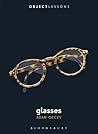
Review 714: Glasses

Glasses Glasses by Adam Geczy
My rating: 3 of 5 stars


This short non-fiction book is in the Object Lessons series that focuses on a single object. I love the concept of these books, read quite a few and have many more to go.

As someone who needs glasses to see beyond the page I was interested to see what Geczy had to say. There is a lot about culture and how people are perceived. There are some possible hiccups with his text, as the exposition on how children are viewed with glasses by their peers. That felt more personal than universal. In discussing various people in pop culture that wear glasses it felt like Geczy was trying to be all encompassing, yet doubt that was the case, missing many examples that could be included.

The last chapter looks towards the future with augmented glasses that have been developed and those planned in the near future. Glasses that give you an overly of additional information, or record all that you see. Let alone other futuristic improvements that may be directly embedded in contact lenses or your eye.

Not much in the way of history other than the most basic. Nothing about how glasses are made, other than now they are part of fashion and all fashion lines must now have branded glasses on offer. However, there were musings and random moments about glasses that held my interest, which is why I keep coming back to this series.


Thanks to Bloomsbury Academic and NetGalley for an uncorrected electronic advance review copy of this book.
Thursday, February 26, 2026

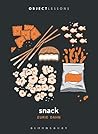
Review 668: Snack

Snack Snack by Eurie Dahn
My rating: 4 of 5 stars

Who doesn’t love snacks? This book explores the topic, but by no means exhaustive as there can be much said about snacks. The snack food category has become an explosion in recent years. Dahn provides some of the early history, such as the legend of the first potato chip in 1853, although it really isn’t the first.

Confusion around history of snacks continues with the first chapter discussing Flamin’ Hot Cheetos. There is some discrepancy on who invented this flavorful snack. Invented by Richard MontaƱez who rose in the Frito-Lay plant from janitor to manager? Or was it a bunch of scientists in a lab looking for a new flavor?

The second chapter was about snacks for children, which went a bit long, while the third chapter is an extremely short, labeled “Fruits and Vegetables” and Dahn says she will not discuss even though there are foods here that qualify as snacks. I loved that.

“Guilty Pleasures” discusses the ramifications of diet culture and who can be seen as eating snacks in public. And the last chapter is “Chocolate and Dried Squid” which discuss more of Dahn’s favorite snacks. Her ethnic snacks come up frequently in the book.

The blend of Dahn’s own history and experience of snacks growing up, to what she gives to her kids, was well meshed in with the history and culture aspect of snacks. The book was slightly fun, which is how snacks are often, or at least portrayed. And it left me wanting more.


Thanks to Bloomsbury Academic and NetGalley for an uncorrected electronic advance review copy of this book.


Friday, July 25, 2025

Review 604: Bookshelf

Bookshelf Bookshelf by Lydia Pyne
My rating: 3.75 of 5 stars


This is a short book, knew that going in, but it felt way too short. The book is one of the series in Object Lessons. It stays very close to the subject matter, providing history and various ways in types of bookshelf, such as moveable or fixed, and very short on what can be found on a bookshelf. I did enjoy reading about the history of chained bookshelves, and particularly the library in Hereford.

Some authors in this series take a wide view of the subject and include personal details from their life, but not here. Usually I do like that approach, yet here I wanted a peek at her own bookshelves.

This book felt like it barely scratched the surface of this topic. It had a long bibliography, pages of notes and index that all told are around 20% of the book. One book Pyne quoted from often I do hope to read later this year, The Book on the Bookshelf. I’ve had that book for a long while, perhaps it will provide more of the details that I felt missing from this book.

Unfortunately, another book discussed a little too much, provided spoilers for a book on my to read list, Umberto Eco’s, The Name of the Rose. Ugh. I will have to wait a while longer before reading so as to forget what I now know.

This was good, but ended with wanting more.


Note: First Object Lessons book bought, although read quite a few already.

Tuesday, August 20, 2024

Review 508: Traffic

Traffic Traffic by Paul Josephson
My rating: 3 of 5 stars


This book in the Object Lessons series took on a serious tone to the subject. The book is of a small size and usually these series books are usually quickly read books.

In looking at traffic, the focus was on safety and traffic calming measure, specifically with the speed bump. It has many different names, one of my favorites is in Russian it is referred to a the sleeping policeman. These roadway bumps can take on several different forms, but they are there in order to calm traffic and speeds. With slower speeds pedestrians and bicyclists can share safer roads. One of the best things about speed bumps are they are very low cost and easy to add to the roadway.

Other safety features in the automobile was discussed, such as seatbelts, interior design changes and airbags, all to make the car safer in the event of an accident. The book did have a leaning towards looking at the regulations of the United States, but other countries were often mentioned. There was a chapter on Brazil and longish one on Russia. The county with the strictish measures of safety does have the lowest number of fatalities per 100,000 persons, this is the Netherlands at 3.9, worldwide the average is 18.

Overall the book does come together as a cohesive unit, but many of the chapters felt like individual essays, somewhat disjointed from one to another. The speed bump was the one consistency throughout.

Tuesday, July 30, 2024

Review 503: Email

Email Email by Randy Malamud
My rating: 4.5 of 5 stars


This is a short book in the ongoing Object Lessons series. Each book is focused on one topic and the books vary on how the author approaches the subject.

For this book on email the author stayed very close to the subject and made it quite entertaining as well. There was so much humor in this book, it was a delight to read this.

One of the best chapters was called Junk. Yes, it is about that unwanted spam, but written well. That chapter alone was worth the read, and quite short. It’s one of the shorter ones, not quite two pages long.

The author shows bias towards this necessary form of communication, but not entirely likely it. There are many examples of why there is a dislike, such as how easily overwhelming it can be by the immediacy of contacting anyone at any time. He also contrasts to what is no longer done, the writing of physical letters and what was lost in that.

And yet, it seems the goal of the book was to make the reader look at email in a new light. And it did that for me, so I’d say this was a success.

Saturday, July 2, 2022

Review 331: TV

TV TV by Susan Bordo
My rating: 4 of 5 stars


Another book in the Object Lessons series that focuses on a single object, in this case television. The authors of the series can take this wherever they like, and in this case, the focus was on how TV has changed through the years. Bordo says she grew up as television did.

American values are presented in fictional shows and news programs, as the grounding of this book. It also is one of the only book about television that doesn't discuss sports (the author dislikes it). The book is is based in feminism and political critiques. I loved Bordo's writing style! And even if I didn't watch most of the tv shows covered in the book, enough details were provided to understand her points.

A good entry in the series.

Read June 29 to July 01, 2022

Monday, October 11, 2021

Review 260: Environment

Environment Environment by Rolf Halden
My rating: 3.5 of 5 stars


This was a depressing book. The words used were particularly dire and full of doom. Extreme language. And yet very informative, particularly about chemicals invented and used, then subsequently banned, although not all. 

Is this the way to change behavior? I’m not sure people want to listen to just the negative side…what are the solutions? How do we improve?  There was barely a mention, a few sentences is all, and not nearly enough. 

We are the environment, it is us, not separate from. The plastics we love are now us as well. 
How do we move forward? Where do we go from here?

I waited entirely too long to read this book but I almost didn’t read it entirely due to the language, the negativity is seeping. Yes, we’ve done stupid things are a society, continue to do so, but also have done great things as well. There are solutions, people are working on this, I want to hear about some of that.


This book is in the Object Lessons series.

Thanks to Bloomsbury Academic and NetGalley for an uncorrected electronic advance review copy of this book.


Thursday, September 23, 2021

Review 253: Office

Office Office by Sheila Liming
My rating: 4.5 of 5 stars

Written just before the pandemic which has also changed the office. Unfortunate timing, as would be interesting to have thoughts on that aspect. Although the last chapters do talk about the end of the office, the pandemic just helped that along.

This is one of the better entries in Bloomsbury Academic’s Object Lessons series. The book is well organized and provides in-depth history and curiosities that are perfect for this type of series of books. Author Liming touches briefly on literature and film/television references.

We see the full cycle of the office here, with the early beginning and the looming sense of the end of the office. Although the book was written just before the pandemic, which sent most of the office workers to work from home, upending many assumptions of what a worker or manager could accomplish when not all in the same building. It is unfortunate timing and would be enlightening if Liming provided thoughts on this latest change in offices. Perhaps there will be an addendum or additional chapter added at some future date. Office part two.


Thanks to Bloomsbury Academic and NetGalley for an uncorrected electronic advance review copy of this book.


Tuesday, December 1, 2020

Review 179: Political Sign

Political Sign Political Sign by Tobias Carroll
My rating: 4 of 5 stars


With the recent ending of the 2020 U.S. election season over, at least as far as voting, I figured I could approach this book. Honestly, there is way too many political signs, commercials, mailers and everything else thrown at you for long months when there’s an upcoming election. It can become exhausting just sifting through the daily mail of circulars by the various candidates.

There is a good reason behind that, which Tobias Carroll points out early on, which is name recognition. That is one of the top ways a political candidate gets voted into office. Makes sense, as most people want to know at least something about the person they are voting for, even if it’s only a name and the party they are align themselves with.

The book took on much more than the typical political signs you may think about, such as yard signs, billboards, and those placards people carry when marching in the streets. I was surprised at the breadth that political signs may appear. Yes, tattoos make sense when you think about it. One of the bigger surprises for me was sporting events, particularly in soccer, or football as the rest of the world calls it.

All in all, this was a thorough book on the topic and short enough that the material doesn’t get bogged down with too much. The coverage is mainly focused on the United States, but veers away from time to time, into the UK and other countries where football (soccer) is the main sporting event. There was some discussion about the history of political signs as well, but not in depth.

This book is part of the Object Lessons series, and they are all fairly short, and focused topic reads.


Thanks to Bloomsbury Academic and NetGalley for an uncorrected electronic advance review copy of this book.

Thursday, November 12, 2020

Review 174: Fat

Fat Fat by Hanne Blank
My rating: 4 of 5 stars


Fat. It is a necessary part of being human, as without it you will die. As the author states, that is starvation. Fat encases our brains, and other organs, it does things in our body to maintain it, such as regulate our body temperature. There are different types of fat, most of the “extra” society denigrates is generally the white fat, which actually looks yellow. There is also brown fat, which is the type that typically encases our organs. And a mixture of the two that is, of course, beige fat, a small part but useful to survival. This science part was found only in the beginning.

The book dove into several aspects of fat, societal expectations, discrimination, and sexuality as related to being a fat person. Being a large person is not easy, and society rails against it in every way, and surprisingly to me even with salary. A fat person generally makes less than anyone. Discrimination is rampant.

The author’s first book was about being large and sexuality, one of the first of its kind. So then, the focus for the last portion of the book isn’t surprising.

The book is not about weight loss. Gosh no! It’s more about acceptance of the body you have and how it operates. All bodies are different, how the food we eat is used and distributed around the body. This part was enlightening to read.

This book is part of the Object Lessons series, and they are all fairly short, and focused topic reads.


Thanks to Bloomsbury Academic and NetGalley for an uncorrected electronic advance review copy of this book.

Friday, August 21, 2020

Review 155: Coffee

Coffee Coffee by Dinah Lenney
My rating: 3 of 5 stars

upon finishing reading (Aug.19.2020): learned more about the author and her family than about coffee, yet well written....more thoughts soon. 
 

This book is one in a series called “Object Lessons” where the focus is on one object, this book is clearly enough about coffee. I love the idea of this series, and I have a few of the books checked out from the library, yet this is the first one I’ve actually read. I thought it would be more focused on coffee but instead it was more a meandering with the author’s life.

After reading the book I found that is actually within the scope of the series, so it was my misunderstanding. Okay, but still I did want a bit more about coffee than I did get here. I understand it isn’t to be fully comprehensive, there are other books for that. But even within the pages, Lenney tells us early on about a survey she sent out to people about coffee for writing this book but it seems to drop off early on and we didn’t get much out of that. It felt odd to bring it up so thoroughly yet not discuss it in details.

In any case the book is enjoyable, the writing decent. I liked the coffee diaries entries, and overall the light tone of the book.

Book rating: 3.5 stars


Thanks to Bloomsbury Academic and NetGalley for an uncorrected electronic advance review copy of this book.

Previous Popular Posts