Showing posts with label writers. Show all posts

Friday, May 29, 2026

Review 698: A Swim in a Pond in the Rain

A Swim in a Pond in the Rain: In Which Four Russians Give a Master Class on Writing, Reading, and Life A Swim in a Pond in the Rain: In Which Four Russians Give a Master Class on Writing, Reading, and Life by George Saunders
My rating: 4 of 5 stars


This would be a great book if you are looking to improve your story writing skills. I’m not. I had hoped it would be useful as a reader, and it was that, but not as much as I hoped. The book is really geared towards fictional writers.

However, I did get to listen to seven, no, eight stories by classic Russian writers. The audiobook included a bonus story. For these stories and the bit extra, it was worth my time. My rating reflects what I expect how it would help writers.

Monday, April 20, 2026

Review 686: Dark Renaissance

Dark Renaissance: The Dangerous Times and Fatal Genius of Shakespeare's Greatest Rival Dark Renaissance: The Dangerous Times and Fatal Genius of Shakespeare's Greatest Rival by Stephen Greenblatt
My rating: 4 of 5 stars


This book is set in the late16th century, a biography of Christopher Marlowe, although the title nor subtitle mentions that. It appears that he was a collaborator with Shakespeare not a rival, or at least that's not how it was presented in this book.

However, the biography of Marlowe, or at least what is known of him, and the details of his plays was fascinating. There is much more detail about Shakespeare’s life than Marlowe’s, but there are remnants that can be pieced together.

Marlowe was a bit of a genius, son of a cobbler in Canterbury he managed to get a scholarship to Cambridge. He stayed on after the initial degree, working on a Master’s for a couple more years of school. During this time he apparently started working as a spy for the government, spent time in France and generally was away from school more than was allowed. He was not to graduate, except a letter appeared from the Queen’s Privy Council that said, give him the degree.

Instead of becoming the anticipated clergyman, as the scholarship he won had expected, Marlowe went to London and wrote more plays (something he had started as a student). Perhaps he was also still working as a spy for the government. This time period was quite dangerous, the Queen with Walsingham’s spy network attempted to root out all Catholics or plots to overthrow her.

The plays Marlowe wrote were subversive, and the writing was in a new style, which helped to transform art of which Shakespeare benefited. Several of Marlowe’s plays were discussed in detail, which I did appreciate as I have no familiarity with them.

Marlowe was killed at age 29 under mysterious circumstances. Those details are described along with what may have happened. As with many other parts of the book many words such as perhaps, or maybe are used.


Thursday, January 15, 2026

Review 656: Winter

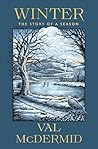
Winter: The Story of a Season
Winter: The Story of a Season by Val McDermid
My rating: 3.75 of 5 stars


Suppose it was my mistake in understanding what this book was about...I thought it would be about nature in winter time. Instead it is more an autobiography of sorts. The author writes about different traditions and festivals in Scotland, but mostly her memories of being a child experiencing these. Also, I did not realize this is an author of thriller, mystery books perhaps well known for those who enjoy this type of genre.

The beginning of the book begins with what McDermid typically does in a new year, preparing to write a new book. Then it backtracks to the Fall with Halloween, and how that was for her growing up in Scotland. How different things were, such as using a neep, or rutabaga, instead of a pumpkin. This becomes a pattern for the festivals and holidays that occur during the winter, with McDermid’s personal recollections. Often those are of her in childhood, but not always. There was a section on comfort food, which for her is soup.

It is decent enough, and I didn’t mind reading about Scottish traditions and her experiences. I just wish I had known that going in. Again, fully my part in not understanding as I sometimes just glance at descriptions not wanting too many spoilers beforehand. The book included some drawings peppered throughout the book. I quite enjoyed those images.


Thanks to Grove Atlantic/Atlantic Monthly Press and NetGalley for an uncorrected electronic advance review copy of this book.

Thursday, October 2, 2025

Review 627: The Duchess of Bloomsbury Street

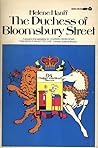
The Duchess of Bloomsbury Street The Duchess of Bloomsbury Street by Helene Hanff
My rating: 4 of 5 stars


This book takes place for roughly six weeks while Helene Hanff finally gets over to London. Her previous book just published and the publishers want to do some publicity with her. Shortly before she left, a slight delay, as she had an emergency operation. This does add complications but she handles it well.

This book is her journal of the trip, starting with the airplane ride.

Since this is the 1970s things are different than today, such as booked two hotel rooms in case one didn't hold the reservation. Or at least that's not how I've been doing things. And as I understand it, I would be liable to pay for both if I cancel one at the last minute, or just don't show up. Anyway, Hanff is very trusting with people. She accepts all sort of invitations, many by friends of friends, but also accepts invitations by fans to go to lunch or something. She is economizing and the more she takes these lunches and dinners the longer she can stay in London.

It's a short book, entertaining but I do prefer her previous book better.

Review 626: 84, Charing Cross Road

84, Charing Cross Road 84, Charing Cross Road by Helene Hanff
My rating: 5 of 5 stars


Re-read this short book recently, enjoyed it the second time around as well.

Liked Helene's humor. Felt like the letters included were curated, like some were missing. Made me wish to have a grand correspondence with an overseas bookseller, and get some of those nice books for such a great price. Haha!

Tuesday, September 16, 2025

Review 620: The Biographer's Tale

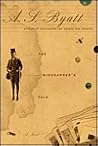
The Biographer's Tale The Biographer's Tale by A.S. Byatt
My rating: 4 of 5 stars


It’s been decades since I read an A.S. Byatt book. I was enamored by her writing in the late 90s, and somehow stopped reading her work. This book reminded me why I do like her writing, and why I don’t as well.

The narrator, Phineas G. Nanues, is a young literary fellow who decided to give up literary criticism as he sees no point in it. Instead he wants to interact with things.

A professor, who then becomes his new advisor, gives him a three-volume biography of Sir Edmund Bole written by Scholes Destry-Scholes. Phineas is enthralled and decides that he will do a biography of Destry-Scholes. He also needs to get a job, and finds himself working for a unique travel agency.

This book is his record of this transition and his searching, and of his life. Destry-Scholes is not an easy man to find, although Phineas is a very good researcher he is unable to come up with information. Slowly, a few pieces come to him and he finds that perhaps Destry-Scholes was working on a biography of some sort of three different men. These papers and findings are included verbatim in the book. This is where sometimes it gets a bit tedious and reminds me why I don’t like Byatt. Too much in the weeds!

As Phineas is writing he says he hates autobiographies, he is not going to write one, yet his record does indeed become that. There are layers in Byatt’s writing. Sometimes I feel not adept enough to catch everything. The layers in just the title and the biography here is a bit obvious, that helps.

I have several more of her books still waiting to be read, and will get to them sometime, hopefully before decades pass.

Tuesday, August 26, 2025

Review 614: Speak, Memory

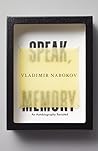
Speak, Memory: An Autobiography Revisited Speak, Memory: An Autobiography Revisited by Vladimir Nabokov
My rating: 5 of 5 stars


Superb writing! The book is composed of essays written over many years, and previously published, yet the come together in one book quite nicely. They were all titled as published essays, but that was not retained in the book, which is a detriment.

The majority of the book covers Nabokov’s years growing up. An amazing amount of detail and description from when he was very young is contained in the first several chapters. He was born in 1899, and a brother soon followed less than a year later. Nabokov had five siblings, after the brother were two sisters and the last another brother. They were a family of the upper class, having a country estate and a house in town. They went abroad quite often.

The book is chronological, with an occasional hint at what is to come, particularly exile. Nabokov doesn’t go into a lot of detail the Russian Revolution, it was a tumultuous time, and his father was in the thick of it. But he does provide some information that I understand slightly better what was happening during the overthrow on the Tsar to the next regime.

Nabokov and his brother were taught by various tutors and learned to read English before he learned Russian. They were of the kind of Russian family that he says is now extinct.
Nabokov loved butterflies, well butterfly collecting, or Lepidoptera as its scientifically known. He started at a young age, and was determined to find a new species while he was still a young school boy. It wasn’t until much later, as an adult, he finally got a named butterfly: Plebejus (Lysandra) cormion Nabokov.

One of the later chapters Nabokov talks briefly about both of his brothers. It was quite moving, as by that point when we was writing both of them had died, and somewhat young. His sisters weren’t discussed. The last chapter ends in 1940 as Nabokov, along with his wife and young son, were granted passage to emigrate to the United States.

I really enjoyed his writing style. I may need to read one of his novels later this year.

Wednesday, July 16, 2025

Review 599: The Wreckage of Eden

The Wreckage of Eden The Wreckage of Eden by Norman Lock
My rating: 4 of 5 stars


I enjoyed the language and writing style of the books in this series: American Novels. This is the 5th book, I have not read all of them, and do not intend to, they are all standalone books. They all evolve around American writers, so far in the 19th Century. This one has Emily Dickinson as a character.

The book is written like it is speaking to Emily, perhaps as a letter to her. Robert Winter, a US Army Chaplain of the Lutheran faith, who is in love with Emily, although he does not say it so plainly. Winter asked Emily to marry him but she refuses, staying put in her Homestead with her Father. Yet they remain good friends, she writing to Winter, and him visiting her whenever he is in Amherst.

While I do like the language, it is not direct at times. It does obscure meaning occasionally, and yet I feel like this matches the time period a little more closely than our language of today.

Despite all that I do like, a large part of the book is taken up with Robert Winter serving as a chaplain in several wars or skirmishes. First it is with the Mexican War, then The Mormon Rebellion, and finally with Harper’s Ferry. The descriptions of some of these war scenes and what is taken by these periods of violence were not pleasant for me. Otherwise this was wonderful.

So what should have been a quick read, as this was not a long book, for me was not. I set it aside often. Although I also was away on a work trip then a vacation but I could have found time for the book if I found it more engaging. Perhaps the book deserves a bit more than my rating of 3.5 stars, so I’m rounding up.

Thursday, May 29, 2025

Review 586: Wild Girls

Wild Girls: How the Outdoors Shaped the Women Who Challenged a Nation Wild Girls: How the Outdoors Shaped the Women Who Challenged a Nation by Tiya Miles
My rating: 3 of 5 stars


This is one of the first two books in a new series called Norton Shorts, by publisher W.W. Norton. They are calling it “Brilliance with Brevity”. Further description “Written by leading-edge scholars, these eye-opening books deliver bold thinking and fresh perspectives in under two hundred pages.”

For this book, and one of the inaugural books for the series, I think it missed the mark. It was short, and I think that was part of the problem with the book. It was even under 150 pages, it needed more length.

The author Miles focused only on a few women and it needed more depth to hold up to that subtitle. I don't think the author proved her thesis. Also, even with these few women it was occasionally a stretch in placing the outdoors with the women, although not for all of them.

The main subjects were: Harriot Tubman, Louisa May Alcott, and Genevieve Healy, Jane Johnson Schoolcraft and Mamie Gavin Fields get a few pages, along with mentions of Sakakawea. Miles also writes extensively about a girls basketball team of Native Americans. It was highly unusual for the time. I do appreciate the author finding some women who may have made a mark during their time, that are not well known. However, I was still wanting more.

The book contained some photos, all in black and white, and the back had an extensive section of notes on sources and quotations. Which then brings the text to 120 pages, yes, very short.


Wednesday, May 21, 2025

Review 583: Henry Thoreau as Remembered by a Young Friend

Henry Thoreau as Remembered by a Young Friend Henry Thoreau as Remembered by a Young Friend by Edward Waldo Emerson
My rating: 4 of 5 stars


This is a somewhat small book recounting the character and person of Henry David Thoreau. The author, Edward Emerson was a child growing up in Concord and knew Thoreau quite well being the son of Ralph Waldo Emerson.

Emerson does not rely solely on his own experiences and memories, he includes other people's remarks about Thoreau. There are also passages of Thoreau’s that were from his diary or other published works. He also has a few poems, or lines of poetry that is sprinkled throughout.

The book was published about 70 years after Thoreau's passing and is a response to those who criticized his character. Some of the townsfolk of Concord at that time thought he was lazy or didn’t do right by his family by spending time wandering around the woods. Emerson here points out how Thoreau was wisely spending his time. He also shows how Thoreau was ahead of his time. If that was noticeable in 1917 he is every more so now another 100 plus years later.


Monday, March 10, 2025

Review 557: Octavia E. Butler: H is for Horse

Octavia E. Butler: H is for Horse Octavia E. Butler: H is for Horse by Chi-ming Yang
My rating: 4.25 of 5 stars


This is a slightly academic biography, not only the author, but also of her early writings as well. Yang dove deep into Butler's archives held at the Huntington Library and have presented here an insight into how Butler's writing grew into the published books. Yang provides summaries on many of Butler’s juvenile writings, as she was writing stories since grade school.

The book is short and presented in 26 chapters, one for each letter of the alphabet, such as the subtitle. It’s a different way of organizing a biography, as it goes forward or backward in time as it fits into the chapter letter.

Any fan of Butler can find something here to appreciate and help to understand the author, and the origin stories of her books.

I listened to the audiobook which was well narrated. My only complaint is that there were references to images I could not see. I may have to seek out a copy just to peek at the images I missed while listening.


Thanks to HighBridge Audio and NetGalley for an advance review audiobook.

Tuesday, February 25, 2025

Review 552: The Colony of Unrequited Dreams

The Colony of Unrequited Dreams The Colony of Unrequited Dreams by Wayne Johnston
My rating: 5 of 5 stars


Very much enjoyed this one. It’s a biography of Joseph Smallwood and Newfoundland, following his career and his dealings with Sheilagh Feilding. They meet in grade school, involved in a pivotal moment for both of them, which also leads to them both not graduating. They meet again a few years later both being reporters for rival newspapers covering the courts. Their relationship, is followed throughout the book, which is of attachment, but not physical.

From what I read on Wikipedia the biography part of Smallwood is accurate. Certainly there is much fiction here, but the aspects of what he did in life is true. Smallwood was ambitious since childhood and kept preserving in a political aspect, or with newspapers. Somehow despite all the energy he would pour into his endeavors they never did succeed immensely, until he landed a role on the radio bringing boosterism of Newfoundland, The Barrelman. In the end, he did achieve what he desired.

This was a long book, there was much here, and it’s the first book of a trilogy. The other two focus on Fielding, which is quite the character. Yet despite my enjoyment of this book just not sure I want to continue on.

Tuesday, September 24, 2024

Review 518: Ambrose Bierce and the Ace of Shoots

Ambrose Bierce and the Ace of Shoots Ambrose Bierce and the Ace of Shoots by Oakley Hall
My rating: 3.5 of 5 stars


Having read quite a bit of Ambrose Bierce’s The Unabridged Devil's Dictionary this title seemed interesting to me. Some years ago, I picked it up at deeply discounted used book sale at my local bookstore, that it was practically free. As my usual method, didn’t know what to expect with this book.

First off, it’s a series of titles and this one is not the first, it’s the fifth. So the main characters are perhaps more developed in earlier books of the series. I expected Ambrose Bierce to be the main character, but he wasn’t. Not sure if it’s that way in the series, or just this book. Instead the narrator is Tom Redmond, a journalist for the newspaper Examiner in San Francisco. Bierce also writes for the newspaper a column called "Prattle". They are friends, Bierce does come up in the story, but he’s more of a side-kick in this book. Of course, this is a fictional Bierce modeled from the real person.

Both are sometimes detectives and for this book they are summoned to a case of a murder. During a parade for the Colonel Studely Wild West Show the colonel himself is shot dead. High on the list of suspects is Oswald “Oz” Bird, train robber and recently out of jail for the shootings in Hungry Valley. His ex-wife Dora Pratt is the Ace of Shoots in the Wild West Show and Studley had taken her under his wing. Bird doesn’t consider the divorce to be valid and so has a vendetta against Studley.

The writing was good. The book has a historical feel as this takes place in 1892. Really liked how each chapter began with an entry out of the Devil’s Dictionary.

While the book was enjoyable enough, it wasn’t something I was floored by and want to search other the other books in the series.


Wednesday, August 14, 2024

Review 506: Bad Animals

Bad Animals Bad Animals by Sarah Braunstein
My rating: 3.5 of 5 stars


A woman working at a library is let go. She loved, absolutely loved working at the library. And with her precious daughter off at college and barely contacting her, the library fulfills her purpose. When suddenly jobless and her husband out of town for an extended period Maeve Cosgrove clings to the library. Going over and over what happened, with that troubled teen. 

Then the famous writer that she had sent many letters to in the hope he would come speak to the library, well he agreed and even wants to write his next book based on one of the patrons. Maeve becomes a liaison between him and the writer. 

The book was okay, read mostly during a vacation.

Thursday, July 25, 2024

Review 500: Sugar and Rum

Sugar and Rum Sugar and Rum by Barry Unsworth
My rating: 3.75 of 5 stars


This novel takes place in Liverpool in the late 1980s, written back then as well. Benson, the main character, is a writer and stuck on his latest book. He walks aimlessly about town and strikes up conversations with just about anyone on subjects that are quite odd to discuss with a stranger. Benson sees metaphors and meanings in things that likely are not there and how this relates to him he talks about with anybody.

Benson also has a consulting business helping out other writers, the fictioneers he calls them. There are passages of these fictional writings that he helps to improve and get them unstuck.
After a while the book settles into almost a plot, after Benson runs into an old army buddy. His service during WWII comes into play with reminiscences and reliving some of the anguish.

The book is very solidly about Liverpool, the past as part of Benson’s book he’s trying to write, and also the present, with the results of years of Thatcherism, the city’s decay, the unemployed and disaffected youths with no prospects.

This book is said to be fairly autobiographical. Perhaps Unsworth had writer’s block for the story he wanted to write (about Liverpool and the slave trade) and instead he ended up writing this one, about his war experiences and helping other’s with their fiction work. I haven’t read any of his work before, but he seems like a writer that know his craft.


Tuesday, June 4, 2024

Review 490: Sixty: A Diary of My Sixty-First Year

Sixty: A Diary of My Sixty-First Year: The Beginning of the End, or the End of the Beginning? Sixty: A Diary of My Sixty-First Year: The Beginning of the End, or the End of the Beginning? by Ian Brown
My rating: 5 of 5 stars


While I’m not there yet, this age will be in my future (baring something catastrophic), so why not read about one man’s experience with living the age of sixty. This diary is more contemplative than what happened each day, although there is that in the book as well.

Ian Brown lives in Toronto working at the Globe and Mail. He keeps active, sometimes biking to work when he’s at home. Near the end of the book I started to wonder how many days does he actually stay at home? He travels quite frequently, and mostly for pleasure, although there is some work related travel, such as a month-long stint at Banff as he leads the literary journalism program for the fifth year.

Of course aging is a recurring topic, as is health issues, and studies that show what declines and what point – generally everything sooner than you think, just the results don’t start showing until later. Other topics he keeps returning to is sex, his family (a given) and money, worrying about enough to retire. But the primary topic seems to be his own death is on the horizon.

It's quite the readable book, and well done, especially for a diary, but it’s not just a diary. It was written and edited with an eye to publication from the start.

Thursday, May 23, 2024

Review 486: In the Country of Women

In the Country of Women In the Country of Women by Susan Straight
My rating: 4 of 5 stars

This autobiography is a different sort than I’ve read before. It is a chronicling of family history, focused on the author’s own personal history for the majority of the book. The book is written for her three daughters, sometimes addressing them directly, even recounting what they did when young. This premise is so personal that it sounds like it wouldn’t be very interesting to read about another person’s family. Yet the author is a skilled writer it was an absorbing read.

Susan Straight grew up in Riverside California and still lives in the same neighborhood. She married her high school boyfriend and members of his extended family lives in the area as well. They are a mixed-race couple, so their backgrounds are quite divergent. Her mother immigrated from Switzerland, while his family were slaves back in the mid-1800s.

The author’s story is mostly from her younger days towards the present, but when it came to the parents, grandparents, and other ancestors is not necessarily linear. There is an abundance of characters in this book, and found it at times difficult to keep track of everyone and how they were related. I ended up giving up in that task, and just went along with the narrative flow.

I enjoyed the book, wished my family had more detailed information like this, so perhaps it made me a bit envious. I listened to the audio book which was well done by the narrator, but had a copy of the print book. This was handy as there are family photographs throughout the book.


Friday, April 12, 2024

Review 478: Animal, Vegetable, Miracle

Animal, Vegetable, Miracle: A Year of Food Life Animal, Vegetable, Miracle: A Year of Food Life by Barbara Kingsolver
My rating: 3.5 of 5 stars


The book was a challenge for me, as it started out strongly in moralizing us Americans how poorly we eat, which may be true, but it's hard to read being constantly chastised. It eased maybe a little as the book went on, or I started to just ignore that part and enjoy reading about how Kingsolver and her family grew their own food and ate locally for a year.

Kingsolver’s husband Steven Hopp owned a farm in the southern Appalachians when they married, but they lived in Tucson, Arizona for many years, visiting the farm during the summer months, growing some food. After some years they decide to move permanently to the farm. Then they came upon the idea of eating locally for a year, with the majority of their food coming from their own farm, which did include some animals like chickens and turkeys.

The book included side bar essays by Steven Hopp and end of chapter small essay by the daughter Camille along with some recipes and examples of meals they would eat.

Certainly the goal of this book is to educate people on how food is grown, and how the monoculture is destroying the land. The book is slightly dated now. Eating local and organic foods are something people are now aware of more than a decade or so ago, right? My local grocery stores have produce labeled grown local and a section for organics that I didn’t see when I was younger, so things are changing, but yes we can do better. I can do better.

Friday, March 1, 2024

Review 469: Dayswork

Dayswork Dayswork by Chris Bachelder
My rating: 3.5 of 5 stars


When I started this book, I was a skeptic, this is an usual style of book. There isn’t a plot really, the sentences on the page are mostly not grouped together into paragraphs, there is a lot of white space.

Many of the sentences are seemingly random bits of information, mainly about Herman Melville’s life, but then can go on tangents.

Also mixed in is the narrator with her family. They are under lock down during the early days, months, of the pandemic. She and her husband, along with their two daughters, are remotely working and going to school. Her husband is a creative writing professor, her job is not mentioned, but seems also to be a writer. She is the one obsessed with researching Melville, sharing much of what she finds with her husband, as he would enjoy it too.

So the book feels like non-fiction, the two writers of Dayswork are married and work in the same fields. They have a child, or children, I don’t know, only that they are parents. The few things I’ve looked up about Melville are true, so it makes me wonder why this is fiction. Perhaps it is easier to invent that pandemic life, the family quirks. But it makes me suspect validity for these interesting facts about these writers: Herman Melville, Nathaniel Hawthorne, Elizabeth Hardwick, and Marilynne Robinson, along with all the others, such as The Biographer.

I did enjoy the book, I would call it an unusual biography of Herman Melville. I have read scantily little of his work, and now feel like attempting Moby Dick. His life was not a happy one, and his family suffered as well. Do I now want to read a real biography of Melville? Yes, a little, perhaps someday.

Tuesday, May 2, 2023

Review 399: L.A. Exile

L.A. Exile: A Guide to Los Angeles Writing 1932-1998 L.A. Exile: A Guide to Los Angeles Writing 1932-1998 edited by Paul Vangelisti with Evan Calbi
My rating: 4 of 5 stars


Generally, collections that feature excerpts from longer works I do not enjoy, but this one is a bit of an exception.

Reading one entry after another with a focus on Los Angeles brings forth some semblance of coherent structure that forms a picture the editors are attempting to portray, that Los Angeles is a place of exile. Not that I agree, although…the size of the place does make it challenging.

The geographic locations of where these writers lived are within the boundaries of the county, not all firmly set within the city limits. It is a sprawling metropolis, where San Francisco is more contained. Why compare to “The City”? Well, the editor does, and it was the most populous city in the state until the 1930s.

One major complaint is the amount of space given to the women writers. Of course, there are fewer in number (5 out of 38), but the space devoted to each woman was quite small too. Each entry is as follows: a picture of where the writer lived, a short biography that typically focused on explaining their time living in L.A., then a selection of their writing. This selection was usually around 7 pages, but for the women it was usually 3.

The quality of the writing was quite good. If you compare the writing of today, it is vastly different than what is found in this book. While the book subtitle states up to 1998, most of the selections are mid-century, and the writers themselves older, generally born around the last decade of the 19th century, into the first few decades of the twentieth. The entries are listed alphabetically by last name, with about half of the writers being unknown to me.

A common theme among the writers was being associated with movies. Often, they came to L.A. to make some money scriptwriting then went back to live where they enjoyed. One writer even mentioned this era of writers were involved with the pictures instead of teaching, which today is where many writers earn their living, with a university. The other grouping are poets, eleven of them (although a couple wrote more than poetry, but that was featured).

A few surprises for me of writers living in the LA area of note: John Steinbeck, Gore Vidal, William Faulkner, F. Scott Fitzgerald, just to name a few. And yes, all were here to write for movies, except Steinbeck who lived through a stipend by his father. Quite a few that are well known were a surprise to me, as I always associated their lives with another location, but most of these writers didn’t stick around. A few did, Upton Sinclair and Thomas Mann did.

One final note, I got this book as a gift many years ago and was reluctant to read it as I mentioned above. Then, the first entry was a difficult starting off point. Maybe it seemed great to the editors, but for me that almost made me not read this book ever. Now that I finished, I’m glad I took the time with it.

Previous Popular Posts