Showing posts with label 700 pages plus. Show all posts

Monday, August 3, 2026

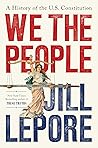
Review 722: We the People

We the People: A History of the U.S. Constitution We the People: A History of the U.S. Constitution by Jill Lepore
My rating: 4 of 5 stars


This was a massive book, detailed and covers two and a half centuries. It took me quite a while to read it, months. But I didn’t read this solely, as I could only manage parts at a time. Further in, I was able to read a full chapter in one session, due to the book progressing in time, until almost to today. These later chapters were closer to when I had more information and become more readable at length.

The book begins with a very close look at how the United States Constitution was created. It took many people throughout the colonies, and many discussions. Each state had to ratify the new constitution, and each had their own desires and amendments. Would amendments be able to be added or not was a discussion. Who presented what to the constitutional congress, what their state desired, and all these minute details were discussed in length. It was very much in the weeds.
After the constitution was adopted, then came the discussion about amendments. As the chapters progressed the amendments would arise around social issues, such as in the later era civil rights or women’s rights, etc.

The book perhaps is a bit like a history book for school. All the minute details about the U.S. Constitution and amendments were more than I really wanted to know. Yet, reading section by section the book seemed good enough to keep going, and ended up being quite a reading project for me. And since this year I wanted to spend time reading about the history of the United States, this book did help to fill in a gap of my knowledge.


Tuesday, August 19, 2025

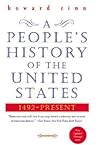
Review 611: A People’s History of the United States: 1492–Present

A People’s History of the United States: 1492–Present A People’s History of the United States: 1492–Present by Howard Zinn
My rating: 4 of 5 stars


A history that needed to be told. A history that about the people who get abused, ignored, discriminated against, and worse. And why we got to where we are today – a dysfunctional political system, dispirited citizens, and blame put in the wrong place.

There is so much that can be said about this book, but I don’t want to write a long essay. Much of the material was not new to me, and maybe won’t be to many others. However, I suspect there is many historical facts that many people do not know. Some of the book was a little confusing, as it generally was linear, but not entirely. For example, while discussing the early 1900s, Zinn would backtrack to a specific incident that took place in the late 1800s. I wish the book was organized better.

Just want to note one specific item mentioned in the book about how few eligible voters actually vote a president. Since the 1900s, generally around 33% of the eligible voters actually vote in the president. While the most recent past two presidential elections turn out has been slightly higher, it hasn’t effectively changed the fact that around a third of the population gets the president they voted for. Which means two-thirds of the country voted for the other candidate or not at all. Dismal.

The version of the book I read ends around 2001, so today it is already over two decades past. There was an earlier version. It appears this book gets updated every couple of years, but usually only with a new introduction or foreword, the overall material isn’t changed.

I listened to the very long audiobook and do not recommended to read the book this way. The author’s son narrated it and he is definitely not a professional narrator. The narration is uneven and awkward in many places. I only got through this by going slowly, and it took me months to get through.

Saturday, April 15, 2023

Review 392: Jamie MacGillivray

Jamie MacGillivray: The Renegade's Journey Jamie MacGillivray: The Renegade's Journey by John Sayles
My rating: 5 of 5 stars

Begins with the Battle in Culloden and ends with the war between France and England in the New World (later called the French Indian War), with so much in-between.

We follow Jamie MacGillivray of Dunmaglas, and Jenny Ferguson of a crofter's home, just a young woman falsely accused of participating in the Jacobite uprising. Jamie, however, isn't quite so innocent but didn't participate in the battle (arriving late), although his older brother led a charge. The two meet just briefly, Jamie giving Jenny his mother's ring thinking he won't survive, but maybe she could use it when in need at some time.

They both get captured and sent to London prison for hanging, then somehow getting a reprieve on a slave ship to the new world. "Serve 7 years and you'll be free, but go back to England and you'll be hanged." Jenny is also sent on a slave ship, but hers end up liberated by a French privateer vessel and becomes a refugee, a free woman in Martinique. Although free she doesn't know anyone, the language nor has any money. Jenny must work, and is given to a French commander, who oversees the cannons on the island.

This is just barely the beginning. It is a long tale, but I don't think anything could have been cut out. It is well done, although I had somewhat of a trial with the Scottish accents printed on the page. After a while, I got used to it and the reading became easier. We also have a lot of untranslated French. My college French days came in handy, but occasionally had to use a translator to ensure I was getting everything being said.

I really enjoyed the way the ending brought around full-circle to what started in Scotland.


Many thanks to Melville House for sending me an advance review copy.


Thursday, November 11, 2021

Review 271: Railroaded: The Transcontinentals and the Making of Modern America

Railroaded: The Transcontinentals and the Making of Modern America Railroaded: The Transcontinentals and the Making of Modern America by Richard White
My rating: 3 of 5 stars


So happy to have finally finished this long, complicated book. I nearly quit reading several times, and did take a long pause here and there through the months, but glad to have persevered and finished reading it.

My rating reflects the convoluted writing style and poor organization of the book. While the topics and major points are made and deserve a full five stars.

This includes: the railroad building that occurred with a fever in the late 1800's were too soon, ahead of demand, extremely poorly done with extensive corruption, and decimated the environment along with the Native Peoples. The extent of the corruption mixed with politics and the economy is amazing. It brought several economic depressions, wiped out the huge buffalo herds and in the end, actually did some social good as well. Railroads were going to be a necessity, but it could have been done in a wholly different manner and the repercussions of this railroad building is still evident today.

I may write more fully my thoughts on this long book, but for now, my initial thoughts on completion just moments ago, will have to leave it here.


June 1, 2021 – Started Reading
June 2, 2021 – 
page 58
 
 8.24% "this will likely take a while....yet not as long as it looks, appendix begins at page 562."
June 4, 2021 – 
page 75
 
 10.65%
June 9, 2021 – 
page 126
 
 17.9%
June 14, 2021 – 
page 151
 
 21.45%
June 17, 2021 – 
page 188
 
 26.7% "on pause for a bit..."
August 2, 2021 – 
page 194
 
 27.56% "picked this back up. started to read it again, albeit slowly"
August 5, 2021 – 
page 220
 
 31.25%
August 6, 2021 – 
page 230
 
 32.67%
August 23, 2021 – 
page 256
 
 36.36%
August 27, 2021 – 
page 302
 
 42.9%
September 1, 2021 – 
page 343
 
 48.72%
September 20, 2021 – 
page 349
 
 49.57%
September 23, 2021 – 
page 441
 
 62.64%
October 19, 2021 – 
page 471
 
 66.9%
October 25, 2021 – 
page 481
 
 68.32%
October 27, 2021 – 
page 517
 
 73.44%
November 1, 2021 – 
page 555
 
 78.84%
November 2, 2021 – 
page 570
 
 80.97%
November 4, 2021 – 
page 591
 
 83.95%
November 8, 2021 – 
page 623
 
 88.49%
November 10, 2021 – 
page 658
 
 93.47% "hoping to finish tomorrow"
November 11, 2021 – Finished Reading

Wednesday, January 15, 2020

Review 99: Deep River

Deep River Deep River by Karl Marlantes
My rating: 4 of 5 stars

Book read: December 9-23, 2019

This was an epic of a book. A long tome covering only one generation of the Koski family, through decades (1890's-1930's) and with some years closely detailed. It is a linear book, without jumping around in time, which I do enjoy in a book.

The first part of the book covers the family while they lived in Finland, already the eldest child, Ilmari, off in America establishing himself and writing letters home. Aino, the middle child, becomes political, radicalized and determined to change her country to independent (from Russia) and Socialist. When she must move to America her goals do not change much. The youngest, Matti leaves Finland before Aino, though she follows not too long later, after being tortured and her boyfriend killed by the Russian who rule Finland.

When the Koski’s siblings leave Finland separately, all are young teenagers. With Ilmari settled, they other two make their way to him. Despite having a farm and blacksmith shop already running, he can’t afford to feed his reunited siblings, so they too must find work. They all end up deeply into the logging industry.

It is astounding at the young age how much these three do, along with their friends, with working in the logging industry in the Pacific Northwest. Askel Langstrom, Matti’s friend also joins the Koski’s after fleeing Finland. He dreams of returning to fishing, while also being a logger. Aino won’t give up her politics, tries to unionize the loggers, and organizes strikes once joined with the International Workers of the World with the goal of One Big Union. As the years roll by they find spouses and love, soon children are born. And there are some that die.

The detail in the book is quite remarkable. The writing is plain and straightforward and there lies the one major downfall of the book. The writing style was a bit flat and sometimes the descriptions were way off from what one may expect. Such as when Aino is an older woman, maybe in her 40s now, and still keeping up with the latest fashion and acting like a school girl, it seemed unlikely given how he never cared what people thought given her politics and personality. And it is with the women that was the weakest depiction, despite one being a main character and viewpoint.

Regardless of the faults I did enjoy this book, and give it a high rating. Perhaps others may be bothered more severely than I with its faults, and given the length of the book be more skeptical.

I read that Marlantes is working on another book, which is continuing the same family, focusing on one adult son of one of the Koski brothers. It may be a while before that book is available given the length of this writer’s books, but I will be willing to continue read the Koski saga.


I will close with quote from Aino, found on page 453: " 'Everyone is equal' is..a myth. It's economic Calvinism. If you're one of the elect, the right parents, the right schools, the right connections, you get into capitalist heaven. The rest are damned at birth."


Final note: I was excited about this book. I did get an advanced review copy from NetGalley. Then at the ALA Annual convention I was so happy when the author was there signing books, so I got that which was still an advance review copy. Well, I meant to read the book right away, but the length was daunting. I was tempted to listen to the audiobook from the library, but again, length. The library where I work bought a hard copy of the book. I checked it out and ended up reading that copy, a hardback book. (wanted to keep my signed copy pristine) It was way too heavy to carry, so I read it at night before sleep until I had a stretch of time during the holidays at home, when I blew through the rest of the book, about two-thirds, in just a few days.
Previous Popular Posts