Showing posts with label Politics. Show all posts

Sunday, September 20, 2026

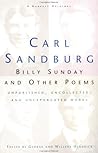
Review 741: Billy Sunday and Other Poems

Billy Sunday and Other PoemsBilly Sunday and Other Poems by Carl Sandburg
My rating: 4.25 of 5 stars


This book of poetry is organized into twelve parts. Nearly all of the included poems were previously unpublished. The title poem was one published before in 1916, but in a revised version and without naming the preacher. Most of the poems were written between 1910 to early 1930s.

The poems are generally easy to read, straightforward without a lot of abstraction. Sandburg wrote so the common person would be able to understand his meaning. And his meaning comes through clearly. He is one of the downtrodden, the working class, the poor. He is a socialist.

His words paint portraits of people. A few describe atrocities, such as WWI and the sinking of the steamship Eastland which resulted in the drowning of hundreds of people, workers and family on their way to a company picnic. There is a section of love poems as well, which are mostly tender or passionate.

I bought this book many years ago, before taking poetry classes in college. I do not remember what brought me to purchase this book of poetry, perhaps it was what just a random purchase of poetry as I did back then. And hard to say why I never picked it up until recently.
Saturday, September 12, 2026

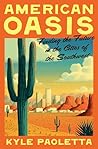
Review 737: American Oasis

American Oasis: Finding the Future in the Cities of the SouthwestAmerican Oasis: Finding the Future in the Cities of the Southwest by Kyle Paoletta
My rating: 2.75 of 5 stars


While the book was okay and I’m glad to have read it, I don’t think the premise of the book held up. The author profiled a few cities in the southwest looking mainly at: Phoenix, Las Vegas, El Paso and Albuquerque, with a few other cities being mentioned. All of these places are hot desert climates, having water issues and in the last several decades huge growth. Some history about these cities were discussed.

Yet, the author described many personal stories of individuals or families that seemingly had nothing to do with the topic, other than they live in that city. The opening described the author’s upbringing in New Mexico. While one story was about a man who lost his hands in 1946 as a boy while playing with explosives. Dealing with his disability ended up giving him some fame. First a newspaper article then later working in movies. Okay, but how does this relate to that particular city and the future? (not to mention this man had moved to another state.) There are many digressions and stories like this. Interesting characters, but not all that relevant.

The last part of the book seemed to regain focus and keep on topic. Water issues are a problem and will be more so in the future. Looking at these desert and drought-prone areas is a good idea for finding solutions for the future. One interesting piece of information was that despite all the growth in Las Vegas, through their water policies the amount of water consumed has stayed at the same level. I just wish the narrative had kept this at the forefront for most of the book.


Thanks to Knopf, Pantheon, Vintage, and Anchor/Pantheon and NetGalley for an uncorrected electronic advance review copy of this book. However, I read and listened to a published copy of the book, as it was published over a year before I finally got to the book. Apologies for the lateness.


Monday, August 3, 2026

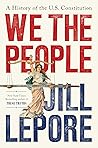
Review 722: We the People

We the People: A History of the U.S. Constitution We the People: A History of the U.S. Constitution by Jill Lepore
My rating: 4 of 5 stars


This was a massive book, detailed and covers two and a half centuries. It took me quite a while to read it, months. But I didn’t read this solely, as I could only manage parts at a time. Further in, I was able to read a full chapter in one session, due to the book progressing in time, until almost to today. These later chapters were closer to when I had more information and become more readable at length.

The book begins with a very close look at how the United States Constitution was created. It took many people throughout the colonies, and many discussions. Each state had to ratify the new constitution, and each had their own desires and amendments. Would amendments be able to be added or not was a discussion. Who presented what to the constitutional congress, what their state desired, and all these minute details were discussed in length. It was very much in the weeds.
After the constitution was adopted, then came the discussion about amendments. As the chapters progressed the amendments would arise around social issues, such as in the later era civil rights or women’s rights, etc.

The book perhaps is a bit like a history book for school. All the minute details about the U.S. Constitution and amendments were more than I really wanted to know. Yet, reading section by section the book seemed good enough to keep going, and ended up being quite a reading project for me. And since this year I wanted to spend time reading about the history of the United States, this book did help to fill in a gap of my knowledge.


Saturday, July 18, 2026

Review 718: The Whiskey Rebels


The Whiskey RebelsThe Whiskey Rebels by David Liss
My rating: 4.25 of 5 stars


Quite enjoyed this historical fiction book. Takes place in the 1780s to early 1790s, while the country is barely begun and still forming itself, particularly with banking. The book also is a bit of a mystery, but not quite either.

There are two main characters, both you cannot help but like despite their faults. Joan Maycott is a woman (gasp) and highly intelligent, the other, Ethan Saunders, being a drunk and falsely accused of being a traitor during the revolutionary war.

Their lives intersect with this banking business and trading of shares. It tended to go on slightly long, and I found some of all that trading got to be too much, otherwise I would have rated the full five stars. I did quite enjoy the humor though, somewhat deadpan humor mostly.

Thursday, July 16, 2026

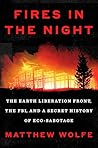
Review 717: Fires in the Night

Fires in the Night: The Earth Liberation Front, the FBI, and a Secret History of Eco-SabotageFires in the Night: The Earth Liberation Front, the FBI, and a Secret History of Eco-Sabotage by Matthew Wolfe
My rating: 4 of 5 stars


The events discussed in this book took place mainly, but not entirely, in the Pacific Northwest by a group of young people called ELF, Earth Liberation Front during the 1990s. The first part of the book is more focused on several of the people involved in setting fires or actions to liberate animals. Law enforcement is peppered throughout the book but is discussed more thoroughly in the later part. The author Wolfe is neutral in this book, doesn’t provide opinions only facts of what happened or balanced, counterposing views. The writing was done well in making this a coherent narrative.

There was a good discussion on how these types of acts have become labeled as (incorrectly) terrorism, also known as eco-terrorism. There was a major shift after Sept.11, 2001 with Bush declaring a war on terror and including these types of groups with increased surveillance and infiltration.

The book was intriguing. These young people were working towards laudable goals, wanted to improve the world, but went about it entirely the wrong way. At least they were always mindful to harm only property, or seemingly help animals, and never purposefully harm people. Yet in the end, they had to ask themselves how much did their actions help in promoting their cause?


Thanks to Viking Penguin and NetGalley for an uncorrected electronic advance review copy of this book.

Tuesday, July 7, 2026

Review 713: Abigail and John

Abigail and John: Portrait of a Marriage Abigail and John: Portrait of a Marriage by Edith B. Gelles
My rating: 5 of 5 stars


Highly enjoyed this biography of Abigail and John Adams. The book perhaps was more of a biography of Abigail than of John.

Both Abigail Smith and John Adams came from pious backgrounds with families well established in America before the revolution. They married while John was 29 and Abigail just 19. And quickly after their marriage their lifelong habit of letter writing began, as John being a lawyer, would travel to the various colonies for work. This also established a pattern for their marriage with John being absent from home much of the time.

Since they were great letter writers and their correspondence survives, even to their numerous relatives and friends, it enables books like this. The book was not so narrow to only discuss their marriage. It is a wider biography which discusses their entire lives. Such as how John became involved with the revolution, and the long years apart while he was in Europe serving the new country while Abigail dealt with living in a revolutionary war zone, while managing a farm. During this time women did not own property or assets, yet to keep the family afloat Abigail bought land and other assets in John’s name. She even started trading goods to keep the family afloat during this time of struggle.

There is a lot of material here in the book. To note, one surprising fact is how their young boys spent many years apart from one parent or another, or often both. The family believed in Duty and their children learned the lesson well. Duty to others came before self. The youngest boy barely knew his father as John was in Europe for much of his life.

It was noticeable the author’s opinion that John Adams was not a monarchist, as many of his detractors, and historians state. She proves this several times in the book. This being the only book about him I’ve read, I cannot say, but she makes a convincing argument.

Their lives are quite detailed, until we get to the post-presidency of John Adams and near the end of their lives. Other than discussing the renewed friendship with Thomas Jefferson, the latter era is glossed over. Now I would like to read a biography of their eldest son John Quincy Adams, he had an unusual childhood.

I had this book for many years, not sure why I waited so long to read it. This year of a focus on American history finally gave me the impetus needed.


Thursday, April 2, 2026

Review 680: Unbearable

Unbearable: Five Women and the Perils of Pregnancy in America Unbearable: Five Women and the Perils of Pregnancy in America by Irin Carmon
My rating: 4 of 5 stars


This book looks at being pregnant in the United States post revoking Roe v. Wade, where abortion is now nearly impossible in many states. Unfortunately, some state laws are going even further, which give more consideration to unborn, even when the woman's life is endanger.

The focus in this book is not about women being forced to carry to term babies they did not want. Instead it is about how these changing laws give preference to the babies in gestation over the mother’s health.

The book follows five women throughout multiple pregnancies and how the laws and being pregnant has effected each of them. Unfortunately, there is also a huge divide of care based on color of skin, and wealth (of course).

The book is shocking and appalling, to say the least. For these women profiled, and women in similar locations and situations, their life is endangered every time they get pregnant.

The book is too heavily centered on Alabama and New York City. It may have done better to expand to a couple other areas in the country.

Friday, September 5, 2025

Review 618: Where the Axe Is Buried

Where the Axe Is Buried Where the Axe Is Buried by Ray Nayler
My rating: 4 of 5 stars


I zipped through this book, hard a hard time putting it down. It’s a science-fiction, political, dystopian, techno book, taking place in the future (far?). A bit confusing through the first part of the book, different POVs and different technologies. At first I just wanted to get beyond the confusing part. Then I was sucked in.

This is a future where everything and everyone is watched constantly. In the free west it is for advertising purposes, in the totalitarian states it is to ensure the people are controlled. Many countries are run by A.I. Prime Ministers, and The Federation is run by a president whose consciousness gets transferred to new bodies one the old ones deteriorate. Then there are the dissidents. The book is mostly about the dissidents.

The book is a commentary on totalitarianism and artificial intelligence. Starts out with a very gloomy outlook but ends with hope and possibility.

Monday, June 9, 2025

Review 590: Nellie Taft

Nellie Taft: The Unconventional First Lady of the Ragtime Era Nellie Taft: The Unconventional First Lady of the Ragtime Era by Carl Sferrazza Anthony
My rating: 5 of 5 stars


Very much enjoyed this biography of Nellie Taft, named Helen Louise Heron, but always went by Nellie. I liked the writing style and how the information was presented, linear, and perfect for this type of biography.

While young she decided she wanted to marry a man who would be president and in William Taft she found her man, even though his ambition was to be on the Supreme Court. Well, he managed both.

Nellie was quite the woman, her own mind and did a lot of "firsts" as a president's wife. If alive today she likely would have run for president instead of her husband.

I would like to say more, but this is all I can manage at this moment. Oh, except to add she is responsible for all the Japanese Cherry Trees in Washington, D.C.

Wednesday, April 30, 2025

Review 576: The Red Umbrella

The Red Umbrella The Red Umbrella by Christina Diaz Gonzalez
My rating: 2 of 5 stars

This is another freebie book from Sync some years back (2017). I did not finish the book. I listened to just under 14%, which equals to around 40 pages, not too far into the book, but I wasn’t enjoying it.

The writing is very simplistic, which this is billed as young adult sometimes it can be overlooked. I read a few reviews, both those who liked it and those who did not, and decided my reading time would be better spent with a different book and leaving this one. (I’m not good at letting a book go.)

The book starts in early May 1961. The book point of view is from a young teenager, Lucia Alvarez, her quinceanera is coming up in November. She comes from an upper-middle class family, her father is a banker. Lucia and her family are Cuban and this is during the time that Fidel Castro takes over the government.

The title of the book comes from the (embarrassingly) red umbrella Lucia’s mother carries with her all the time.


Wednesday, February 5, 2025

Review 547: Beyond the White House

Beyond the White House: Waging Peace, Fighting Disease, Building Hope Beyond the White House: Waging Peace, Fighting Disease, Building Hope by Jimmy Carter
My rating: 5 of 5 stars


With the recent passing of former President Jimmy Carter I figured it was a good time to read one of the books I’ve had sitting on my shelf for awhile unread. This book was a good introduction to the work Carter and his wife Rosaylnn has been doing through the past several decades, and it is remarkable work.

The first chapter is a bit of an eye opener at the state of the Carter’s affairs after leaving the President’s office. They had to remove themselves from his farming business during his term and what had been a lucrative business free of debt was now over $1million dollars in debt. So he was broke. Plus needed to raise funds for a Presidential library, and left the office as an unpopular person. He decided to not use his experience for an monetary gain, but instead to be benevolent or work in some non-profit way. This became the impetus for starting The Carter Center.

The Carter Center has several aims and goals, which basically come down to improving people’s lives, particularly in impoverished areas. The book covers some of the work they have been involved in since the founding of the center. It’s quite impressive.

The list is long: such as being mediators in war zone areas, preventing or stopping wars, overseeing and helping democracy in areas previously run by dictators, trying to eradicate the overlooked diseases in poor nations, not to mention human rights, women’s equality and much more. Due to the amount of work and the many different countries Carter has worked in, the book feels more like a summary instead of a detailed account.

Or course, this work was not done by Jimmy Carter alone. There were many people that helped, interns at the Center, doctors that lead the charge in helping with the diseases, and partnering with Emory University. But his name and position has helped tremendously in some areas and places, allowing him access where others would be denied, or it would take much longer to get to a point of talking with other leaders.

An informative book about a remarkable man. Too bad more ex-Presidents would take his lead as an example of what that clout can do. Thankfully Carter had a long life and was able to make a lasting change in many people’s lives.

Tuesday, November 19, 2024

Review 530: Defending Giants

Defending Giants: The Redwood Wars and the Transformation of American Environmental Politics Defending Giants: The Redwood Wars and the Transformation of American Environmental Politics by Darren Frederick Speece
My rating: 4.25 of 5 stars


This is an in-depth look at the fight to save old growth redwoods on the California northern coast that are now known as the Redwood Wars. The redwood tree is known by several names, scientifically as Sequoia sempervirens, colloquially as coastal redwoods, California redwoods, or just plain redwoods. Their preferred habitat today is along the coast of Northern California reaching into Oregon. The old-growth trees that were at the heart of the redwood wars are forests and these giant trees which can live for two-thousand years.

With the narrow range of where these trees can grow, which like coastal fog, the 1.3 million acres of area from pre-Columbus days are now down to just 5% of the land. And to save that five percent was a hard fought battle that this book describes.

The main company involved is Pacific Lumber. It was founded in 1863 and was a family company that grew to be one of the largest in the area. The company policy in cutting trees was in a fairly sustainable manner with looking towards long term and generally did not clear-cut groves of tree stands. They were more selective.

Unfortunately, it didn’t stay that way. In 1985 the company was taken over by Maxxam Corporation run by Charles Hurwitz, who was known as a corporate raider and used the Michael Milken junk bonds. (see savings and loan crisis of the 1980s.) This is when the old-growth redwoods became extremely endangered. The plan by Maxxam was to reduce the inventory, i.e. trees standing, in order to increase profits as quickly as possible and clear-cutting began.

In order to make this shorter, let’s just say that didn’t happen, not entirely anyway. The book is detailed in explaining all the various steps and stages that took place during these years. There were many, many lawsuits, activists protests and actions all to raise awareness and save the last standing redwoods from being cut down. Environmental groups, forest plans and government agencies, along with the main environmental leaders are heavily features in the book. Several women took major roles as leaders, which needs to be acknowledged since the corporations, forest service and government were all men.

There aren't any close biographies of people involved, only cursory. Although the car bombing in 1990 of two prominent activists, Judi Bari and Darryl Cherny, does come up several times. It was a major point in the Redwood Wars.

The book is somewhat academic. Darren Speece wrote his PhD thesis on this topic being nearly the same length of this book. Certainly that was transformed into this book. The book comes with extensive section of notes (46 pages), Selected Bibliography (8 pages) and a very long index that is 31 pages.

Saturday, December 9, 2023

Review 448: Timber Wars

Timber Wars Timber Wars by Judi Bari
My rating: 4 of 5 stars


Judi Bari was an activist for saving old growth redwoods. She worked within the group Earth First! and helped to organize non-violent actions and protests to save the forests from the continuing of clear-cut practices. Of course, doing this caused a ruckus and as a result she was bombed. This bomb was a small personal bomb placed underneath her car seat, and it’s surprising she even survived. She nearly didn’t. Instead, she had a painful recovery and permanent disability afterwards.

What becomes more amazing is the first instinct for the FBI is that she and her passenger Darryl Cherney must have been transporting the bomb for nefarious activity and so arrested them, while still in the hospital for the bombing. After not enough evidence was ever discovered to charge them, the case was dropped against Bari and Cherney. However, neither the FBI nor the Oakland Police, where the bombing occurred, seriously looked into who may have actually done this.

Through the Freedom of Information Act Bari was able to get hold of her FBI files and they showed that the FBI used this bombing to investigate all the environmental activists they could. Digging into phone records they also looked into anyone who may have been contacted, which included family members. It is utterly surprising there was no serious investigation into who actually committed the crime.

So, this book is a compilation of articles Bari wrote, mostly newspaper articles, along with a few interviews with the media. The focus is quite often on the bombing. It does get to be repetitive with the same information going over time and again, but I don’t blame Bari, if I was bombed, I’d be talking about it every chance I got, especially when nothing was being done to find the culprit.

The articles are in chronological order, from October 1989 to the last in February 1994 as a lengthy article that appeared in Earth First Journal covering specific details on the bombing and investigation, which included several photos. The most mainstream publication Bari had an article published was with Ms. Magazine, where she focused on feminism and bringing that to environmental activism.

The thrust of the book is about the car bombing and Bari suggests a few culprits, starting with the FBI as the prime suspect. She also discusses evidence that the officials never investigated, such as a letter sent to the local newspaper that took responsibility for the bomb and included details about it that was not public knowledge. This letter also matched another that was sent by someone Bari knew which told the Oakland police he would be an informant against Bari.

Anyway, the book goes into these details, and more, many times. Also included is the local organizing and demonstrations against the corporate companies that were doing the clear-cutting. Bari makes it clear she was for the loggers, the individuals who lived in the area, but was against the destroying of the forest and the jobs for these loggers. Without using the word sustainable, this is what she was striving for, sustainable logging. Then loggers would have employment and people would have the wood they need.

It's a fascinating history, and the work Bari, Earth First!, and other activists did stopped the logging and saved the final areas of old growth redwoods. In the late 1980s there was only 5% left in the world still standing and the corporations wanted to take that too. Today they are still there. A paltry 120,000 acres, but at least it is still there.

Monday, January 23, 2023

Review 371: Common Sense

Common Sense Common Sense by Thomas Paine
My rating: 5 of 5 stars


This is a short book of essays, that I listened to entirely in one day. 

A complete dig at a monarch system of government and for independence and self-rule. 


I've wanted to read some of Paine's writings for a long while, other than the excerpts I read while in college. Maybe more of his writings later this year. Next is a biography.


Read in one day: January 23, 2023

Thursday, January 19, 2023

Review 368: The Deluge

The Deluge The Deluge by Stephen Markley
My rating: 4 of 5 stars


A deluge of words and pages, later becomes a deluge of rain and flood waters then finally a deluge of people.  

This is an impressive book, it takes us from current time into the near future, incrementally year by year. It gives us a horrifying look at what climate change might look like, and US politics. 

There are a large cast of characters, in the beginning of the book they each get their own chapter, with some depth, that it feels like you are untethered. But later they do start to intertwine and recur with subsequent chapters. There are some unusual aspects to the book; one character’s chapters always contain side boxes with extra information, there are some articles interspersed, and occasionally a full page with headlines and snippets.

While I am impressed with the scope of breadth of this book, part of me thinks it is too much too soon. Many of these events take place ten to fifteen years from now and seem too extreme for possibility (or at least that’s my hope!). The book is overwhelming, impressive, and frightening. 
Certainly, the author is hoping this epic book will serve as a warning. Perhaps one take away from the book is that one person can make a difference, as we see several versions of that here. 


Thank you to Simon and Schuster for an advance print copy of the book. 


Initial thoughts: I need a breather after this one.

Yet, I didn't wait to start a new book....only a few hours later began something new.

Saturday, July 2, 2022

Review 331: TV

TV TV by Susan Bordo
My rating: 4 of 5 stars


Another book in the Object Lessons series that focuses on a single object, in this case television. The authors of the series can take this wherever they like, and in this case, the focus was on how TV has changed through the years. Bordo says she grew up as television did.

American values are presented in fictional shows and news programs, as the grounding of this book. It also is one of the only book about television that doesn't discuss sports (the author dislikes it). The book is is based in feminism and political critiques. I loved Bordo's writing style! And even if I didn't watch most of the tv shows covered in the book, enough details were provided to understand her points.

A good entry in the series.

Read June 29 to July 01, 2022

Wednesday, February 23, 2022

Review 301: Bound for Canaan

Bound for Canaan: The Epic Story of the Underground Railroad, America's First Civil Rights Movement Bound for Canaan: The Epic Story of the Underground Railroad, America's First Civil Rights Movement by Fergus M. Bordewich
My rating: 5 of 5 stars


Definitely an Epic Story! Well researched and well written history all about underground railroad from the early beginnings and until it dismantled with the start of the Civil War. This wasn't a fast read by any means, took me almost an entire month, but it was fascinating and gripping at moments.

Interesting fact: the underground railroad predates railroads in the country. Once the railroad (steel and metal kind) became something used as transportation the language became tied to the movement of helping people escape and find their way to freedom, often in Canada.

I'm so glad I read this book as my understanding was vague before, knowing the general gist of this transformative movement along with a few of the key people. The book covers many of the people who were significant in helping develop networks to help people find freedom and yet are lesser known. This was an excellent book to learn about this awful time in American history.

Friday, November 19, 2021

Review 274: Holdout

Holdout Holdout by Jeffrey Kluger
My rating: 3 of 5 stars


Not quite the science fiction book I was expecting, had more politics thrown in, but it mostly kept my interest. 

This isn’t solely a science fiction book that takes place in space. Instead, it ties space, specifically the International Space Station (ISS) to Earth. Walli Beckworth, an American astronaut and two Russian cosmonauts are on the ISS when a supply mission goes wrong. They narrowly avoid catastrophe, but the small impact created some problems especially for the three humans. The protocol is to abandon the space station and at the last minute Walli doesn’t board the shuttle stating she “Prefers not to.” Thus, begins her time as the “holdout” and the reason the world soon learns is to protest over the burning of the Amazon forests, destroying the ecosystem and native peoples of Brazil. Walli not only has the environmental concern in mind but also her niece who is more like a daughter, caught up in the middle of the fires as she is there as an aide worker. She asks the United States to intervene, which coincidentally a vote is scheduled just a few days away.

We have many viewpoints in this story, ranging from the presidents of Brazil and the United States, political figures, Russians, and of course, Walli and her niece. The politics and protests take up most of the book, but there are a few “space” moments when the space station is in peril and Walli has to do a space walk which she wasn’t trained for and is unheard of doing this all alone. Also, what happens when the Russian shut down part of their modules.

I didn’t feel very tied to Walli or her story, or really to any character in the novel. There were so many views presented that the story didn’t feel solid in any one way. I had hopes for more of a space story than a political one. This book has the feel like The Martian but it didn't reach quite that far, not enough character development of Walli and too much on the ground to balance out.


Thanks to Dutton/Penguin Group and NetGalley for an uncorrected electronic advance review copy of this book.

Thursday, November 11, 2021

Review 271: Railroaded: The Transcontinentals and the Making of Modern America

Railroaded: The Transcontinentals and the Making of Modern America Railroaded: The Transcontinentals and the Making of Modern America by Richard White
My rating: 3 of 5 stars


So happy to have finally finished this long, complicated book. I nearly quit reading several times, and did take a long pause here and there through the months, but glad to have persevered and finished reading it.

My rating reflects the convoluted writing style and poor organization of the book. While the topics and major points are made and deserve a full five stars.

This includes: the railroad building that occurred with a fever in the late 1800's were too soon, ahead of demand, extremely poorly done with extensive corruption, and decimated the environment along with the Native Peoples. The extent of the corruption mixed with politics and the economy is amazing. It brought several economic depressions, wiped out the huge buffalo herds and in the end, actually did some social good as well. Railroads were going to be a necessity, but it could have been done in a wholly different manner and the repercussions of this railroad building is still evident today.

I may write more fully my thoughts on this long book, but for now, my initial thoughts on completion just moments ago, will have to leave it here.


June 1, 2021 – Started Reading
June 2, 2021 – 
page 58
 
 8.24% "this will likely take a while....yet not as long as it looks, appendix begins at page 562."
June 4, 2021 – 
page 75
 
 10.65%
June 9, 2021 – 
page 126
 
 17.9%
June 14, 2021 – 
page 151
 
 21.45%
June 17, 2021 – 
page 188
 
 26.7% "on pause for a bit..."
August 2, 2021 – 
page 194
 
 27.56% "picked this back up. started to read it again, albeit slowly"
August 5, 2021 – 
page 220
 
 31.25%
August 6, 2021 – 
page 230
 
 32.67%
August 23, 2021 – 
page 256
 
 36.36%
August 27, 2021 – 
page 302
 
 42.9%
September 1, 2021 – 
page 343
 
 48.72%
September 20, 2021 – 
page 349
 
 49.57%
September 23, 2021 – 
page 441
 
 62.64%
October 19, 2021 – 
page 471
 
 66.9%
October 25, 2021 – 
page 481
 
 68.32%
October 27, 2021 – 
page 517
 
 73.44%
November 1, 2021 – 
page 555
 
 78.84%
November 2, 2021 – 
page 570
 
 80.97%
November 4, 2021 – 
page 591
 
 83.95%
November 8, 2021 – 
page 623
 
 88.49%
November 10, 2021 – 
page 658
 
 93.47% "hoping to finish tomorrow"
November 11, 2021 – Finished Reading

Monday, October 18, 2021

Review 261: The Senator's Children

The Senator's Children The Senator's Children by Nicholas Montemarano
My rating: 3 of 5 stars


Silly me, I thought this book was going to be about a kidnapping, or some thriller, mystery or crime. Well, a social crime was committed, adultery and a child born out of that. It ruined the Senator’s chance at becoming president.

A book about a senator running for president in the early 1990s, gets into an affair, which ruins his election. A child is born of this affair. In 1984 his wife and son get into a car accident, the child dies. It propelled his election becoming a senator. The focus is more on Avery, the elicit child than Betsy, the one from marriage. 

The book is about the children, who are three, as well as the wife, Danielle. David Christie is the Senator. He has two children by his wife. When Betsy was young maybe four or five her mom has a car accident, and her brother Nick dies. Nick is a young teen or preteen. Later Danielle becomes sick with cancer, and this is while David is running for president. Somehow during this time he ends up having an affair. One wonders her motives, we never find them out, but she obviously did things in hopes of being caught. She ended up having someone take her picture with the Senator thus revealing the affair. 

Also want to note there were a few moments of oddness, I guess that’s what to call it, how a character dealt with things. Such as Betsy she would close her eyes tight and try to feel the light that would be her brother, a feeling would come over her. 

The time line isn't straight forward, but dates are given for each chapter. Fairly lukewarm about this book. Not what I expected.


PS: I read a reviewer say this book was modelled after John Edwards. I didn't realize this while reading.

Previous Popular Posts