Showing posts with label early America. Show all posts

Wednesday, September 16, 2026

Review 739: The Hemingses of Monticello


The Hemingses of Monticello: An American FamilyThe Hemingses of Monticello: An American Family by Annette Gordon-Reed
My rating: 5 of 5 stars


An incredibly detailed account of the Hemings family. Gordon-Reed places the Hemingses in the center of the narrative, how it was for them to live enslaved and without control over their life. Yet, with Thomas Jefferson some of the family had a greater degree of autonomy, they were treated better than the rest of his slaves. They were “privileged” within the slave community. Several generations of Hemings were from white masters and black slaves. Two of Jefferson’s offspring by Sally went on to live a life as a white person. All of their children were set free, eventually. It’s hard to imagine the mores of that time and place, that this was acceptable behavior.

Jefferson was careful in what was kept by his letters and writings. He tried to shape his historical image. Even at the time it was a scandal between himself and Sally, and still nothing was confirmed. Yet there are still facts, and of course now DNA evidence. He is quite the enigma.

Saturday, July 18, 2026

Review 718: The Whiskey Rebels


The Whiskey RebelsThe Whiskey Rebels by David Liss
My rating: 4.25 of 5 stars


Quite enjoyed this historical fiction book. Takes place in the 1780s to early 1790s, while the country is barely begun and still forming itself, particularly with banking. The book also is a bit of a mystery, but not quite either.

There are two main characters, both you cannot help but like despite their faults. Joan Maycott is a woman (gasp) and highly intelligent, the other, Ethan Saunders, being a drunk and falsely accused of being a traitor during the revolutionary war.

Their lives intersect with this banking business and trading of shares. It tended to go on slightly long, and I found some of all that trading got to be too much, otherwise I would have rated the full five stars. I did quite enjoy the humor though, somewhat deadpan humor mostly.

Tuesday, July 7, 2026

Review 713: Abigail and John

Abigail and John: Portrait of a Marriage Abigail and John: Portrait of a Marriage by Edith B. Gelles
My rating: 5 of 5 stars


Highly enjoyed this biography of Abigail and John Adams. The book perhaps was more of a biography of Abigail than of John.

Both Abigail Smith and John Adams came from pious backgrounds with families well established in America before the revolution. They married while John was 29 and Abigail just 19. And quickly after their marriage their lifelong habit of letter writing began, as John being a lawyer, would travel to the various colonies for work. This also established a pattern for their marriage with John being absent from home much of the time.

Since they were great letter writers and their correspondence survives, even to their numerous relatives and friends, it enables books like this. The book was not so narrow to only discuss their marriage. It is a wider biography which discusses their entire lives. Such as how John became involved with the revolution, and the long years apart while he was in Europe serving the new country while Abigail dealt with living in a revolutionary war zone, while managing a farm. During this time women did not own property or assets, yet to keep the family afloat Abigail bought land and other assets in John’s name. She even started trading goods to keep the family afloat during this time of struggle.

There is a lot of material here in the book. To note, one surprising fact is how their young boys spent many years apart from one parent or another, or often both. The family believed in Duty and their children learned the lesson well. Duty to others came before self. The youngest boy barely knew his father as John was in Europe for much of his life.

It was noticeable the author’s opinion that John Adams was not a monarchist, as many of his detractors, and historians state. She proves this several times in the book. This being the only book about him I’ve read, I cannot say, but she makes a convincing argument.

Their lives are quite detailed, until we get to the post-presidency of John Adams and near the end of their lives. Other than discussing the renewed friendship with Thomas Jefferson, the latter era is glossed over. Now I would like to read a biography of their eldest son John Quincy Adams, he had an unusual childhood.

I had this book for many years, not sure why I waited so long to read it. This year of a focus on American history finally gave me the impetus needed.


Tuesday, May 19, 2026

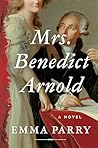
Review 694: Mrs. Benedict Arnold

Mrs. Benedict Arnold Mrs. Benedict Arnold by Emma Parry
My rating: 2.75 of 5 stars


Continuing my desire for American history reading this year this book looked interesting, although it is fictionalized history. What I came away with was – I should have stuck with non-fiction.

In this book Peggy Shippen is a teenager wanting new dresses and looking forward to parties and gawking at the men. She is also smart and intelligent but that seems to take a back seat for a good portion of the book. I almost quit the book several times.

I soldiered on and when Peggy meets Benedict Arnold she is taken by him quickly and very soon they are married. The book becomes less fluffy at this point. Yet the modern language and actions started to really annoy me.

According to this book Peggy Arnold had to convince Benedict to become the traitor he become. Throughout the book Peggy laments the war, wanting it to end, and when their son is born her desire for it to end skyrockets. Thus she believed in these actions to end the war sooner than later, although for the British. Peggy didn’t seem to be much of a patriot anyway.


Thanks to Zando and NetGalley for an uncorrected electronic advance review copy of this book. However, I listened to a published audiobook copy of the book.

Friday, May 15, 2026

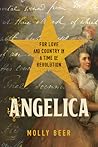
Review 692: Angelica

Angelica: For Love and Country in a Time of Revolution Angelica: For Love and Country in a Time of Revolution by Molly Beer
My rating: 4 of 5 stars


This year one of my reading goals was to include more history, particularly early American history. I also wouldn’t mind to read about the women involved, and this book fit that category nicely.

Angelica Schuyler Church should be a more well known figure from the revolutionary time particularly coming from a prominent family, except women were expected to be primarily caretakers of the family, mothers and daughters. At a time when the new country was writing a constitution, some women advocated for women to not be overlooked, to be included in having a voice, but that did not happen. Instead women continued to experience the tyranny of the husband and father.

At age 20 Angelica wanted to marry John Barker Church who went by John Carter, but could not get her parents approval. Her father, General Schuyler was busy with war efforts, Carter spent ten weeks with him and still could not gain the approval. Angelica made her own “democratic vote” and eloped. Her parents were embarrassed. Yet, they remained together and the couple ended up having eight children.

Most of the book is about the history of the time, and following the timeline of Angelica’s life until she died in 1814. In 1783 the Church’s went to France as John was the U.S. envoy to France. A few years later John bought property in England and served as a member of the British Parliament until 1796. Meanwhile Angelica went to New York in 1789 to witness the swearing in of the first United States President George Washington. In 1799 they returned to America permanently and founded a town in New York and called it Angelica.

Angelica’s brother-in-law was Alexander Hamilton and she was friends with Thomas Jefferson and other important figures at the time. Without getting much longer in this, the book often veers to the history and other people. There are details of life during these years, such as how the price of butter and other goods were affected by the war. The research done is incredible. The author was born in Angelica, New York and likely was her inspiration for book.


Friday, April 10, 2026

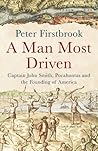
Review 683: A Man Most Driven

A Man Most Driven: Captain John Smith, Pocahontas and the Founding of America A Man Most Driven: Captain John Smith, Pocahontas and the Founding of America by Peter Firstbrook
My rating: 5 of 5 stars


I thoroughly enjoyed this biography of Captain John Smith. He led an amazing life, particularly for one who began life as a farmer’s son. His family had some means, as they had a servant and help with the farm, and Smith was sent to school, when poorer families needed the help at home. Early on Smith was interested in having “brave adventurers”.

The experiences of John Smith, particularly with establishing Jamestown in 1606 came from his writings. Smith wrote his own biography and several different accounts of what happened in Jamestown during his life. To go over all of the mishaps and many ways Smith narrowly avoided death would take too long.

Early on in his life he sought his adventurers by joining to fight against the Spanish in 1597, then a few years later trying to become a crusader fighting against the Turks. Not being Catholic only slightly dampened those “adventures” as he was involved in plenty of fighting. Enough to where the Prince of Transylvania awarded him a coat of arms and a small pension and rank of Captain. After being captured and enslaved, killing his master and escaping, Smith decided his adventures on the continent was enough.

Yet back in England he was not content to manage the farm, so he used his contacts in London to join the Virginia Company of London, or London Company and went to the new world in 1607. A good portion of the book is about this time, as it is very significant. Yet this is already getting long.

One of the aspects that I appreciated with this book is the author goes to lengths to determine if what Smith had reportedly done actually happened. Smith perhaps embellished and a braggart about his accomplishments and experiences.

This was a well written book. I started reading the print book, then realized I had bought an audiobook as well, and listened to a good portion of the book as well, as the narrator did an excellent job. However, there was material in the print copy you cannot get in audio with a few maps and images throughout.

Many things can be said about Captain John Smith, and one for certain is without him, Jamestown settlement would not have survived. He was crucial for the success of the first English settlement in the New World.


This will be one of my top reads for the year. 

Friday, February 27, 2026

Review 669: Inventing a Nation

Inventing a Nation: Washington, Adams, Jefferson Inventing a Nation: Washington, Adams, Jefferson by Gore Vidal
My rating: 2.75 of 5 stars


This year, the 250th anniversary of my county’s beginning, I want to read a few history books, particularly of the beginning era, starting with what I already have on my bookshelves. I know the basics, but the specifics have been left far behind in my school years. And despite where the country is right now (and how much I want to leave it right now), knowing history can’t be a bad idea.

But starting here may have been a bad choice. Gore Vidal did not write this book in a cohesive manner. The book was meandering and very much not linear, which caused much confusion for me. Since I’m only vaguely aware of the history this book discusses I didn’t gain very much, just bits and pieces here and there. One more familiar with the topic may get more out of it than me. Generally it describes the beginning of the nation and some contributions by three major figures of George Washington, John Adams and Thomas Jefferson. There are many asides and off-topic discussions though.

One can tell this was written shortly after the September 11th tragedy, as Vidal refers to the aftermath a few times. It is that lens of where the country was this book was written.

Book rating: 2.75 stars


Friday, August 1, 2025

Review 606: Martha Peake: A Novel of the Revolution

Martha Peake: A Novel of the Revolution Martha Peake: A Novel of the Revolution by Patrick McGrath
My rating: 2 of 5 stars


Found myself disappointed by this book, as it turned out to be something different than I expected. So maybe I should be disappointed in myself for misunderstanding what I was about to read.

Well, it seemed that despite the subtitle stating “A Novel of the Revolution”, that was not the main focus of the book. Instead it focused heavily on Harry Peake, Martha’s father. Oh, yes, Martha was there in the book but not as much as Harry.

Throughout the book, the story telling is overly dramatic. Then, a good way in the book, out of nowhere, this ghost type scenario appears. Strange sounds coming around in this old manor house and being told no one else was there.

After finishing the book I found out the author is known for his gothic tales. Someone more familiar with the author’s writing then would not be surprised. I bought this book a couple of decades ago, but I certainly wouldn't have done so if I knew about that aspect. My interest was in a woman becoming a hero of the revolution, which does come up in the book, but not until the near end.

I kept going with this to the end, mostly to see how it would all turn out. There is a bit of a twist, or surprise at the end. Not sure it was worth it sticking with the book. Certainly this book would work better for people who like gothic horror, or know what the book is about beforehand.


Thursday, April 3, 2025

Review 563: The Ride

The Ride: Paul Revere and the Night That Saved America The Ride: Paul Revere and the Night That Saved America by Kostya Kennedy
My rating: 4 of 5 stars


This is a short biography and history about a famous transformative night, the ride that changed everything. Paul Revere was not alone on April 18, 1775 riding out to warn that an attack was imminent by the British soldiers, but his story is the one that best known. Revere’s ride was also the most effective, where William Dawes was a bit slower, or maybe not as personable as Revere.

The book provides a small amount of biography of Paul Revere. He was named after his father who was also Paul Revere, after he changed from his French name Apollos Rivoire. Revere was a bell ringer in 1750, a teenager then and pledged himself along with several other boys to always ring the bells at Old North Church at least one evening a week for a year.

Revere was given to joining societies and at twenty-five joined the Masons, the St. Andrew’s Lodge which was formed in dissent to the elite St. John’s Lodge whose members were mostly loyal to the Crown. This group of men grew close friendships through the years and tended toward rebellion and independence through the 1760s. It was through this group that Paul Revere became the man who rode the horse on that fateful night.

It felt momentous to read this as we approach the 250 year anniversary. While I knew about Paul Revere and his ride, as we are taught as children, this book filled in many details of the man and the night. The book is somewhat narrow, but not exclusively focused on the ride. I enjoyed learning a tidbit about his many generations later descendants who have been named Paul Revere and are carrying it through the years, with the youngest now being the 4th, although the Patriot Paul Revere is his six-times great-grandfather.


I listened to this book on audio, but did not particularly enjoy the narrator. The way he had of speaking is not a style that I liked, almost like shouting but not loudly. Perhaps it is a just a quirk of mine and others will have no problem with the narrator.


Thanks to St. Martin's Press, Macmillian Audio and NetGalley for an uncorrected electronic advance review copy of this book.


Thursday, October 26, 2023

Review 434: The Rebellion of Jane Clarke

The Rebellion of Jane Clarke The Rebellion of Jane Clarke by Sally Cabot Gunning
My rating: 5 of 5 stars


Really enjoyed this book! It's set in 1769 in Boston and a small town nearby where Jane Clarke grew up. She's now a young adult tending to the sick learning from a village woman, when her father wants Jane to marry Phinnie Paine. Jane, however, says no to Paine's proposal. This infuriates her father, and he sends her off to Boston to tend to her elderly aunt who is ill.

While in Boston Jane hopes to see more of her older brother and finds that tending to her aunt's illness is much different than a sore throat or a burn, it's a daily management of her symptoms, which seems to increase whenever there is noise outside. The city life is much noisier, and smellier, than the small village Jane is used to. There is also the political situation, which is very much on everyone’s mind and agenda.

British soldiers have been sent to the colony to "keep the peace" in Boston, instead it aggravates the townspeople and creates disturbances. Jane Clarke finds herself entwined in a couple of these disturbances and she quickly learns that the newspapers don’t necessarily print the truth as it happens.

While exiled from her Satucket village Jane tries to understand not only the political situation, but also herself and what she wants for a husband. In an errand to buy paper for letter-writing Jane meets Henry Knox and they become friends. Though there is this bit of match-making and relationship woes, it certainly isn’t the center of the novel. Plus there are unexpected turns of events!

I love how Jane grew as a character and discovers herself. And the historical facts in the book make it brilliant. However, Jane does question nearly everything frequently, particularly in the beginning of the book. She is growing and learning but this type of uncertainty may make some readers frustrated at the pacing. For myself, I just want to read another Sally Gunning book!
 

P.S. Apparently this is book 3 is a series. I didn't realize that and this book can be read without the previous two. Although, maybe those are where I should start with another of Gunning's books.

Saturday, April 15, 2023

Review 392: Jamie MacGillivray

Jamie MacGillivray: The Renegade's Journey Jamie MacGillivray: The Renegade's Journey by John Sayles
My rating: 5 of 5 stars

Begins with the Battle in Culloden and ends with the war between France and England in the New World (later called the French Indian War), with so much in-between.

We follow Jamie MacGillivray of Dunmaglas, and Jenny Ferguson of a crofter's home, just a young woman falsely accused of participating in the Jacobite uprising. Jamie, however, isn't quite so innocent but didn't participate in the battle (arriving late), although his older brother led a charge. The two meet just briefly, Jamie giving Jenny his mother's ring thinking he won't survive, but maybe she could use it when in need at some time.

They both get captured and sent to London prison for hanging, then somehow getting a reprieve on a slave ship to the new world. "Serve 7 years and you'll be free, but go back to England and you'll be hanged." Jenny is also sent on a slave ship, but hers end up liberated by a French privateer vessel and becomes a refugee, a free woman in Martinique. Although free she doesn't know anyone, the language nor has any money. Jenny must work, and is given to a French commander, who oversees the cannons on the island.

This is just barely the beginning. It is a long tale, but I don't think anything could have been cut out. It is well done, although I had somewhat of a trial with the Scottish accents printed on the page. After a while, I got used to it and the reading became easier. We also have a lot of untranslated French. My college French days came in handy, but occasionally had to use a translator to ensure I was getting everything being said.

I really enjoyed the way the ending brought around full-circle to what started in Scotland.


Many thanks to Melville House for sending me an advance review copy.


Wednesday, February 1, 2023

Review 374: The Trouble with Tom

The Trouble with Tom: The Strange Afterlife and Times of Thomas Paine The Trouble with Tom: The Strange Afterlife and Times of Thomas Paine by Paul Collins
My rating: 3.5 of 5 stars


Not really a biography of Thomas Paine as the author follows where Paine's bones have appeared in the years after his death. Along the way we meet all sorts of people that are associated, and brief biographies of m0st. We have moments of modern times and compare the current state of that place with what it was like in the past, when Paine was there, or some of his bones.

One person discussed the most is Moncure D. Conway, a minister who published Paine's works. We also encounter Margret Fuller, Henry David Thoreau, Mark Twain and some phrenologists.

Wasn't exactly what I expected from the book, but I'm not unhappy I read it.
Listened to the audiobook.


Monday, January 23, 2023

Review 371: Common Sense

Common Sense Common Sense by Thomas Paine
My rating: 5 of 5 stars


This is a short book of essays, that I listened to entirely in one day. 

A complete dig at a monarch system of government and for independence and self-rule. 


I've wanted to read some of Paine's writings for a long while, other than the excerpts I read while in college. Maybe more of his writings later this year. Next is a biography.


Read in one day: January 23, 2023

Tuesday, December 28, 2021

Review 286: The Secret Wife of Aaron Burr

The Secret Wife of Aaron Burr: A Riveting Untold Story of the American Revolution The Secret Wife of Aaron Burr: A Riveting Untold Story of the American Revolution by Susan Holloway Scott
My rating: 3.75 of 5 stars


I would not call it "Riveting" 

500 pages – longish book
Read somewhat quickly, from Dec.19 to 26.
Had time off work, so that helped.
roughly years: 1768-1829 


It was a very detailed account of a slave, that came from India, sold by her uncle for a pittance to a French lady to serve as a pet when she was around 8 years old. Briefly at a plantation in the Caribbean Islands she luckily was sold to a British officer who gave her to his wife where they lived in New Jersey. Mistress was a "good" master and here is the bulk of the book, with the American Revolution years. Aaron Burr does come into the book, later than one would expect.

The author notes how factual she tried to remain to history, with lots of fiction with our main character, except she did exist at least to the extent of giving Burr two children.

Friday, July 9, 2021

Review 231: Savage Country

Savage Country Savage Country by Robert Olmstead
My rating: 4 of 5 stars


The writing, the words, pull you into this story. I wasn’t sure I wanted to read about the slaughter of the last large buffalo herd, and yet I did and enjoyed the tale.

Michael arrives at his brother’s home just days past David’s death. His newly widowed sister-in-law Elizabeth is determined to follow her husband’s plans, to earn a big payout to get out from all the debt he accumulated. David wrote in his journal where a herd of buffalo could be found, a good camp site and already had men lined up. Elizabeth will go no matter, despite that Michael paid off all the debts, including the moneylender and now she has the paper to her land.

Undeterred Michel goes along, to keep her safe, if possible. They follow David’s journal, and all is as he wrote. Michael is a man of little words, Elizbeth seems to follow. The men join, including a preacher who seems intent on gaining her favor to marry. Along the way they pick up a few more men, or boys really. Michael seems to be the only one who knows what to do, goes out ahead with his trusty dogs and horse, to watch for dangers, or what may be head, despite his desire to not undertake this venture, as it is tempting fate, death.

While the descriptions of the harsh conditions endured, the brutal relentless killing of so many buffalo, the deaths that come, are difficult to read, yet it is the writing that keeps you going.


I received a free copy of this book at a library conference. I was not required to write a review, but felt like it and, of course, the above opinions are my own.

Saturday, October 3, 2020

Review 165: 1491: New Revelations of the Americas Before Columbus

1491: New Revelations of the Americas Before Columbus 1491: New Revelations of the Americas Before Columbus by Charles C. Mann
My rating: 5 of 5 stars


A great book!  It changed my understanding of the Americas, how many people were living here and their accomplishments. Large cities flourished for hundreds of years. The Amazon area was man-made 

Tuesday, June 9, 2020

Review 142: Facing Frederick

Facing Frederick: The Life of Frederick Douglass, a Monumental American Man Facing Frederick: The Life of Frederick Douglass, a Monumental American Man by Tonya Bolden
My rating: 4.5 of 5 stars


This book’s audience is young people aged 10 to 14. The writing style reflects that and is an easy read. It is also a decent read. Frederick Douglass led a full life, most of it in the public. This book is a great place for adults to learn the outline of Douglass’ life, and with the bibliography at the end, has idea where to dig in deeper.

The book is well decorated, with a ribbon around the edging and contains many photographs, woodcuts and other images. Frederick Douglass was found of photography and he sat to have his picture taken many times. It was said he was the most photographed American of the 19th century.

Since I received a free copy of this book at a library conference the advance reader copy I have is in black and white. It is noted the book is published in color. I’m sure it looks spectacular.

I was not required to write a review, but felt like it and, of course, the above opinions are my own.


Previous book on Douglass: 
read twice, last October 2003.

Wednesday, September 25, 2019

Review 73: Call Upon the Water

Call Upon the Water Call Upon the Water by Stella Tillyard
My rating: 4 of 5 stars

This historical novel is set in the mid 1600’s in two locations, England and the New World. This book is told mostly from the point of view of a Dutch engineer Jan Brunt, writing, to you. Jan starts the book in New Amsterdam as he is writing in his diary. We soon find out who this you is, not to the reader, but one of the native fens woman, Eliza. They had a secret romance.

Water abounds and the Dutch engineer is there to control it, change the land, hold the water at bay, bend it to their needs. So these fens, the wetlands, will be drained made into the Great Level, so the land could be made useful for the English. The native, fens people had already sabotaged a prior attempt to alter the natural landscape.

Much of the book was enjoyable, but it was a slow paced novel. It is not long, but it took a long while to read it. The writing is good, the story is mainly interesting, but there is lingering. I wavered during the relationship parts, and that seemed to take over the entirety of the novel, yet not quite. There is a bit more.

It was an odd choice for the author, Tillyard, to only give the reader Eliza’s point of view towards the later part of the book. Then we return to Jan’s briefly once more, and it is odd that this back and forth wasn’t for the entire book. After completing the book entirely you can understand more of each character, yet part of me desires that the entire book was just one point of view. In any case, the choice didn’t ruin the book at all, just a little different with the structure. Also, I didn’t feel the voice of Eliza’s writing was much different from Jan’s, it is only the author telling us this is which character.

I did enjoy the historical aspect of the book, the turning of the city from the Dutch to British with New Amsterdam becoming New York. Even saw a different side to Virginia.

Book rating: 3.5 stars


Thanks to Atria Books and NetGalley for an uncorrected electronic advance review copy of this book in exchange for an honest review


View all my reviews

Previous Popular Posts