Showing posts with label literary criticism. Show all posts

Friday, May 29, 2026

Review 698: A Swim in a Pond in the Rain

A Swim in a Pond in the Rain: In Which Four Russians Give a Master Class on Writing, Reading, and Life A Swim in a Pond in the Rain: In Which Four Russians Give a Master Class on Writing, Reading, and Life by George Saunders
My rating: 4 of 5 stars


This would be a great book if you are looking to improve your story writing skills. I’m not. I had hoped it would be useful as a reader, and it was that, but not as much as I hoped. The book is really geared towards fictional writers.

However, I did get to listen to seven, no, eight stories by classic Russian writers. The audiobook included a bonus story. For these stories and the bit extra, it was worth my time. My rating reflects what I expect how it would help writers.

Monday, March 2, 2026

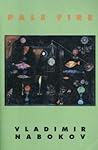
Review 671: Pale Fire

Pale Fire Pale Fire by Vladimir Nabokov
My rating: 5 of 5 stars


The format of the book is unusual, not your typical novel. All of it is fiction, where the form is a critical analysis book of a long poem. The long 99 line poem is called Pale Fire, by fictional American author John Shade. The bulk of the book is the commentary by Charles Kinbote, author of the foreword and editor of the poem. The commentary dissects the poem by lines, or sometimes just a word.

Kinbote was the neighbor, and “close friend” of the author in the last months of his life. Shade had just finished the poem when he died. Kinbote expected the poem to be about his country Zembla, where the king was overthrown, but escaped while being held captive.

The details of all this comes out in the commentary, which is not what the poem is about, but Kinbote misinterprets it, or adds all of his own details. It ends up being quite entertaining.

I even read the index entirely since there was humor found in those referenced notes. Nabokov writes so incredibly well. I love all the unique words he uses in his writing, makes for delightful reading.


Tuesday, September 16, 2025

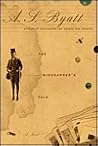
Review 620: The Biographer's Tale

The Biographer's Tale The Biographer's Tale by A.S. Byatt
My rating: 4 of 5 stars


It’s been decades since I read an A.S. Byatt book. I was enamored by her writing in the late 90s, and somehow stopped reading her work. This book reminded me why I do like her writing, and why I don’t as well.

The narrator, Phineas G. Nanues, is a young literary fellow who decided to give up literary criticism as he sees no point in it. Instead he wants to interact with things.

A professor, who then becomes his new advisor, gives him a three-volume biography of Sir Edmund Bole written by Scholes Destry-Scholes. Phineas is enthralled and decides that he will do a biography of Destry-Scholes. He also needs to get a job, and finds himself working for a unique travel agency.

This book is his record of this transition and his searching, and of his life. Destry-Scholes is not an easy man to find, although Phineas is a very good researcher he is unable to come up with information. Slowly, a few pieces come to him and he finds that perhaps Destry-Scholes was working on a biography of some sort of three different men. These papers and findings are included verbatim in the book. This is where sometimes it gets a bit tedious and reminds me why I don’t like Byatt. Too much in the weeds!

As Phineas is writing he says he hates autobiographies, he is not going to write one, yet his record does indeed become that. There are layers in Byatt’s writing. Sometimes I feel not adept enough to catch everything. The layers in just the title and the biography here is a bit obvious, that helps.

I have several more of her books still waiting to be read, and will get to them sometime, hopefully before decades pass.

Monday, March 10, 2025

Review 557: Octavia E. Butler: H is for Horse

Octavia E. Butler: H is for Horse Octavia E. Butler: H is for Horse by Chi-ming Yang
My rating: 4.25 of 5 stars


This is a slightly academic biography, not only the author, but also of her early writings as well. Yang dove deep into Butler's archives held at the Huntington Library and have presented here an insight into how Butler's writing grew into the published books. Yang provides summaries on many of Butler’s juvenile writings, as she was writing stories since grade school.

The book is short and presented in 26 chapters, one for each letter of the alphabet, such as the subtitle. It’s a different way of organizing a biography, as it goes forward or backward in time as it fits into the chapter letter.

Any fan of Butler can find something here to appreciate and help to understand the author, and the origin stories of her books.

I listened to the audiobook which was well narrated. My only complaint is that there were references to images I could not see. I may have to seek out a copy just to peek at the images I missed while listening.


Thanks to HighBridge Audio and NetGalley for an advance review audiobook.

Tuesday, May 17, 2022

Review 321: Avidly Reads Poetry

Avidly Reads Poetry Avidly Reads Poetry by Jacquelyn Ardam
My rating: 3 of 5 stars


I hadn’t come across this series Avidly Reads, before this book. The series is described as brief books about how culture makes us feel. There are only a handful of these books published, so far. This one takes on the topic of poetry.

The book itself is a bit of a poetry literature criticism class, with a touch of memoir all wrapped up into several long essays. There are four chapters with one short coda, all discussing poetry. The focus is on several types of poems, but the feelings aspect related to: wanting, learning, resisting, soothing and losing.

The first chapter is about the sonnet and wanting and perhaps provides the most autobiographical material as well, with the author talking about her entry into poems as a teenager. The later chapters had more of the literature criticism class aspect to them, with one in particular (documentary poems) discussing a class she held recently and what her students focused on and were taught.

Ms Ardam does not shy away from letting you know there are some poets she does not like, one of whom is a favorite of mine, Billy Collins. I like his poetry as it is accessible and filled with humor where too often poetry seems to be a Very Serious Business.

I don’t think I would have wanted a longer book on this topic, it was enough here to remind myself about reading poetry, while also providing insight into the more recently developments in that world. This one is heavily into diversity and inclusion within poetry, and shows how the entry point to poetry can be something other than the standard sonnet of historical literature classes. These types of poems may be off putting to people who could otherwise gain from experiencing poetry. I did appreciate the write up of how Ardam helped her students get into difficult poems, like avant-garde poetry.

Monday, May 11, 2020

Review 134: My Green Manifesto

My Green Manifesto: Down the Charles River in Pursuit of a New Environmentalism My Green Manifesto: Down the Charles River in Pursuit of a New Environmentalism by David Gessner
My rating: 4 of 5 stars


One month after finished reading this book and finally have some notes:

There were three parts to this book: a river trip on an urban river, that ends up in the Boston Harbor, a coming to his own philosophy about environmentalism, how it should be approached, and the literature criticism of an environmental book.

The primary way the book moves forward is the river trip. Gessner and Dan Driscoll (a friend from the Frisbee days), paddle down the Charles River that ends in the Boston Harbor. Driscoll has made it his life work to improve the river. It started in the 1990s, new in the department and they said look at this river. Driscoll then says, hey, let’s green the river. Put in green pathways, connected, plant native plants, improve it. Soon he became known as “the River man.” It has been a long road but he has been persistent and constant for nearly twenty years. And now it is a good success for most of the river, of course more can be done. During their trip they do pass through very urban areas. Places where they have to haul the canoe a short distance the nature in urban become incongruous. When at the end of the day, you can hop over to a pub, have dinner and a few drinks, it is spectacular.

There is also a conversation about a book Gessner reads while taking this trip, Break Through: From the Death of Environmentalism to the Politics of Possibility by Ted Nordhaus and Michael Shellenberger. He argues with the authors on their viewpoints of environmentalism. This book helps Gessner to define his own approach and what may be something more people would be open towards, such as finding a spot in the natural world and fall in love with it

Bonus: Gessner's ideas:

  • Have a small love affair with something in the world.
  • Get in a fight. (to improve what you love)
  • Launch a larger project of self and world.


Read two Gessner books at the same time. This book read: (April 29-May 07)
Other book: All The Wild That Remains: Edward Abbey, Wallace Stegner, and the American West
  • 3.5 stars (April 22-May 04)

Tuesday, May 5, 2020

Review 133: All The Wild That Remains

All The Wild That Remains: Edward Abbey, Wallace Stegner, and the American West All The Wild That Remains: Edward Abbey, Wallace Stegner, and the American West by David Gessner
My rating: 3.5 of 5 stars

Part travel autobiography, part biography. The autobiography portion is in search of information and anecdotes about Wallace Stegner or Ed Abbey. I suspect that people who have read most of the books by Stegner and Abbey would get more out of this one than I did. What kept coming up in my mind was, I’ve only read one book by Stegner and it isn’t the most read, nor his most ambitious (Big Rock Candy Mountain). Recently I tried a book by Abbey, and was so disappointed by it, could not get beyond the overt racism and sexism. So this book did have some hurdles for me.

Despite that I enjoyed the book for the most part. I learned about both author’s lives and felt like perhaps I could get beyond some of Abbey’s crassness and read some of his other non-fiction books. The book I was appalled by he wrote furiously as he was dying, which makes me more upset. I would hope people would find peace and love in the end, not more antagonism toward other human beings.

Gessner compares and contracts these two which are somewhat complete opposites, except for their love of preserving the wild. Abbey was a sexist, could hardly stay married (had 5 wives), was a horrible father to most of his children. Then there’s Stegner who was married and loyal for decades, wonderful father. Stegner is quiet and works with legislature to get things preserved, while Abbey is loud and obnoxious and sets the foundation for Earth First! and property destruction in an attempt to stop the real destruction of wilderness.

I enjoyed Gessner’s own journey, meeting up with some people associated with the two authors, and discussing a little of the west and environmentalism. Perhaps the book overall would have worked for me better if I had read more of the Abbey and Stegner.


Read two Gessner books during same time. This book read: (April 22-May 04)
Other book: My Green Manifesto
  • 4 stars (April 29-May 07) 

Tuesday, March 10, 2020

Review 119: Upstream

My rating: 4 of 5 stars


Mary Oliver is a poet and these essays of hers are poetic. I believe she writes metaphorically even here in these essays, to get across her meaning. She shows she is taking in nature, in all ways. Perhaps she did or did not actually kiss that oak tree "every first day of spring for the last thirty years." Or eat those turtle eggs. Maybe? Or not. Does it matter? Oliver is showing us her wild youth and how she continued in this way, and that it gives her life and meaning.

My favorite parts of this short book are in the third section where she discusses Emerson, Poe, Whitman and Wordsworth. These are about Oliver herself, but also about the writers as well, and their works.

The last essay, "Provincetown" is a nice tribute to the town he lived in for much of her life. Yet it feels less crafted then most of her other essays.


A partial on her take on Leaves of Grass by Walt Whitman:

The twelve poems of the 1855 edition of Leaves of Grass consist of one huge and gleaming Alp followed by a relaxed undulation of easily surmountable descending foothills. The initial poem, “Song of Myself” (sixty-two pages), is the longest and the most critical. It is the Alp. If the reader can “stay with” this extended passage, he has made a passage indeed. The major demands of the poem are here established, the first and essential lesson given in the first half-dozen lines:

I celebrate myself, And what I assume you shall assume, For every atom belonging to me as good belongs to you. 
I loafe and invite my soul, I lean and loafe at my ease … observing a spear of summer grass. (pg.27)

In these lines the great work is begun, and the secret of success has been given. And what is that great labor? Out-circling interest, sympathy, empathy, transference of focus from the self to all else; the merging of the lonely single self with the wondrous, never-lonely entirety. This is all. The rest is literature: words, words, words….
      (Pages 96-67)

Previous Popular Posts