Showing posts with label neuroscience. Show all posts

Thursday, June 11, 2026

Review 702: The Mind At Night


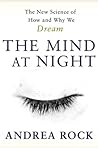
The Mind At Night: The New Science Of How And Why We DreamThe Mind At Night: The New Science Of How And Why We Dream by Andrea Rock
My rating: 4 of 5 stars


The subtitle perfectly explains what this book was about...the science of dreaming. It starts with the discovery of the rapid eye movements (REM) sleep correlating with the time during sleep of dreaming. Eugene Aserinsky wasn’t particularly interested in sleep research, but that was where he found himself in 1951 while working on his degree. His lab subject was his eight-year-old son. Other subjects were studied and with his mentor they published their findings that REM sleep correlated with dreaming in the journal Science in 1953. This was the beginning of dream research as a science, as opposed to the psychological aspect, such as Freud.

Freud and his dream theories are mentioned off an on, yet mostly in the way of not accepting that everything is sexual based. Often the book points out ways that proves this is not the case.
The book states the 60’s were the “golden era” of dream research, meaning in the United States, where federal funding started drying up in the 1980s. Then dream research was more of a side-benefit of sleep disorder research.

The book ends with stating there are two main theories of why we dream. One is to work out our emotional states for emotional regulation. The other is dreaming is a way of enhancing memory so as to solidifying learning. More likely it is both.

Although at the time the book was published the research was new, I’ve had this book for a couple of decades so that is no longer the case. The first few chapters the writer wrote some corny lines, like attempts at humor or something. It was awkward reading. But by the end of the book the writing solidifies better, those attempts are gone and just reporting the facts has he found them, and the writing was smoother and worked better.
Monday, January 12, 2026

Review 655: The God Peak

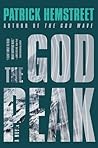
The God PeakThe God Peak by Patrick Hemstreet
My rating: 2.5 of 5 stars


This second book in the trilogy was fairly similar to the first book. The team we met in book one had been split and remained so. One group was being kept hostage, Team Chuck, much like what happened in the first book, but by a different sort of organization.

Most of the book was about Team Chuck plotting to escape and get back to the other group, try to control them, along with what that group was up to…world peace, anyone?

Overall the book was somewhat okay, but far from great. Again, the ending was left hanging, not everything was resolved. Looks like this third book failed to happen, which is okay, as I’m not sure I could take another one.


Monday, January 5, 2026

Review 653: The God Wave

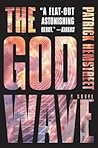
The God Wave The God Wave by Patrick Hemstreet
My rating: 3 of 5 stars


The concept of this book was intriguing to me, or at least what I knew about it – a neuroscientist has tapped a region in the brain that allows humans a new ability. Well, a neuroscientist along with a mathematician and a robotics engineer – it took a team, plus the research subjects from various fields.

After their initial success the mathematician Matt, became the business driver of their new start-up, Forward Kinetics. Matt was relentless in wanting a good contract with deep pockets and when a military contract was offered Matt pushed the team to sign on. Of course this goes in a direction most the rest of the company founders wasn’t interested in.

A good portion of the book was about how the new technology was developed and starting up the business. It ended with quite a lot unresolved, but not quite a cliffhanger.

Most of the characters feel somewhat flat and not fully fleshed out, with many of few the attempts at doing not working well. I grimaced a few times while reading this. Not stellar writing, yet with the ending, it feels like part one of a two part book, so I’m continuing on for now.


Friday, November 5, 2021

Review 269: The Man Who Mistook His Wife for a Hat and Other Clinical Tales

The Man Who Mistook His Wife for a Hat and Other Clinical Tales The Man Who Mistook His Wife for a Hat and Other Clinical Tales by Oliver Sacks
My rating: 3 of 5 stars


This book was something I heard about a long while ago, while still in school. From what I remember it made a splash, was popular and became just intriguing to me. It was in the back of my mind to read it someday. Well, decades later now I finally did, and  I'm slightly disappointed.

 This was not my first book by Oliver Sacks and his later books are better written for a lay audience. This one felt like he wasn't sure who would read his book, so half jargon and half not and it doesn't quite work. Let alone the way the clinical tales are told. Also, I don't think the book aged well with some of the language used in the book are with words we don't generally use anymore.

Entirely too short clinical tales mostly just describe the odd symptoms. There are some with the attempt to find out what has gone wrong, and how to fix, but most are short and seem to just say – look at this odd thing that happened to someone. 

Friday, September 3, 2021

Review 247: Bewilderment

Bewilderment Bewilderment by Richard Powers
My rating: 4.5 of 5 stars


I’ve read two other books by Richard Powers and this one is about half the size, if not even smaller. Like the other two, I’m surprised by the book. Sometimes the writing has a way of being a little quirky, perhaps a bit difficult to follow, but that settles after a while into the book.

Bewilderment had that quality as well, with the father Theo describing invented planets to his son Robin, which is written as if it exists, and they are visiting. As Theo is an astrobiologist it makes sense this is one of the nighttime stories told to Robbie. They both are grieving for they lost the third in the family, the mother and wife Alyssa. Robin has been diagnosed “on the spectrum,” has difficulties. Perhaps Robin’s main issue is he is “too sensitive” toward animals, much like his mom.
The species collapse means way too much to Robbie. And as the book progresses it is hard not to ache for him, trying to come to terms with what we all do, going about our day.

There is so much sadness in this tale, and yet joy as well. Robbie is certainly a delight, particularly after the neuro-treatments he starts to undergo. It calms him and he becomes so focused, he becomes smarter. Theo does all he can to keep up with his kid, trying not to make too many mistakes, which sometimes he cannot avoid.

Alyssa is put on a pedestal, being too perfect, which could happen when the person is no longer living. This attempt to have her still present is a constant in the book. There are few aspects that I had a little trouble with, it is a modern-day retelling of Flowers for Algernon. And when you forget about that, Powers brings it back up and reminds you. I could have done without that part. This is one book that will stay with you long after finishing reading.


Thanks to W.W. Norton and NetGalley for an uncorrected electronic advance review copy of this book.

Friday, June 4, 2021

Review 225: Double Blind

Double Blind Double Blind by Edward St. Aubyn
My rating: 3.5 of 5 stars


Not a light read here. Although short, there are large passages with dense rabbit-hole wanderings into neuroscience, biology and other wild ideas mainly put forth by a drug induced mania.

We have several characters: Hunter being a venture capitalist with a penchant for drugs; a couple of friends Olivia and Lucy being reunited in England after Lucy starts working for Hunter. Olivia and Francis just started a love affair. Lucy soon discovers there’s a tumor lodged in her brain. Olivia’s dad works with schizophrenics and the two start working on a project based on the illness and genetics and nurture. We also get one of the patient's story with his neurodivergent thought patterns.

There are many themes in the book and none well developed or resolved, just many huge ideas thrown in and on occasion info dumped into the text of the book. Yet it is held together by the relationships of these people that become more intertwined as the book continues.

Odd enough, I do wish the book had more pages to it, as then the author may have helped some of these themes become more developed or to some conclusions. Although I do get the sense that was the point, to end early and leave it all in the air. This may not satisfy many readers, but some may revel in the complexity.


Thanks to Farrar, Straus and Giroux and NetGalley for an uncorrected electronic advance review copy of this book.

Tuesday, May 25, 2021

Review 223: Remember

Remember: The Science of Memory and the Art of Forgetting Remember: The Science of Memory and the Art of Forgetting by Lisa Genova
My rating: 4 of 5 stars


This is a general book on memory, looking at general brain function in that area. It covers how your memory tends to work, and why it doesn’t, such as when you don’t pay close attention to something, you aren’t likely going to remember it.

The book also goes over a few ways to keep your brain healthy, and how to optimize memory, using tricks such as a “memory palace” which is a word association with images. Genova also covers Alzheimer’s, very briefly, as well as ways to help prevent the effects as we age. Although research is still ongoing, following these actions such as: getting enough sleep (7-9 hour per night), eating healthy and getting aerobic exercise will always be good advice.

This may be something to read as a companion with Jonathan Foer’s Moonwalking with Einstein, about people who compete in Memory competitions. As this book gives more general and practical advice about memory.

I listened to the audiobook and the author as narrator did a decent job of the task.

Previous Popular Posts