Showing posts with label History. Show all posts

Wednesday, September 16, 2026

Review 739: The Hemingses of Monticello


The Hemingses of Monticello: An American FamilyThe Hemingses of Monticello: An American Family by Annette Gordon-Reed
My rating: 5 of 5 stars


An incredibly detailed account of the Hemings family. Gordon-Reed places the Hemingses in the center of the narrative, how it was for them to live enslaved and without control over their life. Yet, with Thomas Jefferson some of the family had a greater degree of autonomy, they were treated better than the rest of his slaves. They were “privileged” within the slave community. Several generations of Hemings were from white masters and black slaves. Two of Jefferson’s offspring by Sally went on to live a life as a white person. All of their children were set free, eventually. It’s hard to imagine the mores of that time and place, that this was acceptable behavior.

Jefferson was careful in what was kept by his letters and writings. He tried to shape his historical image. Even at the time it was a scandal between himself and Sally, and still nothing was confirmed. Yet there are still facts, and of course now DNA evidence. He is quite the enigma.

Saturday, September 12, 2026

Review 737: American Oasis

American Oasis: Finding the Future in the Cities of the SouthwestAmerican Oasis: Finding the Future in the Cities of the Southwest by Kyle Paoletta
My rating: 2.75 of 5 stars


While the book was okay and I’m glad to have read it, I don’t think the premise of the book held up. The author profiled a few cities in the southwest looking mainly at: Phoenix, Las Vegas, El Paso and Albuquerque, with a few other cities being mentioned. All of these places are hot desert climates, having water issues and in the last several decades huge growth. Some history about these cities were discussed.

Yet, the author described many personal stories of individuals or families that seemingly had nothing to do with the topic, other than they live in that city. The opening described the author’s upbringing in New Mexico. While one story was about a man who lost his hands in 1946 as a boy while playing with explosives. Dealing with his disability ended up giving him some fame. First a newspaper article then later working in movies. Okay, but how does this relate to that particular city and the future? (not to mention this man had moved to another state.) There are many digressions and stories like this. Interesting characters, but not all that relevant.

The last part of the book seemed to regain focus and keep on topic. Water issues are a problem and will be more so in the future. Looking at these desert and drought-prone areas is a good idea for finding solutions for the future. One interesting piece of information was that despite all the growth in Las Vegas, through their water policies the amount of water consumed has stayed at the same level. I just wish the narrative had kept this at the forefront for most of the book.


Thanks to Knopf, Pantheon, Vintage, and Anchor/Pantheon and NetGalley for an uncorrected electronic advance review copy of this book. However, I read and listened to a published copy of the book, as it was published over a year before I finally got to the book. Apologies for the lateness.


Monday, August 3, 2026

Review 722: We the People

We the People: A History of the U.S. Constitution We the People: A History of the U.S. Constitution by Jill Lepore
My rating: 4 of 5 stars


This was a massive book, detailed and covers two and a half centuries. It took me quite a while to read it, months. But I didn’t read this solely, as I could only manage parts at a time. Further in, I was able to read a full chapter in one session, due to the book progressing in time, until almost to today. These later chapters were closer to when I had more information and become more readable at length.

The book begins with a very close look at how the United States Constitution was created. It took many people throughout the colonies, and many discussions. Each state had to ratify the new constitution, and each had their own desires and amendments. Would amendments be able to be added or not was a discussion. Who presented what to the constitutional congress, what their state desired, and all these minute details were discussed in length. It was very much in the weeds.
After the constitution was adopted, then came the discussion about amendments. As the chapters progressed the amendments would arise around social issues, such as in the later era civil rights or women’s rights, etc.

The book perhaps is a bit like a history book for school. All the minute details about the U.S. Constitution and amendments were more than I really wanted to know. Yet, reading section by section the book seemed good enough to keep going, and ended up being quite a reading project for me. And since this year I wanted to spend time reading about the history of the United States, this book did help to fill in a gap of my knowledge.


Thursday, July 16, 2026

Review 717: Fires in the Night

Fires in the Night: The Earth Liberation Front, the FBI, and a Secret History of Eco-SabotageFires in the Night: The Earth Liberation Front, the FBI, and a Secret History of Eco-Sabotage by Matthew Wolfe
My rating: 4 of 5 stars


The events discussed in this book took place mainly, but not entirely, in the Pacific Northwest by a group of young people called ELF, Earth Liberation Front during the 1990s. The first part of the book is more focused on several of the people involved in setting fires or actions to liberate animals. Law enforcement is peppered throughout the book but is discussed more thoroughly in the later part. The author Wolfe is neutral in this book, doesn’t provide opinions only facts of what happened or balanced, counterposing views. The writing was done well in making this a coherent narrative.

There was a good discussion on how these types of acts have become labeled as (incorrectly) terrorism, also known as eco-terrorism. There was a major shift after Sept.11, 2001 with Bush declaring a war on terror and including these types of groups with increased surveillance and infiltration.

The book was intriguing. These young people were working towards laudable goals, wanted to improve the world, but went about it entirely the wrong way. At least they were always mindful to harm only property, or seemingly help animals, and never purposefully harm people. Yet in the end, they had to ask themselves how much did their actions help in promoting their cause?


Thanks to Viking Penguin and NetGalley for an uncorrected electronic advance review copy of this book.

Tuesday, July 7, 2026

Review 713: Abigail and John

Abigail and John: Portrait of a Marriage Abigail and John: Portrait of a Marriage by Edith B. Gelles
My rating: 5 of 5 stars


Highly enjoyed this biography of Abigail and John Adams. The book perhaps was more of a biography of Abigail than of John.

Both Abigail Smith and John Adams came from pious backgrounds with families well established in America before the revolution. They married while John was 29 and Abigail just 19. And quickly after their marriage their lifelong habit of letter writing began, as John being a lawyer, would travel to the various colonies for work. This also established a pattern for their marriage with John being absent from home much of the time.

Since they were great letter writers and their correspondence survives, even to their numerous relatives and friends, it enables books like this. The book was not so narrow to only discuss their marriage. It is a wider biography which discusses their entire lives. Such as how John became involved with the revolution, and the long years apart while he was in Europe serving the new country while Abigail dealt with living in a revolutionary war zone, while managing a farm. During this time women did not own property or assets, yet to keep the family afloat Abigail bought land and other assets in John’s name. She even started trading goods to keep the family afloat during this time of struggle.

There is a lot of material here in the book. To note, one surprising fact is how their young boys spent many years apart from one parent or another, or often both. The family believed in Duty and their children learned the lesson well. Duty to others came before self. The youngest boy barely knew his father as John was in Europe for much of his life.

It was noticeable the author’s opinion that John Adams was not a monarchist, as many of his detractors, and historians state. She proves this several times in the book. This being the only book about him I’ve read, I cannot say, but she makes a convincing argument.

Their lives are quite detailed, until we get to the post-presidency of John Adams and near the end of their lives. Other than discussing the renewed friendship with Thomas Jefferson, the latter era is glossed over. Now I would like to read a biography of their eldest son John Quincy Adams, he had an unusual childhood.

I had this book for many years, not sure why I waited so long to read it. This year of a focus on American history finally gave me the impetus needed.


Wednesday, July 1, 2026

Review 710: This Land Was Saved for You and Me

This Land Was Saved for You and Me: How Gifford Pinchot, Frederick Law Olmsted, and a Band of Foresters Rescued America's Public LandsThis Land Was Saved for You and Me: How Gifford Pinchot, Frederick Law Olmsted, and a Band of Foresters Rescued America's Public Lands by Jeffrey H. Ryan
My rating: 4 of 5 stars


This book provides the history of how land in the United States became preserved for future generations. Nothing in the book addressed deserts, it was very tree oriented.

U.S. Forest Service, National Parks, Wilderness Preserves, and other public lands have a history, and part of that history is told in this book. Its focus is on some of the men that fought the land and forests.

The book begins with Frederick Law Olmsted, managing a mining operation in the California Sierra Nevada. Needing a break, he wanders to the Yosemite area and is astonished by its beauty. Olmsted realizes this land needs to be protected before it is destroyed by commerce, either mining, clear-cutting timber or some other extraction method that destroys beautiful landscapes.

There are more biographical details of Olmsted for the page length of this book than he deserves. I didn’t mind too much since I’ve been interested in learning more about the guy. Yet it did detract from the premise of this book.

From Olmsted the book discusses Gifford Pinchot. I found it interesting that Pinchot was groomed by his father to become a forester, and good thing he liked it. Pinchot saw opportunity to make his mark with forestry. Like all early foresters he got his forestry education in Europe, then back to the United States, first working with Olmsted then quickly becoming the lead man on forestry management.

At this point there was a lengthy discussion about the development of schools for forestry and development of an agency within the federal government. Pinchot was quite influential with both aspects, even being underhanded towards people he previously worked with.

Pinchot’s view towards forestry was that forests were to be used, not preserved, and this viewpoint became very influential in managing forest service lands. He not only headed the new agency he also trained many foresters for many years.

Further in the book discusses other men who saw that needed to be preserved as wilderness, untouched by humans for the future. They believed that wilderness helped humans reconnect with nature and was good antidote for city life.

The book had many interesting points and yet it also was too large of a topic to be adequately cover everything for a book of under 250 pages. It also seemed to miss quite a bit as well, such as neglecting to mention any women who also helped in the fight to protect lands.

Friday, May 29, 2026

Review 699: The Christian Watt Papers

The Christian Watt Papers The Christian Watt Papers by Christian Watt
My rating: 4 of 5 stars


Christian Watt grew up and lived in Fraserburgh, located on the eastern side of Scotland, north of Aberdeen. She was born in the 1830s and lived a long life, although about half was in a mental asylum. It seemed like a home that looked carefully after their wards, and Christian was able to leave at times. It was there during her time living there it was suggested she write down her history, which is how the books pages came about.

Christian grew up very poor, the only girl in a large family of brothers, then many died in a boating accident. There were two left, but later those two also died. She had many losses in her life, too many. When she was a little older and married she ended up with having ten children and struggled to get by. At one point she says, if only one of my brothers had lived.

After her husband died in the sea as well was when Christian’s mental troubles started. Trying to manage all on her own became too much. The doctor suggested a rest in the asylum in Aberdeen. After a time she came back home but was shunned by many in the community, they would no longer buy fish from her. Christian said this was when she found out who her true friends were.

Christian had a great memory, remembering all the many people in her family and in the village, and this is all told in the book. It was at times a difficult read due to all these names of people, but to get a sense of what it was like during this time in that place, the book is excellent.

This is an edited autobiography, with the editor adding commentary and explanation to the text. Looking at the included family tree it appears that the editor is a Sir and related to Christian as well.

Friday, May 22, 2026

Review 696: The Dark Frontier

The Dark Frontier: Unlocking the Secrets of the Deep Sea The Dark Frontier: Unlocking the Secrets of the Deep Sea by Jeffrey Marlow
My rating: 3 of 5 stars


This book is full of scientific discoveries and information about the deep ocean. It also is a bit of an autobiography for the author, but mostly not. Several different people and aspects are discussed throughout the book. This is very cursory and not much of a review...

The last portion gets a bit too much in the weeds about treaty negotiations to protect the ocean floor. Unfortunately, too often money influences when instead an ecosystem should be looked at, or science.

I made a mistake in listening to this book via audio. The narrator was not a good fit for the book.
Normally I don't let a narration influence how I feel about a book, but this one is long, and I became annoyed. I really should have switched to print. Perhaps one day I will return and read a print version, but I don't expect that will happen anytime soon (if at all).


Friday, May 15, 2026

Review 692: Angelica

Angelica: For Love and Country in a Time of Revolution Angelica: For Love and Country in a Time of Revolution by Molly Beer
My rating: 4 of 5 stars


This year one of my reading goals was to include more history, particularly early American history. I also wouldn’t mind to read about the women involved, and this book fit that category nicely.

Angelica Schuyler Church should be a more well known figure from the revolutionary time particularly coming from a prominent family, except women were expected to be primarily caretakers of the family, mothers and daughters. At a time when the new country was writing a constitution, some women advocated for women to not be overlooked, to be included in having a voice, but that did not happen. Instead women continued to experience the tyranny of the husband and father.

At age 20 Angelica wanted to marry John Barker Church who went by John Carter, but could not get her parents approval. Her father, General Schuyler was busy with war efforts, Carter spent ten weeks with him and still could not gain the approval. Angelica made her own “democratic vote” and eloped. Her parents were embarrassed. Yet, they remained together and the couple ended up having eight children.

Most of the book is about the history of the time, and following the timeline of Angelica’s life until she died in 1814. In 1783 the Church’s went to France as John was the U.S. envoy to France. A few years later John bought property in England and served as a member of the British Parliament until 1796. Meanwhile Angelica went to New York in 1789 to witness the swearing in of the first United States President George Washington. In 1799 they returned to America permanently and founded a town in New York and called it Angelica.

Angelica’s brother-in-law was Alexander Hamilton and she was friends with Thomas Jefferson and other important figures at the time. Without getting much longer in this, the book often veers to the history and other people. There are details of life during these years, such as how the price of butter and other goods were affected by the war. The research done is incredible. The author was born in Angelica, New York and likely was her inspiration for book.


Monday, April 20, 2026

Review 686: Dark Renaissance

Dark Renaissance: The Dangerous Times and Fatal Genius of Shakespeare's Greatest Rival Dark Renaissance: The Dangerous Times and Fatal Genius of Shakespeare's Greatest Rival by Stephen Greenblatt
My rating: 4 of 5 stars


This book is set in the late16th century, a biography of Christopher Marlowe, although the title nor subtitle mentions that. It appears that he was a collaborator with Shakespeare not a rival, or at least that's not how it was presented in this book.

However, the biography of Marlowe, or at least what is known of him, and the details of his plays was fascinating. There is much more detail about Shakespeare’s life than Marlowe’s, but there are remnants that can be pieced together.

Marlowe was a bit of a genius, son of a cobbler in Canterbury he managed to get a scholarship to Cambridge. He stayed on after the initial degree, working on a Master’s for a couple more years of school. During this time he apparently started working as a spy for the government, spent time in France and generally was away from school more than was allowed. He was not to graduate, except a letter appeared from the Queen’s Privy Council that said, give him the degree.

Instead of becoming the anticipated clergyman, as the scholarship he won had expected, Marlowe went to London and wrote more plays (something he had started as a student). Perhaps he was also still working as a spy for the government. This time period was quite dangerous, the Queen with Walsingham’s spy network attempted to root out all Catholics or plots to overthrow her.

The plays Marlowe wrote were subversive, and the writing was in a new style, which helped to transform art of which Shakespeare benefited. Several of Marlowe’s plays were discussed in detail, which I did appreciate as I have no familiarity with them.

Marlowe was killed at age 29 under mysterious circumstances. Those details are described along with what may have happened. As with many other parts of the book many words such as perhaps, or maybe are used.


Friday, April 10, 2026

Review 683: A Man Most Driven

A Man Most Driven: Captain John Smith, Pocahontas and the Founding of America A Man Most Driven: Captain John Smith, Pocahontas and the Founding of America by Peter Firstbrook
My rating: 5 of 5 stars


I thoroughly enjoyed this biography of Captain John Smith. He led an amazing life, particularly for one who began life as a farmer’s son. His family had some means, as they had a servant and help with the farm, and Smith was sent to school, when poorer families needed the help at home. Early on Smith was interested in having “brave adventurers”.

The experiences of John Smith, particularly with establishing Jamestown in 1606 came from his writings. Smith wrote his own biography and several different accounts of what happened in Jamestown during his life. To go over all of the mishaps and many ways Smith narrowly avoided death would take too long.

Early on in his life he sought his adventurers by joining to fight against the Spanish in 1597, then a few years later trying to become a crusader fighting against the Turks. Not being Catholic only slightly dampened those “adventures” as he was involved in plenty of fighting. Enough to where the Prince of Transylvania awarded him a coat of arms and a small pension and rank of Captain. After being captured and enslaved, killing his master and escaping, Smith decided his adventures on the continent was enough.

Yet back in England he was not content to manage the farm, so he used his contacts in London to join the Virginia Company of London, or London Company and went to the new world in 1607. A good portion of the book is about this time, as it is very significant. Yet this is already getting long.

One of the aspects that I appreciated with this book is the author goes to lengths to determine if what Smith had reportedly done actually happened. Smith perhaps embellished and a braggart about his accomplishments and experiences.

This was a well written book. I started reading the print book, then realized I had bought an audiobook as well, and listened to a good portion of the book as well, as the narrator did an excellent job. However, there was material in the print copy you cannot get in audio with a few maps and images throughout.

Many things can be said about Captain John Smith, and one for certain is without him, Jamestown settlement would not have survived. He was crucial for the success of the first English settlement in the New World.


This will be one of my top reads for the year. 

Thursday, March 26, 2026

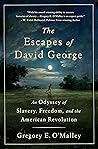
Review 679: The Escapes of David George

The Escapes of David George: An Odyssey of Slavery, Freedom, and the American Revolution The Escapes of David George: An Odyssey of Slavery, Freedom, and the American Revolution by Gregory E. O'Malley
My rating: 3.5 of 5 stars


David George was born into slavery and named Davy. He had his own mind about how he wanted to live his live and his master was not a kind one. In 1762 aged 19 he ran away, going south from the Virginia plantation. Davy managed to escape for a time.

David, as he now wanted to be called, was helped by white people several times during his initial escape. John Green, became a sort of friend, where David lived and worked for two years. It was not in Green’s best interest to harbor a fugitive slave but he did so, and when word came the slave catchers were after David, he ran again.

This time he was captured by the Creek Peoples and was a slave once again, but of an entirely different sort. While still trying to escape his original owner, the Chappells were hot on his heels during his time with the Creeks. David somehow managed be involved with the Nachez people, King Jack in particular. It appears that Jack had brokered a deal where David was purchased by John Miller, or George Gaulphin from the Chappells. David now lived in a trading post managed by John Miller, living here for about three years.

Now around 25 David told Mr. Gaulfin and he wanted to live with him in Silver Bluff. So David ended up choosing his master, not a typical situation by a slave.

Here in Silver Bluff David settled down, had a wife and soon children. During his time here David had a profound reaction to a comment about religion and he sought this out. Over a short period of time David started to become a preacher and chose the last name for himself of George.
When the American Revolution began David George sided with the British as a way to escape slavery. Joining their forces he found that he wasn’t escaping racism and so after the war he and his family moved to Nova Scotia.

In Canada David was emancipated and became a minister with a community. Although they were technically free racism and prejudice still abound. The blacks were blamed for whatever when wrong and at point a riot of the white peoples against the blacks broke out that that destroyed many black homes. Realizing they would never be completely free the community emigrated to Sierra Leone.

David George’s life while not entirely his own, was still formed by his own decisions time and again while trying to escape a situation that he did not like.

This is a fascinating story. The book was somewhat dry at times, although the facts themselves are quite compelling. Several times there is a repetition of what was already explained, even a summing up of what came before, which detracted from my overall rating. The book takes on the wider lens of history at that time, and seemed like the book was trying to be a primer of what slavery looked like in the mid-1700’s. For those unfamiliar with the history and situation the extra material will enhance the material.


Thanks to St. Martin's Press and NetGalley for an uncorrected electronic advance review copy of this book. However, I listened to a published audiobook copy of the book. This is not the ideal way to read this book, the narrator does not favors to the material.

Friday, February 27, 2026

Review 669: Inventing a Nation

Inventing a Nation: Washington, Adams, Jefferson Inventing a Nation: Washington, Adams, Jefferson by Gore Vidal
My rating: 2.75 of 5 stars


This year, the 250th anniversary of my county’s beginning, I want to read a few history books, particularly of the beginning era, starting with what I already have on my bookshelves. I know the basics, but the specifics have been left far behind in my school years. And despite where the country is right now (and how much I want to leave it right now), knowing history can’t be a bad idea.

But starting here may have been a bad choice. Gore Vidal did not write this book in a cohesive manner. The book was meandering and very much not linear, which caused much confusion for me. Since I’m only vaguely aware of the history this book discusses I didn’t gain very much, just bits and pieces here and there. One more familiar with the topic may get more out of it than me. Generally it describes the beginning of the nation and some contributions by three major figures of George Washington, John Adams and Thomas Jefferson. There are many asides and off-topic discussions though.

One can tell this was written shortly after the September 11th tragedy, as Vidal refers to the aftermath a few times. It is that lens of where the country was this book was written.

Book rating: 2.75 stars


Friday, February 13, 2026

Review 663: Evergreen

Evergreen: The Trees That Shaped America Evergreen: The Trees That Shaped America by Trent Preszler
My rating: 4 of 5 stars


I like reading books about trees. This one took the evergreen trees as a jumping point. This was a social history, looking at what trees are used for with a focus on the use of wood and Christmas trees. The holiday tree became a recurring theme, even looking at the various fake trees history, and what a Christmas tree can symbolize.

Wood is a very important resource. This was not a complete assessment of everything evergreens are used for, but did discuss a variety of areas. Which trees that were found to be better during the war, which trees are better the balloon frame type house that became popular.

Preszler meanders away from the topic, going into more social and cultural history at times, such as lumberjack camps and how that plays into gay history. After veering away from the trees, he would refocus back, particularly onto the Christmas tree.

Had hoped for more about the trees history, not just focused on its usage, but it was a decent book overall.


Thanks to Algonquin Books and NetGalley for an uncorrected electronic advance review copy of this book. However, I listened to a published audiobook copy of the book.

Tuesday, December 2, 2025

Review 643: The Sea Captain's Wife

The Sea Captain's Wife: A True Story of Mutiny, Love, and Adventure at the Bottom of the World
The Sea Captain's Wife: A True Story of Mutiny, Love, and Adventure at the Bottom of the World by Tilar J. Mazzeo
My rating: 5 of 5 stars


In 1857 Mary Ann Patten and her husband Captain Joshua Patten set sail from New York harbor on a trip to deliver goods around the world. The first destination port was San Francisco, and in a race with several other clipper ships in hopes of making it within 100 days. This was the second journey that Mary Ann joined her husband, impressing the crew on the first journey in her skills, healing injured or sick men as well as charting and using a sextant.

By the time they reached the most dangerous part of the journey to San Francisco, rounding the Cape Horn, the first mate was held in the brig. Captain Patten fell unconscious from lack of sleep and an illness that finally overtook him. And this was during a violent storm, one of the worst tempests in years. Despite being a woman, Mary Ann took over as captain to get them through this danger ensure they stayed on course. This was an unheard of action. Mary Ann was just 19, pregnant and petite, which endeared her further in newspapers.

This was a non-fiction book that reads like fiction. There were moments when I wondered if the author went too far in attempting to do this readability like a fictional book. Yet I did quite enjoy the book.

It is sewn together by the true accounts of what happened. By genealogy, newspaper reports, diaries, ship logs and other documents. It is very well researched. Bonus was learning about clipper ships and the mid 1800s trade.

Friday, November 21, 2025

Review 641: The Genome Defense

The Genome Defense: Inside the Epic Legal Battle to Determine Who Owns Your DNA
My rating: 4 of 5 stars


This book was a bit outside my comfort zone. The subtitle did say what the book was about, the legal battle, so this was very law focused. The law suite was brought on by the ACLU against the company Myriad who had a patent for a genetic test. This was the BRCA test for breast cancer. Can companies patent DNA or test for DNA? There's a bit of science involved in the book, but it's mostly the nitty gritty of a lawsuit. The author did try to make it readable, and it wasn't boring, but still my eyes glazed over more than once.

Sunday, October 26, 2025

Review 636: Tibet, Tibet

Tibet, Tibet: A Personal History of a Lost Land Tibet, Tibet: A Personal History of a Lost Land by Patrick French
My rating: 5 of 5 stars


While this book is a bit of a travelogue of Patrick French traveling through nearly every corner of Tibet, it really is more of a history of the country. French was the director of the UK organization Free Tibet Campaign. It had been about ten years since French had been to Tibet and decided it was time to return and see what the situation was like first-hand.

French travels extensively throughout Tibet and talks to people of all kinds, various age groups, rankings, in cities or very rural areas. He tries to cover everywhere and everyone it seems like, quick thorough.

For this trip he decided not to go through official channels, as part of a media person or using his office connections. So while the book is factual, he does not reveal anyone’s real name, nor does he use stories that may be too specific to identify someone. While in Tibet, talking to people, he doesn’t want the PSB (Public Security Bureau) to take interest in anyone associated with himself. It’s obvious French is a foreigner.

The stories and history of Tibet are what make this book. It’s quite horrifying to read some of what happens to people, how Mao/Beijing used force to change people from their traditional ways. There several very difficult periods, first being the actual fighting and loss for Tibet. Then quickly after came the Great Leap Forward (started in1959) which resulted in mass starvation, later The Cultural Revolution (beginning late 60s) which in Tibet had in part smashing up monasteries and religious artifacts. Many of the personal stories are from these eras, but not all.

There is much more here, such as the history and relationship of Tibet and China through the centuries. The relationship of the Dalai Lama to the people of Tibet. I found the book very informative. The book is now two decades old, have been many substantive changes since the book was published? Tibet is still not free, not autonomous despite the name of the region. The people are tightly controlled, have been since Mao took over. Good book to understand Tibet.

Thursday, October 2, 2025

Review 625: The Book On the Bookshelf

The Book On the Bookshelf The Book On the Bookshelf by Henry Petroski
My rating: 5 of 5 stars


Earlier this year I read an Object Lessons series book Bookshelf, but it was a bit short for me, left me unsatisfied and curious to know more. Well it happens on my bookshelf for many, many years was sitting this book by Petroski, a book often quoted in the Object Lessons book. I’m glad I finally read it.

Petroski’s book is primarily about the history of the bookshelf, the furniture that holds books. Some history of the book itself is discussed, but that wasn’t the focus and likely there are more detailed books out there.

The furniture for books was varied in centuries past. Early forms were a type of box like a hat boxes when books were scrolls. When the book became closer to today's format there were stored in what we may call a truck but are properly called armaria. They could lock, which was important when books were few.

As books changed, the furniture did too to better hold them. As books became easier to copy, from hands to machines, then more people started to collect books. Libraries started to collect many more, and so the bookshelf came about. Still they were stored differently than today.

While books were still valuable there were chained libraries. The types of furniture and how these books were chained was a chapter or two. Some of the early shelving after the chained libraries had books facing up and at an angle. Often books were stored with the foredge showing, as this was before spines held any information on the book. It took centuries before the standard format of the bookshelf and spine out that we see today.

For most of the history of the book, and shelving, placement of shelving had to account for light. When libraries grew they had to be mindful of how the windows and shelves line up to prove the best lighting for reading. This was particularly important when the books were chained.

I had started to read this via audiobook but quickly realized that was not the best way to read this book. Since I had a print copy, I turned to reading it. Besides with audio I would have missed all of the illustrations that are throughout the book, and they definitely enhance the reading.

This is a quite detailed book, which I did appreciate. Although it is a couple of decades old, the eBook was being developed and is mentioned a few times. What dates the book is more the descriptions of the internet. But these portions are minimal.

The appendix is to be noted as here were listed 25 different ways to shelve a book. Petroski took some fun here, as it was more light hearted, and certainly not exhaustive. I noticed the bibliography at the end contained a long list of books that I could really go down the rabbit hole with this topic, but maybe I will leave it here. This one did satisfy a lot of my curiosity about the history of bookshelves. But it did make me kinda want some ancient book furniture.

Tuesday, August 19, 2025

Review 611: A People’s History of the United States: 1492–Present

A People’s History of the United States: 1492–Present A People’s History of the United States: 1492–Present by Howard Zinn
My rating: 4 of 5 stars


A history that needed to be told. A history that about the people who get abused, ignored, discriminated against, and worse. And why we got to where we are today – a dysfunctional political system, dispirited citizens, and blame put in the wrong place.

There is so much that can be said about this book, but I don’t want to write a long essay. Much of the material was not new to me, and maybe won’t be to many others. However, I suspect there is many historical facts that many people do not know. Some of the book was a little confusing, as it generally was linear, but not entirely. For example, while discussing the early 1900s, Zinn would backtrack to a specific incident that took place in the late 1800s. I wish the book was organized better.

Just want to note one specific item mentioned in the book about how few eligible voters actually vote a president. Since the 1900s, generally around 33% of the eligible voters actually vote in the president. While the most recent past two presidential elections turn out has been slightly higher, it hasn’t effectively changed the fact that around a third of the population gets the president they voted for. Which means two-thirds of the country voted for the other candidate or not at all. Dismal.

The version of the book I read ends around 2001, so today it is already over two decades past. There was an earlier version. It appears this book gets updated every couple of years, but usually only with a new introduction or foreword, the overall material isn’t changed.

I listened to the very long audiobook and do not recommended to read the book this way. The author’s son narrated it and he is definitely not a professional narrator. The narration is uneven and awkward in many places. I only got through this by going slowly, and it took me months to get through.

Wednesday, August 13, 2025

Review 609: What Trees Remember

What Trees Remember What Trees Remember by Marie Hrušková
My rating: 4 of 5 stars


Too bad there isn't a book cover image, as it really is a nice drawing. The cover is pulled from one of the drawings in the book. This seems to be a bit of an obscure book.

This is a short book (easily read in a day, about an hour or so) about 30 important trees across the Czech Republic. Each entry has an illustration drawn by Jaroslav Turek. The associated essay about the particular tree tells the history of why this particular tree is important for the Czech country. Some are fables, but many more are associated with an important person. The trees are mainly oak, linden or pine.

One amazing fact was there were several times when a story mentions how the tree was planted upside down, crown first, and if it continue to grow then it proved something, such as a person’s innocence or where to build a church.

All of the trees discussed are old, ancient trees. Many of them have been helped by the local villagers across the years to continue the tree’s survival, such as banding the trunk, shoring up the branches, and in several cases placing a roof type structure over exposed hollows from broken off branches. And only one mentioned was no longer living by the time of publication, after a very long life.

The last portion of the book has a very short biography of each of the person’s mentioned and of the area where each tree is located. Makes this book feel a bit more of a history book than just a tree survey.

The book came from my continuing a deep dive into my shelves, as I bought in Prague on my second visit there over twenty years ago now. I bought this book as a type of a souvenir for the area. The paper is also very nice and the book is lovely. Not sure why it took me so long to finally read this. Maybe it just mostly got overlooked.

Previous Popular Posts