Showing posts with label down-n-out. Show all posts

Friday, May 29, 2026

Review 699: The Christian Watt Papers

The Christian Watt Papers The Christian Watt Papers by Christian Watt
My rating: 4 of 5 stars


Christian Watt grew up and lived in Fraserburgh, located on the eastern side of Scotland, north of Aberdeen. She was born in the 1830s and lived a long life, although about half was in a mental asylum. It seemed like a home that looked carefully after their wards, and Christian was able to leave at times. It was there during her time living there it was suggested she write down her history, which is how the books pages came about.

Christian grew up very poor, the only girl in a large family of brothers, then many died in a boating accident. There were two left, but later those two also died. She had many losses in her life, too many. When she was a little older and married she ended up with having ten children and struggled to get by. At one point she says, if only one of my brothers had lived.

After her husband died in the sea as well was when Christian’s mental troubles started. Trying to manage all on her own became too much. The doctor suggested a rest in the asylum in Aberdeen. After a time she came back home but was shunned by many in the community, they would no longer buy fish from her. Christian said this was when she found out who her true friends were.

Christian had a great memory, remembering all the many people in her family and in the village, and this is all told in the book. It was at times a difficult read due to all these names of people, but to get a sense of what it was like during this time in that place, the book is excellent.

This is an edited autobiography, with the editor adding commentary and explanation to the text. Looking at the included family tree it appears that the editor is a Sir and related to Christian as well.
Monday, March 23, 2026

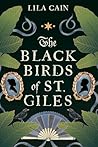
Review 677: The Blackbirds of St. Giles

The Blackbirds of St. Giles The Blackbirds of St. Giles by Lila Cain
My rating: 4 of 5 stars


I was taken by this cover and barely read what the book would be about. The book takes place mostly in London in the late 1700s just after the revolutionary war.

Daniel and his sister Pearl are the only ones from his family who escaped enslavement year prior. Daniel made a name for himself serving the British in the revolutionary war. Upon arriving in London all that was promised him was taken away.

Now destitute he finds himself in the worst part of London in St. Giles ruled by a despot the "King of the Rockery" who you must obey. An interesting historical fiction.


Friday, March 20, 2026

Review 676: Nickel and Dime

Nickel and Dime Nickel and Dime by Gary Soto
My rating: 3 of 5 stars


This somewhat short book contains three related stories. They take place in Oakland, California in the 1990s.

The first story: We Ain't Asking Much the main character is Roberto Silva, happy to have been let go at Walnut Bank as a security guard. His job was replaced by a security camera. Soon enough though, Roberto finds himself out of money and homeless, trying to sell something in order to eat.

The second story called Literary Life has Silver Mendez as the main character. A poet past his prime and happy to have this reading a small college in central California. Once home he finds his stuff on the lawn and kicked out of his apartment. Mendez at least has a car for shelter and ends up befriending Roberto who’s been homeless for two years now.

In the last story called The Untimely Passing of the Clock Radio we return to Walnut Bank as the other security guard, Gustavo Hernandez, is about to retire. Despite working for the bank for years he doesn’t have much savings. Roberto appears in this story as well, five years after his parting with the bank, and now asking Gus for help.

These are not joyful stories, looking at Hispanic men as they become homeless, or very poor despite loyally working for a company for years. What I didn’t like his how the three men are portrayed as simple, not very intelligent. And yet, there is a wee bit of humor laced into these stories as well.

Friday, March 13, 2026

Review 674: Poverty, by America

Poverty, by America Poverty, by America by Matthew Desmond
My rating: 5 of 5 stars


An excellent well written book. Perhaps I will return to say more, but for now, just go read this book.

Tuesday, December 23, 2025

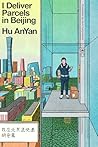
Review 650: I Deliver Parcels in Beijing

I Deliver Parcels in Beijing I Deliver Parcels in Beijing by Hu Anyan
My rating: 3 of 5 stars


Perhaps it is the living vicariously, or seeing what else is out there, but I do have an interest in reading about people’s work, even fictional accounts. So when this book came along it piqued my interest.

The content is a complete account of the different jobs Hu Anyan had until the writing of this book. He goes into the most detail while describing the package delivery job and working at a bike shop.

As the book continues Anyan discusses his internal life more, along with his social anxiety and difficulty with communicating with people. Often the job posed problems for him having these difficulties, such as when he was trying to run a business. He had a little shop and when purchasing from his wholesalers it was expected to negotiate pricing but he just accepted whatever they told him. Then he felt he lost face when realized what was going on and could not continue dealing with the same people.

One aspect of this book that I found interesting was the work culture in China. Just for one example, as a worker in the United States I am used to a 5 day/40 hour work week, but in China 6 days a week with 10-12 hours per day is expected. Anyan had some jobs were those hours were extended longer and not compensated for the extra time. Overtime pay wasn’t mentioned, likely something that doesn’t exist in China.

The writing style was fairly basic and since it is a translation it’s hard to determine if it’s from the original author or the translator. There were some clichés used that did not help and just made the writing feel awkward. It took me a while to read this book, as there wasn’t anything compelling to propel the story forward.


Thanks to Astra Publishing House and NetGalley for an uncorrected electronic advance review copy of this book.

Monday, November 17, 2025

Review 640: The Yellow House

The Yellow House The Yellow House by Sarah M. Broom
My rating: 4 of 5 stars


The book is an autobiography and perhaps one could make the argument it is of the house and not the author, or of the neighborhood in New Orleans East.

Sarah Broom grew up as the youngest child in a house that had 12 kids between both her parents. Her mother, Ivory Mae, bought the house for cash when she was 19, with the life insurance when her first husband died in 1960 while in the military. Two, perhaps three of the children were born of this man, but most likely the third was of her second husband, Simon Broom. He had three of his own, although the eldest boy would never live with this family. Between the two of them they had seven more children.

The house suffered a flood many years before Katrina came along. When it was repaired Simon added a small second story, which became the boys area. Much of the work was never complete fully. The house was not what Ivory Mae had envisioned for her ideal home. But it was her home.

Katrina becomes a focal point in the book. The Yellow House was flooded up the rafters, along with nearly all of New Orleans East. Afterwards the city would come and bulldoze down the house before anyone had notice. Despite living in New York City at the time, this devastation to the city, to the Broom family home, affects her and her siblings. Most had been living in New Orleans prior to Katrina. Years later only a couple have remained or returned. Sarah does for a while as well. The book is a remarkable tale of just one family before and after that devastating hurricane and flooding.


Thursday, September 18, 2025

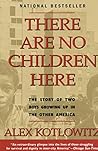
Review 621: There Are No Children Here

There Are No Children Here: The Story of Two Boys Growing Up in The Other America There Are No Children Here: The Story of Two Boys Growing Up in The Other America by Alex Kotlowitz
My rating: 5 of 5 stars


This book was devastating to read how these young children grew up in the Chicago projects. The book is a very close look at the lives of two brothers Lafeyette and Pharoah Rivers, 9 and 12 at the start of the book. Journalist Kotlowitz was embedded into the Rivers family life for two years, Summer of 1987 to September 1989.

The family lived in the projects in Chicago. LaJoe Rivers had eight children with Paul Rivers and still remained married to her husband, which was somewhat unusual circumstance for their background. The kids father sometimes was around, but didn’t really live with them. The three older kids were nearly adults, Lafeyette and Pharoah were the middle kids, then a set of triplets were their younger siblings. LaJoe was on welfare, had food stamps, and had the constant hope of being able to move out of the projects.

Gun violence, drugs, and gangs dominated their lives, along with poor living conditions. The bathroom tub faucet constantly ran, doors wouldn’t shut properly, the stove oven barely worked, among other problems. And the apartment was overly crowded. Each of the older children had succumbed to either drugs or crime. LaJoe hoped at least one of her children would make it by getting a high school diploma.

Pharoah developed a stutter due to all the trauma he experienced. The summers were the worst, as gang activity picked up, shootings became an almost every day occurrence. The Rivers boys lost several friends due to all the violence, one an accidental police shooting. Their older brother Terrance was picked up an charged with a shooting he had nothing to do with, the charged ended up being dropped after the eye witness admitted he didn’t do it. Later Terrance was again charged with a crime he didn’t commit, but was now 18 so he was in adult court this time. Lafeyette also ended up in juvenile court over a crime he didn’t commit either. Just being black and nearby seemed to make you guilty.

The book was written very well, read like a fiction book. The author’s note explains how he conduced his research, verifying everything with multiple accounts, if he wasn’t there. Since this took place several decades ago, one can hope the environment has improved, although I fear not enough.

I was amazed to find an audiobook at my public library, and that got me to finally read this book. I bought this book back around when it came out, so it’s been lingering very long on my bookshelves unread.

Thursday, May 22, 2025

Review 584: Lost at Sea

Lost at Sea: Poverty and Paradise Collide at the Edge of America Lost at Sea: Poverty and Paradise Collide at the Edge of America by Joe Kloc
My rating: 3.75 of 5 stars

Just north of San Francisco in Marin County is Richardson Bay and the city of Sausalito. This location is where the book takes place, with stories and life experiences by a community of people called anchor-outs.

They live in the bay on boats not sanctioned by any government agency so the city and harbor master take to removing the boats. When someone isn’t living in one every day, the boat is impounded then destroyed. Although some called the people unhoused before they lost their boat, now they really are homeless.

This is a collection of stories but lacks solutions or other commentary than just stating what this community has experienced over the past ten years or so.

People have been living in boats for a long time, over a hundred years, since the time of the great earthquake in San Francisco in 1906. Some of the current community members have been living on their boats for decades. This is not a new community. Except the number of boats expanded by nearly doubled when the financial crisis hit.

Marin County is a wealthy community and some residents complained about their view. There were complaints about the anchor-outs polluting the waters, although no ecological testing proved this was an issue.

The author spent nearly ten years visiting these people, hearing their stories and at times living with them. When nearly all of the boats had been impounded and torn up a tent city erupted. Kloc slept in the tents for a few days as well, this being around the time of the pandemic.

Kloc and some of the anchor-outs attend city council meetings. It becomes very eye-opening when you realize a city, or other government agency is willing to spend thousands of dollars, in this case close to half a million dollars, on legal fees to evict and otherwise harass these unhoused individuals. None of this money is spent on providing any relief for these people.

Something missing from this book is more information on the house boats that are legally in the bay. They are mentioned very briefly but not deeply enough to provide context. How is it that there is a community of people living on boats in the bay accepted and others are not. It may just boil down to money, as usual, but this part of the story is lacking.

Unfortunately, there isn’t much of a conclusion to the book either. No solutions or options were provided, it really is just a collection of stories about some of the people’s lives who lived in the bay in unusual living conditions.


Thanks to Dey Street Books and NetGalley for an uncorrected electronic advance review copy of this book. However, I listened to a published audiobook copy of the book.


Thursday, May 23, 2024

Review 486: In the Country of Women

In the Country of Women In the Country of Women by Susan Straight
My rating: 4 of 5 stars

This autobiography is a different sort than I’ve read before. It is a chronicling of family history, focused on the author’s own personal history for the majority of the book. The book is written for her three daughters, sometimes addressing them directly, even recounting what they did when young. This premise is so personal that it sounds like it wouldn’t be very interesting to read about another person’s family. Yet the author is a skilled writer it was an absorbing read.

Susan Straight grew up in Riverside California and still lives in the same neighborhood. She married her high school boyfriend and members of his extended family lives in the area as well. They are a mixed-race couple, so their backgrounds are quite divergent. Her mother immigrated from Switzerland, while his family were slaves back in the mid-1800s.

The author’s story is mostly from her younger days towards the present, but when it came to the parents, grandparents, and other ancestors is not necessarily linear. There is an abundance of characters in this book, and found it at times difficult to keep track of everyone and how they were related. I ended up giving up in that task, and just went along with the narrative flow.

I enjoyed the book, wished my family had more detailed information like this, so perhaps it made me a bit envious. I listened to the audio book which was well done by the narrator, but had a copy of the print book. This was handy as there are family photographs throughout the book.


Tuesday, April 23, 2024

Review 480: This Tender Land

This Tender Land This Tender Land by William Kent Krueger
My rating: 4 of 5 stars


This was an enjoyable book. It had the feeling of a fable, along with an adventure and many lessons learned on the way.

Four orphans, two are brothers, escape from a boarding school for Native Americans, although only one is an Indian. Most of the students are Native Peoples. The woman running the place was cruel and nicknamed by the kids the Black Witch.

The narrator of the story is the younger brother Odie. To facilitate their escape, they canoe down the river towards St. Louis in search of an aunt, the only family out of all of them. Along their stops they run into interesting characters.

The book takes place during the depression era, the kids encounter many shantytowns along the way. Perhaps this helps them, as they fit in a little better during their journey.

The later part of the book brought up some aspects that were beyond believable, in an otherwise straight-forward type of fiction.


Saturday, June 10, 2023

Review 406: Them

Them Them by Joyce Carol Oates
My rating: 4 of 5 stars

The setting is Detroit covering three decades from 1937-1967. Well, it starts in a unnamed town, moves to the county ending in Detroit with the riots.

The book is centered on a family that is poor, that has tragedy at every turn. Not always from drinking, but there is that too. Loretta’s dad is an alcoholic, but she doesn’t blame him. The Depression is what caused it, he lost his job and lost himself. At age 16 Loretta takes up with a guy, a boyfriend and loses her virginity, that night she awakes suddenly, and found him shot dead by her brother Brock.

In trying to fix this situation she runs into someone she knows from the neighborhood, happens to be a policeman but not on duty. He fixes it and takes her as a bride. They have three children, the first two, Jules and Maureen, who become the main characters of the book.

The writing is mostly exposition, not a lot of dialogue. The inner thoughts of these people are repetitive and somewhat hard to grasp at times. They seem to not think clearly but are smart, they don’t understand love or many feelings. They often are outside of themselves, it is all strange.
None of the characters are likable, their behavior unpredictable. Jules starts out as one destined to always be in trouble with the law. Maureen maybe unstable, being crazy is brought up a lot. Not just with her, it started with Loretta’s mother. People come in and out of their lives.

The language and mores of the book don’t fit with the times of today. It is a bit shocking at moments, but it’s a 50 year old book. It isn’t a pleasant book by any means, yet you want to find out what will happen to these people. I’m not sure I’m satisfied, there’s shifts in the book and the afterward the biggest shocker in my approach to the whole work.

The author’s note at the beginning frames this book as a semi-fictional book, taken from the life of a student she had one semester. The woman felt compelled to tell Oates her life story and this book is the result. Well, this too is a fiction, but I didn’t know that while reading and thinking about the book.

This was the first book by Joyce Carol Oates I’ve read, perhaps not the best place to start. I’m interested in other books of this "Wonderland" quartet, although all older and perhaps her later books are more enjoyable?


Thursday, April 20, 2023

Review 395: The Trackers

The Trackers The Trackers by Charles Frazier
My rating: 3.75 of 5 stars


The novel had a slow build up to any action and plot. Like other novels by Frazier, the detail here is particular and enhances the story.

Set in the depression of the 1930s, Valentine, or Val has he liked to be called, arrives at the small town of Dawes, Wyoming, a rural town in the West. Working for the Conservation Corps, he’s hired to paint a mural in the post office. The instructions say to portray hope. Val has free room and board with a local rich rancher and his wife, Long and Eve.

Things are going well, until Eve leaves with a Renoir painting of Long’s and the husband suspects she’s left to see her previous husband, whom Eve says is dead. Long has political ambitions and hopes her previous marriage won’t pose any problems, like her being a bigamist. Long pays Val handsomely to cross the country playing detective.

This wasn’t the best book by Frazier, nor the worst either. There were some meditative moments within the book, however I was hoping for a bit more on art and painting, since that is at the center. Overall, I did enjoy reading this.


Thanks to Ecco/HarperCollins Publishers and NetGalley for an uncorrected electronic advance review copy of this book.

However, I listened to the audiobook version of this book, which was well done.

Wednesday, November 16, 2022

Review 358: Gilded Mountain

Gilded Mountain Gilded Mountain by Kate Manning
My rating: 5 of 5 stars


Really enjoyed this one.

An historical fiction, set around a marble quarry mining town in the mountains of Colorado in the early 1900s. Sylvie Pelletier is our narrator who tells the story of her life that was formed in that town of Moonstone. With her schooling finished there, she soon takes on a job working for a woman printer of the local newspaper. Then was offered a summer job working as a social secretary for the wife of the mine owner.

Quickly Sylvie finds herself conflicted with being attracted to the mine owner’s son and the labor union organizer leader. This is far from a romance, as many social issues are addressed, but not overtly. I found it a fascinating and well told tale. 


I listened to the audiobook. What a great way to read the book, the narration was wonderful. Made the experience of the book more immersive. 

Sunday, November 13, 2022

Review 357: Unsettled Ground

Unsettled Ground Unsettled Ground by Claire Fuller
My rating: 3.5 of 5 stars


Quite a sad story about 51-year old twins still living with their mother. Jeannie can't really read, as she stayed at home so much during school years. Her mother Dot said she had a heart condition and really had to watch herself to not let it beat too hard. The book opens with Dot's death and the twins have to figure out how to manage since her death caused a cascade of secrets flowing out, many with owing money. 

There's a bit of a twist as the book goes along. Dot, well her brother too, were frustrating characters. I'd say Dot was more aggravating, but then again, she didn't get the education and socialization that she should with her mother keeping her at home as she was growing up. 

Friday, February 26, 2021

Review 200: The Night Always Comes

The Night Always Comes The Night Always Comes by Willy Vlautin
My rating: 3.5 of 5 stars


Lynette, a young woman who lives with her mother and disabled older brother who needs constant watching, wants to buy the house they’ve lived in for the past 15 years. The house has been going into disrepair, but Lynette has plans once they buy the place. On the cusp of signing the papers Lynette’s mom says she doesn’t want to live there the rest of her life, in fact would rather not live with Lynette.

A crazy night ensues where Lynette goes around getting as much cash as she can. This part takes up most of the book and it is a wild ride!

The book pulls you into the story and you can’t wait to find out what happens next. There were some long conversations between Lynette and another character: her mom, an ex-boyfriend, etc. The background of the story unfolds in these conversations. I like the way that was done. The driving force behind the book: high housing prices and people barely scraping by, living on the edge.


Thanks to HarperCollins Publishers and NetGalley for an uncorrected electronic advance review copy of this book.

Monday, February 1, 2021

Review 193: The Four Winds

The Four Winds The Four Winds by Kristin Hannah
My rating: 2 of 5 stars


I had high hopes for this book but was disappointed. Many years ago I read and thoroughly enjoyed Steinbeck’s The Grapes of Wrath, and looked forward to another take on the Dust Bowl, Great Depression and migration of farmers to California searching for a better life.

The beginning of this book gives us the early life of the main character, Elsa who was unloved by her family presumably because she wasn’t pretty and been sick with Rheumatic fever at age 14. Elsa desires much more than being a spinster, taking care of her parents, and attempts to take charge of her life. Those early years in the book, along with the family life on the farm are not easy, and they only get worse as the drought remains with becoming more frequent and severe.

Once the decision to leave for California is made the rest of the book became too reminiscent of Steinbeck’s. Although we have a single parent instead of a multi-generational family trekking over to the golden land of California, the main story line is so similar I nearly stopped reading to go re-read the original.

Another aspect that bothered me while reading was the naming of things. Calling out, well this is the Dust Bowl or, this is the Great Depression, we know and it was awkward to read these labels. This was being shown and there was no need to tell it as well. There was a line that was hopefully cut or changed before publication (I read an advance review copy). This is a modern phrase coming from immigrant Italians who used the line “more power to you,” a phrase I highly doubt anyone from the early 1930s, but definitely not these characters.

The book was overall depressing, as were those difficult years. There isn’t much to enjoy, or hold onto in the book, with a few exceptions. The bright spots for me were the town librarian and the hairdresser, who looked beyond the clothes and saw the person.

The book also felt overly long, as there was a lot of repetition and similar scenes. There is a good book in here, but not the one I read. I had hoped for another take on this time period, and there are some slight differences, but not enough. If you haven’t read Steinbeck’s book, do yourself a favor and go read that one instead.


Thanks to St. Martin's Press and NetGalley for an uncorrected electronic advance review copy of this book.


Previously Read books by Kristine Hannah:


Tuesday, January 26, 2021

Review 191: At the Edge of the Haight

At the Edge of the Haight At the Edge of the Haight by Katherine Seligman
My rating: 4.5 of 5 stars


Having visited San Francisco countless number of times over the years (I call it my favorite city in California) I’ve seen the homeless youth that congregate in the Haight-Ashbury area, near massive Golden Gate park. I’ve always wondered what brought them here, what were their stories? And here is one book attempting to answer that question as fictional characters of Maddy Donaldo and her friends, and her dog Root. Root is definitely a character!

While this book is fiction it had truth. The descriptions of the area are accurate, and while reading you feel the cold that Maddy and her friends do. You feel the sleep deprivation and hope that this night, this one time, she can get a full night’s rest. Yet how can you sleep when the cops will rouse you before 4am and cite you or arrest for sleeping in the park? And shelters aren’t much better with everyone crammed into open rooms, the noise and smells. Yet some of these people chose this life, and many, most, do not.

I quickly read this book, ripped through the pages. While the murder aspect gave the book a bit of a plot, it isn’t like a formula mystery or thriller, it’s more of the backdrop.

I liked how Maddy was portrayed, she didn’t seem to know things herself, but was open enough to start to question things, and acted as she needed to. Maddy lived life on her terms, not her friends, not her “boyfriend”, or as anyone else would tell her.

Certainly there are many more stories about the lives people are living outside on the streets. I’m happy to see this book, applaud the author for this topic and hope she writes another book, with other characters or continue the journey of Maddy and her friends.


Thanks to Algonquin Books and NetGalley for an uncorrected electronic advance review copy of this book.

Wednesday, December 23, 2020

Review 185: The Road

The Road The Road by Jack London
My rating: 5 of 5 stars


This book is a series of essays about Jack London’s time of hoboing and tramping along riding the rails. He was young, about 15 to nearly 19. There are two essays that cover his getting arrested, just as London entered the town near Niagara Falls and the sham trial that happened so quick it was obviously a sham. The next essay was of the thirty days he spent in jail from walking into town too early and without being registered at a hotel. Serving time in jail was part of the life, but this was London’s first time in prison, and he learned many lessons.

London writes with the slang in quotations and often explains the meanings. He talks about how he got into living on the road, names or monicas that people use or are given, and different types, such as road-kid, gay-cat, and “profesh”. There are of course the bulls, the police and all the railroad men that try to keep these free loaders off their trains.

Despite the writing being of a different era it is very readable. The first essay of London explaining how to beg for food at people’s houses reminds us of a different time, although maybe people weren’t happy to see strangers they weren’t nearly as leery as they are today.

I live near enough to a train station that during times while reading the book I could hear the freight trains passing and the engine whistle blow. It was the perfect back drop to this book.


Note: The version of the book I read isn't displayed. There are many editions in goodreads, and yet still missing many, particularly the older versions, and the edition I read wasn't there. The one I read was published in 1970 with an introduction by King Hendricks. The cover is an appropriate a man riding a train on the outside, hanging onto a "ladder" with the wind blowing his coat, all in blue. Love the cover of the book I read, and had to mention it here.


2nd Note: This book came to by from my Grandparents on March.11.2006
They were clearing out their books, I chose from their selections, and got a small box of books, mostly classics.

Tuesday, April 21, 2020

Review 127: The Quarry Wood

The Quarry Wood The Quarry Wood by Nan Shepherd
My rating: 3 of 5 stars

This is a Scottish book, written by a Scotswoman nearly 100 years ago. The story was at times difficult in reading due to the Scottish Brogue in the dialogue. The rest of the passages were plain enough English to read, but the conversations were tricky. There was a glossary provided at the back of the book, but not all of the words were listed. Many words were contractions, so as to get the feel of the speakers, yet it was at times nearly indecipherable. Generally though it did not pose too big of a problem, as it can be figured out what was being said, more or less.

The story line isn’t all that unique. Here we have a young woman from a poor family that is smart and goes on in her education. Of course she has difficulty with that, as it wasn’t done very much during this time.

Our heroine, Martha struggles. First she feels as an outsider due to her poverty. At home she is chided for being above the rest of her family. Martha manages to continue, having a good friend, who happens to be married. They help her navigate the intellectual world. About the time Martha gets her teaching degree she realizes she’s in love with her best friend’s husband, Luke. Then the misery starts. Fortunately life has a way of bringing her more work than one should be able to manage. For Martha caring for her ill aunt, teaching the wee ones, and taking care of her mother’s house left her little time to ruminate about Luke.

One aspect makes me wonder, Martha’s mother liked to take in young babies, barins. I didn’t understand in the beginning, but near the end it made clear that these barins that were took in were from unwed mothers.

I was interested in a Scottish story, particularly from a while back. Here is a well written book that fits that, if you can manage with the accented words. This book is the first in a series. Don’t think I’ll read all four, but I may try the last, The Living Mountain.


Oh, and final note: I heard that the story was based on the author's own story, of course fictionalized.

Wednesday, March 4, 2020

Review 117: Iphigenia Murphy

Iphigenia Murphy Iphigenia Murphy by Sara Hosey
My rating: 4 of 5 stars


Being 15 you don’t seem to have a lot of options. Yet the main character here, Iphigenia Murphy decides to change things. Her home life is full of abuse. If she isn’t ignored she’s being hurt in many different forms. Iphignia, or Iffy, has a plan and carries it out. She leaves to go look for her mother, her drug addicted, mentally ill, homeless mother that is likely living in Forest Park. So Iffy buys a tent, sleeping bad, food and other supplies and goes to live in the park as well, to find her mother.

Along the way Iffy meets other people and creates a new, weird life living in this park. No it isn’t safe, and she gets a benefactor who is worried about her and the dog Iffy adopts.

The time line in the book isn’t long, although three months in the life of a teenager is longer than it would be for me. Living in a tent in a park would definitely make it longer.

The people Iffy meet are other people who have problems as well. They have a fast bond and quickly trust each other. Perhaps this is what it’s like when you’re homeless, or seemingly without anyone else who cares about you.

Iphignia definitely had a hard life, but she changed it, actively figured out a way to change it, albeit in an unusual way. She is a strong young woman that grows stronger during the book.

The writing is decent. It felt like the book was stumbling a little in the beginning, but by the time Iffy was staying in the park for a while it picked up and the book read better.

This book feels like it may be for young adult, but it also is a troubling book. Then again sometimes teens are facing tough situations.


Thanks to Blackstone Publishing and NetGalley for an uncorrected electronic advance review copy of this book.

Previous Popular Posts