Showing posts with label Finally Read!. Show all posts

Sunday, September 27, 2026

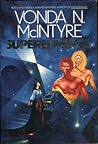
Review 742: Superluminal


SuperluminalSuperluminal by Vonda N. McIntyre
My rating: 4 of 5 stars


This book is one of those that sat on my bookshelves for several decades. I used to be drawn to science fiction more than I am these days. The other day I decided to try the book, see what I make of the beginning at least. Well, the story drew me in and ended up reading the book in about 24 hours.

The story starts out about a newly made pilot, Laenea Trevelyan, a brash woman. To be a pilot the doctors take out your heart and replace it with a machine which you need to control. This is done since people cannot stay awake during transit, which is faster than light travel. As crew you must be put into sleep pods. Laenea has a hard time sticking to the doctor’s orders, staying in the hospital even. When she ventures out, she goes to see her friends who are all crew, but they no longer want to talk to her. There becomes a hierarchy with pilots being looked up to and revered.

Later we meet Radu Dracul who Laenea becomes very friendly with, despite him being crew. Radu is new to earth, being raised on the planet Twilight. He doesn’t know the rules or at least how people are socially. They discover one reason why crew and pilots aren’t friends.

A third person becomes important to the story, Orca whose family has changed their DNA to become more similar to water mammals. They at least speak a common language.

There were some corny bits here and there, perhaps my rating is a bit high, but the story sustained me and I fairly enjoyed it. The book was published in 1983 during a time when there were fewer women writers of science fiction.
Sunday, September 20, 2026

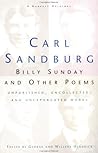
Review 741: Billy Sunday and Other Poems

Billy Sunday and Other PoemsBilly Sunday and Other Poems by Carl Sandburg
My rating: 4.25 of 5 stars


This book of poetry is organized into twelve parts. Nearly all of the included poems were previously unpublished. The title poem was one published before in 1916, but in a revised version and without naming the preacher. Most of the poems were written between 1910 to early 1930s.

The poems are generally easy to read, straightforward without a lot of abstraction. Sandburg wrote so the common person would be able to understand his meaning. And his meaning comes through clearly. He is one of the downtrodden, the working class, the poor. He is a socialist.

His words paint portraits of people. A few describe atrocities, such as WWI and the sinking of the steamship Eastland which resulted in the drowning of hundreds of people, workers and family on their way to a company picnic. There is a section of love poems as well, which are mostly tender or passionate.

I bought this book many years ago, before taking poetry classes in college. I do not remember what brought me to purchase this book of poetry, perhaps it was what just a random purchase of poetry as I did back then. And hard to say why I never picked it up until recently.

Thursday, September 17, 2026

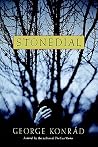
Review 740: Stonedial

StonedialStonedial by George Konrád
My rating: 3.5 of 5 stars


This book appears to be obscure, as there are only three other reviews and none in English. My English edition was published in 2000, which is before goodreads really became around, so perhaps that is why so few entries? I have discovered through goodreads this book is listed as a second in a series, although there is no indication of that in my book.

The book was a frustrating read, for at least the first half. I almost put it aside and DNF it multiple times but kept going since it’s not overly long and have owned the book for many years. In the end it was worth it to have kept going.

The book is a translation from a Hungarian, which might explain some of the awkwardness of the writing of the POV shifts, but I doubt it. There were history, future and present all going on at the same time, and with the POV shifts so it was fairly confusing. The main character, János Dragomán would be referred to in the third person, but sometimes in first person as the narrator. This shift would happen suddenly, and it took a while to figure out this was the same person being spoken about.

János Dragomán, an itinerant philosopher, professor and writer returns to Kandor to be awarded an honorary degree, and see his old friends. He is also a womanizer, which plays in the plot particularly in the later portion. The narration kept returning to 1956, when there was an attempt in Hungry to revolt against the Russian occupation. Dragomán was a student then and was active in this revolt.

In this present time Dragomán just discovers he has a daughter and grandson, which has him contemplating staying in Kandor. There is more, but I’d rather not reveal the entire plot.

A bit of a strange book, but glad I stuck with it. Most of the action was in the last quarter of the book, which was straightforward for the most part, unlike the prior portion of the book. I suppose this answers why there are so few reviews, I expect many would have given up as I nearly did.


Friday, August 21, 2026

Review 728: Interpreter of Maladies

Interpreter of Maladies Interpreter of Maladies by Jhumpa Lahiri
My rating: 3 of 5 stars


This is a collection of nine short stories. I found it mixed, a few I really enjoyed, while others not so much.

The characters in these stories are in the United States from India or Bangladesh. The stories explore the cultural aspects of the people while living in a different type of society. There is the juxtaposition of the way things are done in America to how these characters were raised.
I enjoyed the last story, The Third and Final Continent. A young man needs temporary lodging while he waits for his new wife to come to American and join him. He finds a room with an elderly woman, and he is very surprised when he finds out she is over 100 years old.

In the second story, When Mr. Pirzada came to Dine, is narrated by a child. Mr. Pirzada is now from Pakistan as the story takes place during the time of India being ripped apart. The family should now dislike and separate themselves from him as their home countries, but of course they do not. I thought this was one of the better stories as well.


Wednesday, July 29, 2026

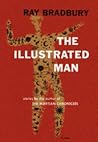
Review 721: The Illustrated Man

The Illustrated Man The Illustrated Man by Ray Bradbury
My rating: 3 of 5 stars


This Bradbury book is a series of short stories. The opening, prologue has a man who meets the illustrated man who warns him not to look to closely. But of course, he does. The images on his skin move and talk and tell these stories... An interesting frame, except it doesn't hold up in the final story.

Then the stories themselves have not aged well. All the women hold traditional roles. Many stories feature rockets going to Mars, or other planets, and it is the men. They hold the jobs; women do the domestic work. I suppose it is to be expected for stories written in the late 1940s-50s, but I had hoped for more imagination.

As mentioned, a rocket was in most of the stories. It felt there wasn’t enough variation of the stories. A few of the stories tended towards horror, or somewhat odd. Although the book is clearly science fiction, the writing focus was on the people and relationships, as much as you can in a few pages. The setting of a rocket going to another planet was just transportation. It wasn’t described how it was possible, nor how the time to travel was quick. What mattered to the story was the man being away.

Overall, the book was not as spectacular as I had hoped, just okay.

Saturday, July 25, 2026

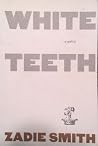
Review 719: White Teeth

White Teeth White Teeth by Zadie Smith
My rating: 3 of 5 stars


An extensive book about two, then three families. The book is written with heavy amount of humor, tongue-in-cheek and outlandishness. This over-the-top style didn't vibe with me.

The first half or so of the book would jump from one person to the next without a seeming plot, so it was hard to get placed within the book. By the time the plot came out it was just ridiculous, and I could hardly care anymore.

I will say for a first book it is well done, there is writing skill. It just wasn't for me. I've had this book sitting on my shelf for so long, thinking I'd enjoy it more. At least I finally got to reading the book.

Book rating: 2.5 stars.
rounded up for the writing skill

Thursday, June 18, 2026

Review 704: The Autobiography of My Mother

The Autobiography of My Mother The Autobiography of My Mother by Jamaica Kincaid
My rating: 4 of 5 stars


After taking a Caribbean literature class in college I bought this book, then did not read it. So after a couple of decades it was finally time. I went into the book somewhat blindly knowing nothing about the story.

Xuela Claudette Richardson was born without a mother as she died in childbirth. Her father, not knowing what to do with her gave her to his laundress as if she was dirty laundry. This woman did not love her. Her father ruled her life, to some extent, but was distant and one could hardly say he loved her. She was born of mixed race in Dominica. Her father sent her to school, actually more schooling than would be expected of a girl in that country. She did not make any close friends. Zuela instead would find what she needed from her own self. She could only rely in her own mind and body.

For much of the book it is somewhat sexual but the language used is not graphic nor what you may find in most typical books. It is the language that propels this book. It is poetic it is sensual.
Zuela’s world is a harsh one. That she claims herself and knows what she wants is amazing. She makes no apologies, lives fully in the world where she is born into, surprising self-accomplishment.

The book is all Zuela’s words of her mind and very little interaction with others as far as dialogue. Yet it works. This is to be read for language and writing style, not so much for the content. And that is what my rating reflects.


Monday, March 2, 2026

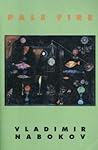
Review 671: Pale Fire

Pale Fire Pale Fire by Vladimir Nabokov
My rating: 5 of 5 stars


The format of the book is unusual, not your typical novel. All of it is fiction, where the form is a critical analysis book of a long poem. The long 99 line poem is called Pale Fire, by fictional American author John Shade. The bulk of the book is the commentary by Charles Kinbote, author of the foreword and editor of the poem. The commentary dissects the poem by lines, or sometimes just a word.

Kinbote was the neighbor, and “close friend” of the author in the last months of his life. Shade had just finished the poem when he died. Kinbote expected the poem to be about his country Zembla, where the king was overthrown, but escaped while being held captive.

The details of all this comes out in the commentary, which is not what the poem is about, but Kinbote misinterprets it, or adds all of his own details. It ends up being quite entertaining.

I even read the index entirely since there was humor found in those referenced notes. Nabokov writes so incredibly well. I love all the unique words he uses in his writing, makes for delightful reading.


Saturday, January 17, 2026

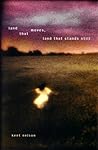
Review 657: Land That Moves, Land That Stands Still

Land That Moves, Land That Stands Still

Land That Moves, Land That Stands Still by Kent Nelson
My rating: 4 of 5 stars


The opening of this novel has the husband, Haney, being killed in an accident on the farm while building a fence in the pouring rain. They had already lost a son years ago. Now Mattie is alone, except her daughter comes home from college to help out. The farm needs constant work. Shellie didn’t do farm work while growing up, so she has to learn too.

Mattie is confused by several things she learns shortly after her husband’s death, like why did he want to be buried in Maine instead of next to their son here in North Dakota. She finds a plane ticket he bought, then there was an invoice from their neighbor. They had friends from Maine, but couldn’t find letters from them and Mattie looked everywhere.

Meanwhile, the work continues. They had advertised for a man to help on the farm, and a young woman showed up instead. Dawn, as she wants to now be called, knew how to fix the farm equipment so it worked out.

There was also a young Indian boy hiding out in the barn. Mattie coaxed him out, said he could stay, and she paid him for helping out with all the work too. But in the fall he would need to go to school. The boy was shy and took a very long while to figure out his name. In the meantime Mattie looked into a missing person’s report, trying to find his family.

While the women work the farm things happen, and they also learn about Haney’s life.
There was something about this novel that has stuck with me, my mind keeps going back to that farm, the rural area in North Dakota. The author drew the characters fully, although not all completely likeable. There’s sadness, violence and neighbors that you just know are going to do something horrible someday.

This was another book that had lingered on my bookshelves for a long time. I’m glad I finally picked it up to read, but it wasn’t easy going the whole way.

Sunday, October 26, 2025

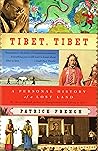
Review 636: Tibet, Tibet

Tibet, Tibet: A Personal History of a Lost Land Tibet, Tibet: A Personal History of a Lost Land by Patrick French
My rating: 5 of 5 stars


While this book is a bit of a travelogue of Patrick French traveling through nearly every corner of Tibet, it really is more of a history of the country. French was the director of the UK organization Free Tibet Campaign. It had been about ten years since French had been to Tibet and decided it was time to return and see what the situation was like first-hand.

French travels extensively throughout Tibet and talks to people of all kinds, various age groups, rankings, in cities or very rural areas. He tries to cover everywhere and everyone it seems like, quick thorough.

For this trip he decided not to go through official channels, as part of a media person or using his office connections. So while the book is factual, he does not reveal anyone’s real name, nor does he use stories that may be too specific to identify someone. While in Tibet, talking to people, he doesn’t want the PSB (Public Security Bureau) to take interest in anyone associated with himself. It’s obvious French is a foreigner.

The stories and history of Tibet are what make this book. It’s quite horrifying to read some of what happens to people, how Mao/Beijing used force to change people from their traditional ways. There several very difficult periods, first being the actual fighting and loss for Tibet. Then quickly after came the Great Leap Forward (started in1959) which resulted in mass starvation, later The Cultural Revolution (beginning late 60s) which in Tibet had in part smashing up monasteries and religious artifacts. Many of the personal stories are from these eras, but not all.

There is much more here, such as the history and relationship of Tibet and China through the centuries. The relationship of the Dalai Lama to the people of Tibet. I found the book very informative. The book is now two decades old, have been many substantive changes since the book was published? Tibet is still not free, not autonomous despite the name of the region. The people are tightly controlled, have been since Mao took over. Good book to understand Tibet.

Tuesday, October 7, 2025

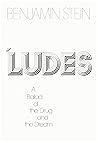
Review 629: Ludes

Ludes Ludes by Ben Stein
My rating: 3 of 5 stars


This book is completely different than what I thought it may be. Many, many years ago I picked this up at a used book library sale, during a brief moment when I thought I’d like to be a psychologist someday. I believed this book was a psychological case study, something academic. No, it is not that.

This is a non-fiction account of a friend of Ben Stein's descent into drug addiction. Stein, who used to host a game show called “Win Ben Stein’s Money” and has appeared in films and such. He’s a writer as well, starting with the Nixon presidency. This book takes place shortly after the political writing ended and now in 1976 he’s writing for The Wall Street Journal, mostly cultural type pieces. Ironically he was the only one with any graduate work in economics on the editorial staff, yet he’s the one not writing the economic pieces.

Stein writes about his friend Lenny Brown, from their first meeting at The Wall Street Journal where Lenny tried to sell him on a financial real estate tax shelter deal on a cold call. For some reason the two clicked and they become friends. The book is a slightly autobiographical, but primarily a profile of his friend and his demise into becoming addicted to quaaludes, or ludes. Yet even here it takes a very good portion, about 40 percent of the book, before Lenny takes his first pill.

We learn all about Lenny’s life of selling and not quite making it, then he gets his break and is hired this guy Max in Los Angeles. Finally Lenny is living the life he always thought he deserved. Eventually Stein makes his way to Los Angeles too, now working with production companies.

The book is non-fiction, but all names have been changed, except Ben Stein’s and one other that is noted in the book. Yet it is written like fiction, recanting conversations and other minute details. Stein mentions how he knows these things, but there are moments when some of this must be fictionalized for the sake of the story and flow.

It's quite readable and quick, but a bit unusual really. I expect this is something that has become a bit obscure.

Thursday, October 2, 2025

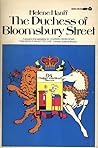
Review 627: The Duchess of Bloomsbury Street

The Duchess of Bloomsbury Street The Duchess of Bloomsbury Street by Helene Hanff
My rating: 4 of 5 stars


This book takes place for roughly six weeks while Helene Hanff finally gets over to London. Her previous book just published and the publishers want to do some publicity with her. Shortly before she left, a slight delay, as she had an emergency operation. This does add complications but she handles it well.

This book is her journal of the trip, starting with the airplane ride.

Since this is the 1970s things are different than today, such as booked two hotel rooms in case one didn't hold the reservation. Or at least that's not how I've been doing things. And as I understand it, I would be liable to pay for both if I cancel one at the last minute, or just don't show up. Anyway, Hanff is very trusting with people. She accepts all sort of invitations, many by friends of friends, but also accepts invitations by fans to go to lunch or something. She is economizing and the more she takes these lunches and dinners the longer she can stay in London.

It's a short book, entertaining but I do prefer her previous book better.

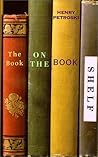
Review 625: The Book On the Bookshelf

The Book On the Bookshelf The Book On the Bookshelf by Henry Petroski
My rating: 5 of 5 stars


Earlier this year I read an Object Lessons series book Bookshelf, but it was a bit short for me, left me unsatisfied and curious to know more. Well it happens on my bookshelf for many, many years was sitting this book by Petroski, a book often quoted in the Object Lessons book. I’m glad I finally read it.

Petroski’s book is primarily about the history of the bookshelf, the furniture that holds books. Some history of the book itself is discussed, but that wasn’t the focus and likely there are more detailed books out there.

The furniture for books was varied in centuries past. Early forms were a type of box like a hat boxes when books were scrolls. When the book became closer to today's format there were stored in what we may call a truck but are properly called armaria. They could lock, which was important when books were few.

As books changed, the furniture did too to better hold them. As books became easier to copy, from hands to machines, then more people started to collect books. Libraries started to collect many more, and so the bookshelf came about. Still they were stored differently than today.

While books were still valuable there were chained libraries. The types of furniture and how these books were chained was a chapter or two. Some of the early shelving after the chained libraries had books facing up and at an angle. Often books were stored with the foredge showing, as this was before spines held any information on the book. It took centuries before the standard format of the bookshelf and spine out that we see today.

For most of the history of the book, and shelving, placement of shelving had to account for light. When libraries grew they had to be mindful of how the windows and shelves line up to prove the best lighting for reading. This was particularly important when the books were chained.

I had started to read this via audiobook but quickly realized that was not the best way to read this book. Since I had a print copy, I turned to reading it. Besides with audio I would have missed all of the illustrations that are throughout the book, and they definitely enhance the reading.

This is a quite detailed book, which I did appreciate. Although it is a couple of decades old, the eBook was being developed and is mentioned a few times. What dates the book is more the descriptions of the internet. But these portions are minimal.

The appendix is to be noted as here were listed 25 different ways to shelve a book. Petroski took some fun here, as it was more light hearted, and certainly not exhaustive. I noticed the bibliography at the end contained a long list of books that I could really go down the rabbit hole with this topic, but maybe I will leave it here. This one did satisfy a lot of my curiosity about the history of bookshelves. But it did make me kinda want some ancient book furniture.

Thursday, September 18, 2025

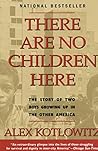
Review 621: There Are No Children Here

There Are No Children Here: The Story of Two Boys Growing Up in The Other America There Are No Children Here: The Story of Two Boys Growing Up in The Other America by Alex Kotlowitz
My rating: 5 of 5 stars


This book was devastating to read how these young children grew up in the Chicago projects. The book is a very close look at the lives of two brothers Lafeyette and Pharoah Rivers, 9 and 12 at the start of the book. Journalist Kotlowitz was embedded into the Rivers family life for two years, Summer of 1987 to September 1989.

The family lived in the projects in Chicago. LaJoe Rivers had eight children with Paul Rivers and still remained married to her husband, which was somewhat unusual circumstance for their background. The kids father sometimes was around, but didn’t really live with them. The three older kids were nearly adults, Lafeyette and Pharoah were the middle kids, then a set of triplets were their younger siblings. LaJoe was on welfare, had food stamps, and had the constant hope of being able to move out of the projects.

Gun violence, drugs, and gangs dominated their lives, along with poor living conditions. The bathroom tub faucet constantly ran, doors wouldn’t shut properly, the stove oven barely worked, among other problems. And the apartment was overly crowded. Each of the older children had succumbed to either drugs or crime. LaJoe hoped at least one of her children would make it by getting a high school diploma.

Pharoah developed a stutter due to all the trauma he experienced. The summers were the worst, as gang activity picked up, shootings became an almost every day occurrence. The Rivers boys lost several friends due to all the violence, one an accidental police shooting. Their older brother Terrance was picked up an charged with a shooting he had nothing to do with, the charged ended up being dropped after the eye witness admitted he didn’t do it. Later Terrance was again charged with a crime he didn’t commit, but was now 18 so he was in adult court this time. Lafeyette also ended up in juvenile court over a crime he didn’t commit either. Just being black and nearby seemed to make you guilty.

The book was written very well, read like a fiction book. The author’s note explains how he conduced his research, verifying everything with multiple accounts, if he wasn’t there. Since this took place several decades ago, one can hope the environment has improved, although I fear not enough.

I was amazed to find an audiobook at my public library, and that got me to finally read this book. I bought this book back around when it came out, so it’s been lingering very long on my bookshelves unread.

Tuesday, September 16, 2025

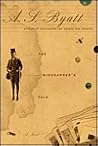
Review 620: The Biographer's Tale

The Biographer's Tale The Biographer's Tale by A.S. Byatt
My rating: 4 of 5 stars


It’s been decades since I read an A.S. Byatt book. I was enamored by her writing in the late 90s, and somehow stopped reading her work. This book reminded me why I do like her writing, and why I don’t as well.

The narrator, Phineas G. Nanues, is a young literary fellow who decided to give up literary criticism as he sees no point in it. Instead he wants to interact with things.

A professor, who then becomes his new advisor, gives him a three-volume biography of Sir Edmund Bole written by Scholes Destry-Scholes. Phineas is enthralled and decides that he will do a biography of Destry-Scholes. He also needs to get a job, and finds himself working for a unique travel agency.

This book is his record of this transition and his searching, and of his life. Destry-Scholes is not an easy man to find, although Phineas is a very good researcher he is unable to come up with information. Slowly, a few pieces come to him and he finds that perhaps Destry-Scholes was working on a biography of some sort of three different men. These papers and findings are included verbatim in the book. This is where sometimes it gets a bit tedious and reminds me why I don’t like Byatt. Too much in the weeds!

As Phineas is writing he says he hates autobiographies, he is not going to write one, yet his record does indeed become that. There are layers in Byatt’s writing. Sometimes I feel not adept enough to catch everything. The layers in just the title and the biography here is a bit obvious, that helps.

I have several more of her books still waiting to be read, and will get to them sometime, hopefully before decades pass.

Friday, May 2, 2025

Review 577: Scotland: An Intimate Portrait

Scotland: An Intimate Portrait Scotland: An Intimate Portrait by Geddes MacGregor
My rating: 5 of 5 stars


This is a slightly dated book with the original copyright of 1980 and first published in 1985 under the name: Scotland Forever Home. This edition was published in 1990, but hard to say if anything was changed from the original. It reads like this was written in the 1980s.

The later chapter about Scottish politics and outlook on independence was where the age showed itself the most. As part travel guide it there may be some changes there. Then again, some buildings, castles, and bridges have been around for centuries so a few decades may not make much of a difference.

The book is partly history, partly travel guide, partly cultural guide and partly entertaining. MacGregor has a way of writing that made sure the book wasn’t dull. Peppered throughout were small vignettes, stories, or tales that would help give the flavor of the people of Scotland.
One I found hilarious, paraphrased here found in the description of Aberdeen and tradition of fishing. A “fishy story” of a fishwife and a man asking about the freshness, who also happened to be a ventriloquist. He asks if the large cod she was carrying around to be sold was fresh, of course she answered yes, “I’ve just brocht it in fae the sea.” The cod replied “Sh’es a lee-ar. I’ve been here for a week!”

Just about all aspects of Scotland was covered, although not thoroughly as that would be way too much to fit all in. Such as the section on islands, MacGregor had to pick some to describe and provide some information, but many of the 787 islands had be overlooked.

The book concludes with 9 appendices, two are for Scottish words, two for historic dates, one on cuisine, another on whisky and a few others. It does feel like MacGregor covers it all.

I would be remiss not to mention how MacGregor is writing this for the Scottish Diaspora, particularly the American with Scottish ancestry, which would mean myself. Several times he says you must visit the homeland, perhaps like a pilgrimage. I’ve had this book many years, perhaps since the mid-1990s and I’m not sure why I neglected to read before. It certainly would have been a good book to read before either of my visits to the homeland.

Friday, April 25, 2025

Review 573: A Sand County Almanac: with other essays

A Sand County Almanac: With Essays on Conservation from Round River A Sand County Almanac: With Essays on Conservation from Round River by Aldo Leopold
My rating: 5 of 5 stars


Many years ago I read about half of this book, the first Part – A Sand County Almanac, for an Environmental Literature class while doing my undergraduate studies at University. The professor said the rest of the book wasn’t worth reading, as it wasn’t his best work. But I had always wanted to get back to the book and finish the rest of it. Now, I finally have.

Perhaps he was right in that the first portion is very good, but the other essays were very much worth reading.

Aldo Leopold died in 1948 and this book was first published shortly after his death, being over a decade before Rachel Carson’s Silent Spring. Leopold’s book then being the first to warn of the ecological damage.

The book is broken into 4 Parts:
Part I: A Sand County Almanac
Part II: The Quality of Landscape
Part III: A Taste for Country
Part IV: The Upshot

Each part is then divided into many more sections and subsections. Part I is broken down to each month, with some further subsections. Part II is divided by some geographic regions. Part III is the only one that doesn’t have subsections. The last two parts are essays, all with the same theme as the rest of the book. My print book is accompanied by line drawings throughout the book. Sometimes the bird or animal doesn’t quite match what is being discussed, but still it is a nice accompaniment.

I listened to an unabridged audiobook for much of this, but it was lacking many of the essays, such as the entire part 3 of my print book. Perhaps there are different versions of this book of what is included.

The author is a hunter, but you can see by the end of this book that he begins to think that taking photographs is perhaps a better way to hunt. Other than the pro-hunting aspects, this is an excellent book. There are many well-turned sentences and passages that make this one of those books you can return to time and again. I’m glad to have finally read the entire book.


Prior to this latest reading:
Read the first half - A Sand County Almanac portion, the other two shorter portions I haven't yet read: Sketches Here and There, and The Upshot. Keep meaning to get back to it.


Thursday, April 10, 2025

Review 568: Drinking Coffee Elsewhere

Drinking Coffee Elsewhere Drinking Coffee Elsewhere by ZZ Packer
My rating: 3 of 5 stars


This collection of 8 short stories took me longer to read than a typical book of similar length. It isn’t a long book either, under 250 pages. I think it is the format. It feels like the older I get the less I like short stories. Maybe I would have liked these better when I first got the book, over twenty years ago.

These stories had a little length to each, so they didn't feel like they ended entirely too early. One good thing about short stories is that if you don't like the characters, well it's over soon enough.

My favorite in the group was the last one: Doris is Coming. Here a high school student, Doris is trying to come to terms with the differences of black and while people. She is black and this is the 60s with Martin Luther King giving speeches, sit-ins at lunch counters and other protests. Doris doesn’t understand why her skin color should dictate a different drinking fountain.

All of the stories are told from the point of view of an African American, usually a young woman or girl. They are complete enough, more than many other short stories are. Some feel like they could be the beginning of a longer story, a few feel like what was given was enough.

Monday, March 17, 2025

Review 560: Ice

Ice Ice by Anna Kavan
My rating: 2.75 of 5 stars


This is a surreal book with many dream sequences, or hallucinations tossed in that make it hard to know what is real or not. Certainly this was purposeful, but make for uncomfortable reading experience. None of the characters or places are named. The story is about an impending world catastrophe that ices over the planet, meanwhile war is breaking out everywhere.

The narrator is a man who is involved in the war somehow, maybe in intelligence, it isn’t clearly explained. He is haunted by this woman who he almost asked to marry. She is portrayed as childlike, very thin, an albino with silvery white hair, and was raised in such a way that is very docile. He was careful with her, trying to gain her trust, when suddenly this other man married her. Thus the three main characters. This other man is very dominant.

The narrator has these awful dreams about the woman, sometimes they seem to be waking visions of what happened, but he couldn’t actually know this. The narrator often makes statements like “Reality had always been something of an unknown quality to me”, or “it dawned on me that this was reality and the other a dream”. Yet these statements don’t always come with the altered sequence of events.

The narrator can’t stop pursuing her, at times he feels like he is saving her from the other man, or from the imminent emergency. It is cold, snowing artic weather. He travels by boat, plane, or car, whatever means he can get. He ends up in an unnamed town, unnamed country, time and again. He always seems to get arrangements yet it usually isn’t explained how he contacts these people, how he knows to get on this boat at this specific time.

The woman seems to have no say in her life. She is roughly handled by her husband, or this other man, who seems to be her husband, but in different countries. It’s never very clear. He is kept up in a room, not able to leave. Our narrator tries over and over to get to her, to see her, and when he does she wants him to leave her alone. She is often called a girl. It’s uncomfortable to read.
Yet some of this is Kavan blending in her own life into fiction. She had two failed marriages, the men pursued her and she felt she had no say in her life. She travels around during WWII trying to escape the fighting, and this matches the book, although the female is not in control, was Kavan during this time? I don’t know enough about her biography.

The foreword placed this book into the genre of slipstream, not quite science fiction, but blending into other genres. Other authors in this category include J.G. Ballard, Philip K. Dick, and Haruki Murakami to name a few. I think this (new to me) category works well. The book is sometime in an unnamed future, with an ecological world collapse, covering everything with artic snow and ice.

Friday, March 7, 2025

Review 555: The World Until Yesterday

The World Until Yesterday: What Can We Learn from Traditional Societies? The World Until Yesterday: What Can We Learn from Traditional Societies? by Jared Diamond
My rating: 4.25 of 5 stars


Somehow I have admired Jared Diamond’s writings without ever having read one of his books. Or maybe I just thought I admired it. I did see a documentary that was based on his book Guns, Germs, and Steel and I have a copy of the book a friend gave me, but have yet to read it. I bought this book, in audio form, over ten years ago. So it is nice to have finally read some of his work.

I did enjoy the book for the most part. It is on the longer side which is why I have avoided it for so many years, but I should not have feared its length as it went quickly. His writing style is very readable. And with this book the concepts are simple, maybe too simple?

Much of the book looks at traditional societies and how they conduct their lives and compare to our modern, western lives. These traditional societies are living mostly as they have been for thousands of years, how our human bodies have evolved. Today in the modern world suddenly we have a different way of life, as far as evolution goes, very sudden.

Diamond is clear that the traditional ways are not always the best ways, and there is much in the modern world that is better. However, we may have left behind a few ways of living that would serve us better if we took that practice back up. One example is by speaking more languages and raising children in multilingual households. It is common for immigrant families to have the children speak only the dominant language and not to learn the family language, but there are many reasons why being exposed to more than one language since birth is good.

The last part of the book goes into a lot of detail about food, eating and the diseases that come from the sedentary modern lifestyles. It feels like this over use of salt and sugar is very common knowledge, yet Diamond uses very compelling examples of how the modern diet effects human bodies. When a traditional society, such as Papua New Guinea, suddenly becomes integrated into a more modern society the rise of diseases previously unknown in their society start to show at alarming rates. There is a shift from communicable diseases in the traditional world, to non-communicable, such as diabetes and heart diseases. I found it interesting what he says about rates of cancer are virtually unknown in traditional societies. Yet, the average life span is also at least 20 years less, and cancer is more prevalent the older you become.

There are some very incredible stories in here too. The chapter on dangers was quite fascinating, which Diamond relating several stories about how he was unaware of the danger he was in until much later. Also, a harrowing story of an overturned boat and his hope to make it out alive.


Previous Popular Posts