Showing posts with label Environmental. Show all posts

Saturday, September 12, 2026

Review 737: American Oasis

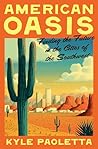
American Oasis: Finding the Future in the Cities of the SouthwestAmerican Oasis: Finding the Future in the Cities of the Southwest by Kyle Paoletta
My rating: 2.75 of 5 stars


While the book was okay and I’m glad to have read it, I don’t think the premise of the book held up. The author profiled a few cities in the southwest looking mainly at: Phoenix, Las Vegas, El Paso and Albuquerque, with a few other cities being mentioned. All of these places are hot desert climates, having water issues and in the last several decades huge growth. Some history about these cities were discussed.

Yet, the author described many personal stories of individuals or families that seemingly had nothing to do with the topic, other than they live in that city. The opening described the author’s upbringing in New Mexico. While one story was about a man who lost his hands in 1946 as a boy while playing with explosives. Dealing with his disability ended up giving him some fame. First a newspaper article then later working in movies. Okay, but how does this relate to that particular city and the future? (not to mention this man had moved to another state.) There are many digressions and stories like this. Interesting characters, but not all that relevant.

The last part of the book seemed to regain focus and keep on topic. Water issues are a problem and will be more so in the future. Looking at these desert and drought-prone areas is a good idea for finding solutions for the future. One interesting piece of information was that despite all the growth in Las Vegas, through their water policies the amount of water consumed has stayed at the same level. I just wish the narrative had kept this at the forefront for most of the book.


Thanks to Knopf, Pantheon, Vintage, and Anchor/Pantheon and NetGalley for an uncorrected electronic advance review copy of this book. However, I read and listened to a published copy of the book, as it was published over a year before I finally got to the book. Apologies for the lateness.


Thursday, July 16, 2026

Review 717: Fires in the Night

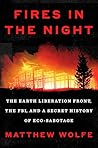
Fires in the Night: The Earth Liberation Front, the FBI, and a Secret History of Eco-SabotageFires in the Night: The Earth Liberation Front, the FBI, and a Secret History of Eco-Sabotage by Matthew Wolfe
My rating: 4 of 5 stars


The events discussed in this book took place mainly, but not entirely, in the Pacific Northwest by a group of young people called ELF, Earth Liberation Front during the 1990s. The first part of the book is more focused on several of the people involved in setting fires or actions to liberate animals. Law enforcement is peppered throughout the book but is discussed more thoroughly in the later part. The author Wolfe is neutral in this book, doesn’t provide opinions only facts of what happened or balanced, counterposing views. The writing was done well in making this a coherent narrative.

There was a good discussion on how these types of acts have become labeled as (incorrectly) terrorism, also known as eco-terrorism. There was a major shift after Sept.11, 2001 with Bush declaring a war on terror and including these types of groups with increased surveillance and infiltration.

The book was intriguing. These young people were working towards laudable goals, wanted to improve the world, but went about it entirely the wrong way. At least they were always mindful to harm only property, or seemingly help animals, and never purposefully harm people. Yet in the end, they had to ask themselves how much did their actions help in promoting their cause?


Thanks to Viking Penguin and NetGalley for an uncorrected electronic advance review copy of this book.

Wednesday, July 1, 2026

Review 710: This Land Was Saved for You and Me

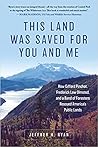
This Land Was Saved for You and Me: How Gifford Pinchot, Frederick Law Olmsted, and a Band of Foresters Rescued America's Public LandsThis Land Was Saved for You and Me: How Gifford Pinchot, Frederick Law Olmsted, and a Band of Foresters Rescued America's Public Lands by Jeffrey H. Ryan
My rating: 4 of 5 stars


This book provides the history of how land in the United States became preserved for future generations. Nothing in the book addressed deserts, it was very tree oriented.

U.S. Forest Service, National Parks, Wilderness Preserves, and other public lands have a history, and part of that history is told in this book. Its focus is on some of the men that fought the land and forests.

The book begins with Frederick Law Olmsted, managing a mining operation in the California Sierra Nevada. Needing a break, he wanders to the Yosemite area and is astonished by its beauty. Olmsted realizes this land needs to be protected before it is destroyed by commerce, either mining, clear-cutting timber or some other extraction method that destroys beautiful landscapes.

There are more biographical details of Olmsted for the page length of this book than he deserves. I didn’t mind too much since I’ve been interested in learning more about the guy. Yet it did detract from the premise of this book.

From Olmsted the book discusses Gifford Pinchot. I found it interesting that Pinchot was groomed by his father to become a forester, and good thing he liked it. Pinchot saw opportunity to make his mark with forestry. Like all early foresters he got his forestry education in Europe, then back to the United States, first working with Olmsted then quickly becoming the lead man on forestry management.

At this point there was a lengthy discussion about the development of schools for forestry and development of an agency within the federal government. Pinchot was quite influential with both aspects, even being underhanded towards people he previously worked with.

Pinchot’s view towards forestry was that forests were to be used, not preserved, and this viewpoint became very influential in managing forest service lands. He not only headed the new agency he also trained many foresters for many years.

Further in the book discusses other men who saw that needed to be preserved as wilderness, untouched by humans for the future. They believed that wilderness helped humans reconnect with nature and was good antidote for city life.

The book had many interesting points and yet it also was too large of a topic to be adequately cover everything for a book of under 250 pages. It also seemed to miss quite a bit as well, such as neglecting to mention any women who also helped in the fight to protect lands.

Tuesday, December 30, 2025

Review 652: The Voice of the Desert

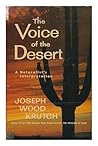
The Voice of the Desert, a Naturalist's Interpretation.


My rating: 4.5 of 5 stars


In the decade or so before Rachel Carson wrote her seminal book, Joseph Wood Krutch started writing environmental literature. In this book Krutch describes in detail several plants and animals that are found living in the desert near his home in Tucson, Arizona. He starts with describing the desert in general terms then to what is a desert – the dryness. Then he starts with the animals, a desert toad that lives most of his life just under the surface until the summer thunderstorms when they come out to mate. Then onto the roadrunner.

In describing different cactus trees, and how it can grown into a forest, I was surprised to learn the saguaro is the quintessential cactus that symbolizes a desert with its upended arms. Despite that, the saguaros have limited range of where they grow.

The scorpion and tarantula are two unexpected animals described in the book. The scorpion is an ancient animal, one of the first animals to breathe air, and it hasn’t changed very much since those early days.

This leads Krutch into a discussion about evolution and contemplation of a guided approach. He leaves it mostly as questions. Going further he discusses if any animal has purposefully made a decision thus encouraging evolution a specific direction, as opposed to just purely nature making all movements and actions on the part of the animal. During this part Krutch was mostly talking about insects, such as a wasp.

Then there was the moments when he mentions the climate changing, which was a surprise to me for a book from the mid-1950s.

Overall this was a through provoking, packed book for under 225 pages, and included some black and white photographs. The author is not nearly as known, nor popular as other environmental writers, but I don’t think Krutch should be overlooked.


Monday, June 23, 2025

Review 595: Fire

Fire Fire by George R. Stewart
My rating: 4 of 5 stars


This book is all about a fiction fire that blows up in California. The location is fictionalized using real place names, but they aren’t near each other as stated in the book. The location is generally in the Sierra Nevada Mountains somewhere between Reno and Sacramento.

The characters are not fully fleshed out characters in the book, they are mere placeholders really for the jobs they do. A few characters do get some motivations and an extremely small amount of their life outside of the fire, but generally even then not more than a couple of sentences. Instead the main character that is fully explained and detailed is the fire. The Spitcat.

The book is broken up in “days” as the first day is the lightning strike that will create the fire. This first two chapters/days are more involved with the people, such as the Supervisor of the forest district and the fire lookout, which is a young woman. This is the only woman taking a “man’s” job during the firefighting operation. The only other women are not even named, but are secretary timekeepers or cooks.

The book was written in the 1940s, and the date does show. Not only with the sexism but also with the techniques of fighting fires and the approach to it.

I liked how the book described all the ways they pulled men in to help fight the fire. There were first the young boys, high school age doing summer work in the mountains. Then they had the smoke jumpers come in. By the time the fire blew-up they needed an army of men, they came in from other districts. They went and recruited from the streets of skid-rows in Stockton, Reno and Sacramento. They called these men pogies. They also brought in soldiers and convicts.

The book has two viewpoints, one that the forest is there to be used by man and the other to be remain pristine as a natural park for beauty. While the animals are of concern, there isn’t any concern about ecology or natural systems in how everything is connected.

In any case, this is a through telling of a fire burning through a forest.


Previously Read George R. Stewart books:

Thursday, May 29, 2025

Review 586: Wild Girls

Wild Girls: How the Outdoors Shaped the Women Who Challenged a Nation Wild Girls: How the Outdoors Shaped the Women Who Challenged a Nation by Tiya Miles
My rating: 3 of 5 stars


This is one of the first two books in a new series called Norton Shorts, by publisher W.W. Norton. They are calling it “Brilliance with Brevity”. Further description “Written by leading-edge scholars, these eye-opening books deliver bold thinking and fresh perspectives in under two hundred pages.”

For this book, and one of the inaugural books for the series, I think it missed the mark. It was short, and I think that was part of the problem with the book. It was even under 150 pages, it needed more length.

The author Miles focused only on a few women and it needed more depth to hold up to that subtitle. I don't think the author proved her thesis. Also, even with these few women it was occasionally a stretch in placing the outdoors with the women, although not for all of them.

The main subjects were: Harriot Tubman, Louisa May Alcott, and Genevieve Healy, Jane Johnson Schoolcraft and Mamie Gavin Fields get a few pages, along with mentions of Sakakawea. Miles also writes extensively about a girls basketball team of Native Americans. It was highly unusual for the time. I do appreciate the author finding some women who may have made a mark during their time, that are not well known. However, I was still wanting more.

The book contained some photos, all in black and white, and the back had an extensive section of notes on sources and quotations. Which then brings the text to 120 pages, yes, very short.


Friday, May 9, 2025

Review 579: When It All Burns

When It All Burns: Fighting Fire in a Transformed World When It All Burns: Fighting Fire in a Transformed World by Jordan Thomas
My rating: 4 of 5 stars


While working on a graduate degree Jordan Thomas takes a break from research to understand fire better and joins the hotshots and battles wildfires for a season. He didn't put it this way, others and himself questioned why he wanted to join this elite firefighting team. One of his explanations was simply he needed money. But there are a ton of ways to earn money. Thomas was also interested in fire and wanted to understand it more thoroughly, and why not experience it by fighting it.

The book is not only about working as a US Forest Service Hotshot, it also delves into the history of fire and environmental changes being seen due to the amount of carbon in the atmosphere.

The book was a blend of personal story, history and more, but it also felt somewhat uneven. The history aspect turned into outrage against corporations, while it may be understood, it changed the tenor of the overall book.

It was fascinating to get an inside look at this dangerous job, that is being even more necessary as more of these firestorms and super-heated wildfires will increase in the coming years.


I listened to the audiobook version of this book, which was narrated by the author. Oftentimes author narrators don’t do this very well, but this was an exception and was well done.


Thanks to Penguin Group Riverhead and NetGalley for an uncorrected electronic advance review copy of this book, and PRH Audio for advance access to the audiobook.

Friday, April 25, 2025

Review 573: A Sand County Almanac: with other essays

A Sand County Almanac: With Essays on Conservation from Round River A Sand County Almanac: With Essays on Conservation from Round River by Aldo Leopold
My rating: 5 of 5 stars


Many years ago I read about half of this book, the first Part – A Sand County Almanac, for an Environmental Literature class while doing my undergraduate studies at University. The professor said the rest of the book wasn’t worth reading, as it wasn’t his best work. But I had always wanted to get back to the book and finish the rest of it. Now, I finally have.

Perhaps he was right in that the first portion is very good, but the other essays were very much worth reading.

Aldo Leopold died in 1948 and this book was first published shortly after his death, being over a decade before Rachel Carson’s Silent Spring. Leopold’s book then being the first to warn of the ecological damage.

The book is broken into 4 Parts:
Part I: A Sand County Almanac
Part II: The Quality of Landscape
Part III: A Taste for Country
Part IV: The Upshot

Each part is then divided into many more sections and subsections. Part I is broken down to each month, with some further subsections. Part II is divided by some geographic regions. Part III is the only one that doesn’t have subsections. The last two parts are essays, all with the same theme as the rest of the book. My print book is accompanied by line drawings throughout the book. Sometimes the bird or animal doesn’t quite match what is being discussed, but still it is a nice accompaniment.

I listened to an unabridged audiobook for much of this, but it was lacking many of the essays, such as the entire part 3 of my print book. Perhaps there are different versions of this book of what is included.

The author is a hunter, but you can see by the end of this book that he begins to think that taking photographs is perhaps a better way to hunt. Other than the pro-hunting aspects, this is an excellent book. There are many well-turned sentences and passages that make this one of those books you can return to time and again. I’m glad to have finally read the entire book.


Prior to this latest reading:
Read the first half - A Sand County Almanac portion, the other two shorter portions I haven't yet read: Sketches Here and There, and The Upshot. Keep meaning to get back to it.


Wednesday, April 9, 2025

Review 567: Uncertain Path

Uncertain Path: A Search for the Future of National Parks Uncertain Path: A Search for the Future of National Parks by William C. Tweed
My rating: 5 of 5 stars


A slightly academic book by someone who worked for the US National Park System for decades. After Tweed’s retirement he takes a month long hike through the Sierra Nevada mountains. This hike is used as the frame for the book in discussing how the national park’s underlying principles needs to change.

The key phrase used as the guiding principle since the agency was established in 1916 is that the parks will be preserved "unimpaired for the enjoyment of future generations." Tweed writes extensively about how there are several problems with this phrasing. The inability to change, the word even, unimpaired, is going to be nearly impossible with the effects of climate change. Already there are visible stressors to the forests from the warming climate and other pollution levels. The last chapter offers some solutions, even possible new wordings.

However, the bulk of the book is about Tweed’s hiking trip through the sierras. A friend joins him for several weeks. They encounter other park rangers and have discussions about how they are looking for a missing hiker or someone who was abusing the rules. It makes these vast parks seems smaller than they actually are. The hike also has a way of introducing some of the history of the park service. When he hikes up a peak the name naturally introduces the reason why that name adorns that mountain.

There are extensive sections about who uses the park. Stock users, those who use pack animals to get into the high country, have a long tradition but it can be damaging to the trails and the meadows. Contrast with the backpackers whose motto is leave no trace behind. Tweed also comments on the change in backpackers, fewer of the younger generations find their entertainment in the Sierras. Some who do look at it as solely a challenge, who can hike the trail the fastest, or bag the most peaks. Then there’s those people that have traditionally not looked at the forest as a recreational avenue for them.

Perhaps the book’s purpose could be summed up by these words: “The parks will have to undergo a metamorphosis that provides them with both new management goals in tune with our contemporary scientific knowledge and a redefined societal role that attracts new generations of users. Nothing less will succeed.”


Tuesday, April 8, 2025

Review 566: The Lost Trees of Willow Avenue

The Lost Trees of Willow Avenue: A Story of Climate and Hope on One American Street The Lost Trees of Willow Avenue: A Story of Climate and Hope on One American Street by Mike Tidwell
My rating: 5 of 5 stars


This book was a mix of personal story and climate change. Tidwell focuses on what was happening on his street and neighborhood, particularly the trees. The oaks dominated the streets, which had been thriving there for over a hundred years, and now were dying. Why? Tidwell finds out.
The answer to why happens to be yes from climate change, but not in a direct way such as it was hotter and the trees didn’t like the heat. No, instead it is a bit more complicated, and he shows the connections. It felt almost like a mystery the way it was laid out.

While the focus was on Tidwell’s neighborhood he isn’t entirely contained there, as he explores some of the science of solutions. The book is also fairly autobiographical, which makes it quite personable along with the other people who appear in his book, such as some of the neighbors.

Overall the book was quite readable and didn’t get bogged down with too many facts and figures or scientific jargon. One aspect that had me give this book a better rating was the book went beyond the effects of climate change and included solutions. Tidwell explored what is being done now to help get us out of this mess from all the carbon-dioxide that is already in our atmosphere, and how to prevent it from getting worse. There was a heavy focus on one of his scientific neighbors who won an X-prize for his idea of tree sequestration. This was a new concept to me, so I didn’t mind the extra pages devoted to this one solution.

I read this book from a published audiobook version that I got from my local library. The narrator did an excellent job and this could be a good way to read this book. However, I also had an eBook copy, which meant I got to see the images that are included at the beginning of each chapter. Some of the photos include his neighbors too.


Thanks to St. Martin's Press and NetGalley for an uncorrected electronic advance review copy of this book.


Monday, February 10, 2025

Review 549: Green Festival Reader

Green Festival Reader Green Festival Reader by Kevin Danaher
My rating: 4 of 5 stars


Having attended two Green Festivals in San Francisco in the early 2000s, I was interested in reading this book when it came out later that decade. My library had a copy, I read a few essays before it was due back. Later I bought my own copy later with the intention of reading it in full. Finally, last week I returned to this book and read every essay. 

I was worried these would be a little outdated by now, but for the most part that isn’t the case. Instead reading the hope and ambition of nearly 20 years ago is a little heartbreaking at how little has been done since the book was published. There are some advances towards being more carbon neutral, and public awareness is much better than it used to be. But with the new US administration saying things like “Drill baby, drill!” it’s very disheartening.

The essays here express hope and excitement. Sure, the environmental situation is discussed and there are discussions about how action is urgently needed. But overall, what is discussed are solutions; ways that anybody and everybody can contribute to making the world a habitable place now and in the future.

We don’t have to burn it all.


Tuesday, November 19, 2024

Review 530: Defending Giants

Defending Giants: The Redwood Wars and the Transformation of American Environmental Politics Defending Giants: The Redwood Wars and the Transformation of American Environmental Politics by Darren Frederick Speece
My rating: 4.25 of 5 stars


This is an in-depth look at the fight to save old growth redwoods on the California northern coast that are now known as the Redwood Wars. The redwood tree is known by several names, scientifically as Sequoia sempervirens, colloquially as coastal redwoods, California redwoods, or just plain redwoods. Their preferred habitat today is along the coast of Northern California reaching into Oregon. The old-growth trees that were at the heart of the redwood wars are forests and these giant trees which can live for two-thousand years.

With the narrow range of where these trees can grow, which like coastal fog, the 1.3 million acres of area from pre-Columbus days are now down to just 5% of the land. And to save that five percent was a hard fought battle that this book describes.

The main company involved is Pacific Lumber. It was founded in 1863 and was a family company that grew to be one of the largest in the area. The company policy in cutting trees was in a fairly sustainable manner with looking towards long term and generally did not clear-cut groves of tree stands. They were more selective.

Unfortunately, it didn’t stay that way. In 1985 the company was taken over by Maxxam Corporation run by Charles Hurwitz, who was known as a corporate raider and used the Michael Milken junk bonds. (see savings and loan crisis of the 1980s.) This is when the old-growth redwoods became extremely endangered. The plan by Maxxam was to reduce the inventory, i.e. trees standing, in order to increase profits as quickly as possible and clear-cutting began.

In order to make this shorter, let’s just say that didn’t happen, not entirely anyway. The book is detailed in explaining all the various steps and stages that took place during these years. There were many, many lawsuits, activists protests and actions all to raise awareness and save the last standing redwoods from being cut down. Environmental groups, forest plans and government agencies, along with the main environmental leaders are heavily features in the book. Several women took major roles as leaders, which needs to be acknowledged since the corporations, forest service and government were all men.

There aren't any close biographies of people involved, only cursory. Although the car bombing in 1990 of two prominent activists, Judi Bari and Darryl Cherny, does come up several times. It was a major point in the Redwood Wars.

The book is somewhat academic. Darren Speece wrote his PhD thesis on this topic being nearly the same length of this book. Certainly that was transformed into this book. The book comes with extensive section of notes (46 pages), Selected Bibliography (8 pages) and a very long index that is 31 pages.

Monday, October 28, 2024

Review 525: Rise & Shine

Rise & Shine Rise & Shine by Patrick Allington
My rating: 2.75 of 5 stars


A dystopian world thirty years after the catastrophe. A few people found a new way to live and started a new community, two cities one named Rise and the other Shine. They are perpetually at war and this footage feeds their people. Growing plants is now a crime. It's an odd book for sure. Not sure I really liked it, but it was short.


Wednesday, October 16, 2024

Review 522: BOOM

BOOM: Oil, Money, Cowboys, Strippers, and the Energy Rush That Could Change America Forever BOOM: Oil, Money, Cowboys, Strippers, and the Energy Rush That Could Change America Forever by Tony Horwitz
My rating: 3.5 of 5 stars


This is a short book. Horwitz traces where the XL Pipeline was proposed to carry the oil from the tar sands in Canada. Starting out in Canada he talks to people who are working on mines in the oil tar sands. Two tons of these sands will produce one barrel of oil, and daily they produce about 3 million barrels a day. That is an enormous amount of sand processed. The size is unfathomable, but Hortwitz does try to describe what the giant mine looks like.

After talking to mainly workers and others, he starts to follow the pipeline location, although it hadn’t been started yet. Most of the people he tries to talk to are land owner who’s land it will be sitting on, and we get their opinion. For the most part people seem to be for this venture, for the jobs and the money it will bring in.

There are some that are completely against it, and Horwitz talks to some of those people too, but there is not a balance. It felt to me that the majority included in this book are for the pipeline for what it will bring. Maybe I didn’t keep close enough track.

This is a journalist travel narrative, with the expected notes on things such as the border crossing and his rental car, along with some other local flavor and experiences.

Thursday, October 10, 2024

Review 521: Forty Years a Forester

Forty Years a Forester Forty Years a Forester by Elers Koch
My rating: 4 of 5 stars


This is an autobiographical account of Elers Koch who started working as a forester when the U.S. Forest Service begun near the beginning of the 20th century. Gifford Pinchot established the forest service, being the very first chief and perhaps the very first United States Forester. He hired the first group of young men, with Koch being among them, and the only one that grew up in the West.

While the book starts with his early days of growing up and college, there isn’t very much of his personal life, instead it is focused on being a forest ranger. The earliest days were taken up mostly as surveying the forests, drawing up maps then claiming them for protection. Then as inspector. The forest service also handled the logging, determining which trees should be cut and which should stay, so they were involved in managing the forest. And of course, there are forest fires. Several chapters discuss this and are among the most exciting passages of the book when escaping near death from the flames.

Koch occasionally compares how things were done in those early days to now, such as using airplanes and smoke jumpers helping out in fighting the forest fires. Of course his “today” is now many decades ago and things have changed even more. Koch advocated for sometimes not fighting a natural fire and letting it burn as the best way to manage the forest. That was not the policy at the time. Another thing Koch did not approve was in this all-out effort to save the forest from burning, roads were made and developed throughout the woodlands, thus ruining the pristine wide open lands and wilderness.

When the book was originally written in 1949 Koch could not find a publisher. He died before it was published, it took nearly 50 years before the book found a publisher. This is a very readable book and an fascinating account of what it was being a forester over a hundred years ago. Glad this book finally found a publisher.

I listened to the audiobook version but also had access to an eBook which I used to glance through and see the photographs and maps that were included. Those are always a nice addition to a non-fiction book, particularly an autobiography.


Monday, October 7, 2024

Review 520: Big Box USA

Big Box USA: The Environmental Impact of America’s Biggest Retail Stores Big Box USA: The Environmental Impact of America’s Biggest Retail Stores by Bart Elmore
My rating: 5 of 5 stars

A fascinating look at the big box store model and the environment. It began with Walmart and the rest followed the model. One section of the book is devoted to the big box stores that are outdoor retailers, such as REI, Cabela’s and Bass Pro Shops. I wrote a longer review which will be published in a forthcoming issue of the Electronic Green Journal.

Feb.2024 Edit: The issue has published. My review can be found here: https://escholarship.org/uc/item/8009q137
Electronic Green Journal: Issue no.51 (2025)

Friday, September 13, 2024

Review 514: Field Notes from a Hidden City

Field Notes from a Hidden City: An Urban Nature Diary Field Notes from a Hidden City: An Urban Nature Diary by Esther Woolfson
My rating: 5 of 5 stars


Quite enjoyed this book about urban nature. The book is more or less in a diary form, with dated entries and contains longer essays as well. Starting off with Snow, to Midwinter, and ending with Into Autumn. The weather is mentioned quite frequently, a main topic. The author lives in Aberdeen, Scotland and weather there can be quite severe and stark.

One striking passage was the description of taking a walk during some strong gale force winds. Not sure why she was out while winds were that strong, maybe it happened suddenly while already out walking.

However, the main discussions in the book are about the small animals around her garden and what is seen when out in the city. These are mostly birds, but a few other small creatures are discussed, such as the squirrels, red and grey. Long essays were devoted to these along slugs and spiders. The compassion for these living beings and their purpose provide a different way of looking at what is typically something grossed out by or frightened about.

Woolfson has had pets in her home, or maybe calling them pets is not quite the right term, but she houses animals that most would not, such as crows and rats, although pet rats are perhaps more common than a crow. Her children had some pets, and as they left the house the pets typically stayed behind.

Her garden is set up to help and encourage the local wildlife, mostly birds, but also encourages other small animals. She feeds the wild birds and helps with providing nesting materials, also houses some a few doves. I did appreciate how the animals she mentioned were always provided with their scientific names. It helped as then one can look it up easily and find what they look like if one wanted a picture. The book contained a few line drawings between sections, which were a nice addition.

Thursday, December 21, 2023

Review 451: Storm

Storm Storm by George R. Stewart
My rating: 3.75 of 5 stars


This is a unique novel, in that it follows a storm over the course of twelve days, from it’s birth to death. The storm is a main character – Maria (pronounced like Ma-RYE-a). This is an old book, written in the late 1930s, published in 1941 and it feels old.

Instead of one main character, we see glimpses of various lives and how they deal with the storm.
We see men at their jobs – from road crews, telephone men, airplane dispatchers, to the weather forecasting bureau. The make sure the infrastructure continues to run smoothly, despite the effects of the storm. We start with the weather bureau, the Junior Meteorologist, with his new scientific methods such as using a slide rule. There is the Load Dispatcher who maintains the electric power and water, keeping track of the rising level of water making sure the dams don't overflow.

Many of the men aren’t named, just called by their titles, such as the Chief Service Office who directs the planes, The General Manager overlooking the rail lines. Everyone’s job is very important to keep people out of danger.

We get glimpses of something that happens with the effects later on, such as an owl that accidentally is electrocuted. Later the weakened wire breaks, the linemen are called out to go fix it, with the details provided.

Certainly these jobs are still being done today, but in different ways. Probably with less people with more monitoring done remotely. They had people out there visibly checking the rail lines, the roadways, the waterways, and today I expect there are cameras or other sensing equipment.

Somewhat interesting book even though it was old, and lots of details on meteorological storms and how they could behave. Every storm is unique.


Previously Read George R. Stewart books:


Wednesday, March 8, 2023

Review 382: A Forest Journey

A Forest Journey: The Role of Trees in the Fate of Civilization
A Forest Journey: The Role of Trees in the Fate of Civilization by John Perlin
My rating: 4 of 5 stars


Very comprehensive in covering thousands of years of cutting down trees.

This book had a new edition released in February 2023 by Patagonia, which adds many photos and images in addition to text material. It’s hard for me to determine exactly all that is new, but certainly anything that is dated after the original release in 1989.

The book covers just about all of human civilization, going way back to when people started using trees for nearly everything. From building fires to keep warm, houses and buildings, tools, furniture and really just about everything. When we reach the iron age wood is needed for fuel to burn in the furnaces. In the later centuries wood was needed for ship building, particularly large trees for masts.

Wood has been part of human life and civilization growth since the beginning, and yet it has always been treated as an endless source that will never disappear. Perlin shows us that is otherwise, how landscapes have changed.

There is a bit of focus on the clearcutting that went on since the beginning of human civilizations with a focus on the west. Perlin does try to cover the globe but misses a few areas, several I wished he did cover (Easter Island for one). The bulk of the book discusses England then a larger section, nearly a third of the book, is about North America.

It seems humans have learned nothing about destroying forests, about what happened in the past, nor about how acting only for the immediate now will effect the future.

At times I found the information overwhelming in repetition of deforestation, and other times amazed at how many things wood is used for. I learned about countries and history and without forests, trees, wood, we would not able to sustain our way of life today. And yet we cannot regrow ancient forests, quickly. Some trees need to be left to grow, and certainly we can have some for use.
Did I mention the beautiful photographs? This is an incredible book.


Thank you to Patagonia and NetGalley for an advance review electronic copy of the book. However, I did listen to audiobook version for reading. I used the eBook for viewing the amazing images and photographs.

Friday, March 3, 2023

Review 380: Birnam Wood

Birnam Wood Birnam Wood by Eleanor Catton
My rating: 3 of 5 stars


This book takes place in New Zealand. I haven’t read many books where this is the setting, so that was appealing. The main description was about an activist gardening collective, called Birnam Wood, that plants in unused land, also sounded interesting.

We start out with two of the main Brirnam Wood people, well it seems like they are the only people involved, but that isn’t the case. These two women live together and are fully enmeshed in each other’s lives, but at least one of them is not happy with the current situation. It feels set up that the book is about these two, but it’s more than that.

We get an omniscient point of view that practically tells the entire story. We do switch characters, a limited number at least, and get each of their personal thoughts, but there is less interaction between the characters, and hardly any dialogue.

It is these thick paragraphs that bogged down the reading for me, with hardly any breaks just endless thoughts and ruminations on past or present circumstances and philosophies.

The action comes later, and yet still somewhat slowed. The book was listed as a mystery/thriller but that isn’t quite true. Although there is something a bit unknown. There is practically no tension in the book.

I suppose I took the book too seriously, as it did have a light-hearted type feel to it, despite some of the content. After finishing I realized I didn’t really like, nor connect with, any of the characters. And I thoroughly did not like the ending. Yet I don’t feel it was a waste to have read the book. I found a moment or two where I learned something about New Zealand, the character of the people there.

But the ending...did not like that one bit.


Thanks to Farrar, Straus and Giroux and NetGalley for an uncorrected electronic advance review copy of this book.

Previous Popular Posts