Showing posts with label 500 pages plus. Show all posts

Saturday, July 18, 2026

Review 718: The Whiskey Rebels


The Whiskey RebelsThe Whiskey Rebels by David Liss
My rating: 4.25 of 5 stars


Quite enjoyed this historical fiction book. Takes place in the 1780s to early 1790s, while the country is barely begun and still forming itself, particularly with banking. The book also is a bit of a mystery, but not quite either.

There are two main characters, both you cannot help but like despite their faults. Joan Maycott is a woman (gasp) and highly intelligent, the other, Ethan Saunders, being a drunk and falsely accused of being a traitor during the revolutionary war.

Their lives intersect with this banking business and trading of shares. It tended to go on slightly long, and I found some of all that trading got to be too much, otherwise I would have rated the full five stars. I did quite enjoy the humor though, somewhat deadpan humor mostly.

Wednesday, May 27, 2026

Review 697: The Name of the Rose

The Name of the Rose The Name of the Rose by Umberto Eco
My rating: 4 of 5 stars


If you make it through the first 100 pages, you’re good for the rest. The beginning was purposefully developed to “construct a reader suitable for what comes afterward”. The book was deep into church theology of the era of 1327, while the mystery of why dead monks were turning up took a back seat. Quite a lot going on the book, including a labyrinth library off limits to all but the librarian and assistant.

Have to admit I was disappointed with the ending. But not disappointed with reading the book – a glimpse into the life of monks in the middle ages.


Monday, March 23, 2026

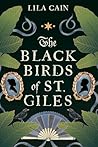
Review 677: The Blackbirds of St. Giles

The Blackbirds of St. Giles The Blackbirds of St. Giles by Lila Cain
My rating: 4 of 5 stars


I was taken by this cover and barely read what the book would be about. The book takes place mostly in London in the late 1700s just after the revolutionary war.

Daniel and his sister Pearl are the only ones from his family who escaped enslavement year prior. Daniel made a name for himself serving the British in the revolutionary war. Upon arriving in London all that was promised him was taken away.

Now destitute he finds himself in the worst part of London in St. Giles ruled by a despot the "King of the Rockery" who you must obey. An interesting historical fiction.


Wednesday, October 23, 2024

Review 523: The Prague Sonata

The Prague Sonata The Prague Sonata by Bradford Morrow
My rating: 5 of 5 stars


My favorite of the year! At least for fiction.

Update: July 2025:
This book was one of my favorites of 2024. At the time, and often, I seem to have a hard time writing some notes about my favorite reads. So here goes another attempt. 

The book has a bit of a mystery about an old sonata. Meta was given just a part of a sonata. Since she can no longer perform as a profession, she went on a search for the other two pieces. Well, she did get a little obsessed by this piece of music, knowing there was more and wanting to hear it, understand it.
 A large part of the book takes place in Prague, and Morrow did an excellent job of writing the feeling of that old city. I could see the place.  No other fiction book I’ve read (so far) has done such a good job of placing the setting. 

The writing was clear. There is a bit of relationships with Meta, one that had a falling out and another that began. Then there was also the music. One of those books I wished I could hear what was being talked about. 

I don’t know much about classical music, but apparently it was a long piece of music with three sections, or parts. They were split apart in Prague during WWII, the owner of the piece, Odylie, had married a Jewish man, Jakub.  When the war broke out he immediately became part of the resistance. Odylie wanted the music to survive, to save it from plundering, so she split it apart, kept the  first part.  She gave the second part to her best friend, and the last went to her husband. However, since he was in the resistance she could not see him directly, it was given to an intermediary and she hoped it found it’s way. Then Odylie left Prague for England.

In the modern time, it was a mystery for Meta trying to find the three pieces of music: where were they, what happened? The book gave us the past, so we knew more than Meta on what had happened, but the past was also revealed slowly so there was still some unknown aspects. Another mystery was who actually wrote this masterpiece of music?  Was it Beethoven, was is someone unknown genius in music, or was it more modern than it appeared?

I put off reading this one for a while (about six years) because of its length, while it took some time to get through it, I did not mind as I savored the book. One of the better fictional books I’ve read in a while.

Wednesday, February 28, 2024

Review 467: Fever

Fever Fever by Deon Meyer
My rating: 4.25 of 5 stars


Good, but a bit too much with the violence aspect.

As the name of this book implies, there was a vast fever, a pandemic that has an such a fast rate of spread and death that nearly 95% of the world’s population did not survive. It was a coronavirus from bats. (The book was published in 2017, before the real coronavirus pandemic.)

The novel follows a teenage boy and his father, Nico and Willem Storm, just after the worst part, when seemingly no one is left alive. They are traveling around their country, South Africa. After a while Willem tells Nico about his plans to establish a new settlement. They met a few people, a woman who has sixteen orphans with her, a man flying a Cessna airplane.

The first people who arrived form a committee, the house they first live in becomes known as the orphanage where the leaders meet. There are always decisions to be made. One of the first people to join was Domingo, a tough man who Nico was relieved his father let him stay. Domingo becomes Nico’s hero to his 13-year-old-self, and as he grows older. Domingo knows how to defend their community, Amanzi.

From the beginning Amanzi comes against people who live by plundering and taking whatever they can find, or by violence against those who have anything. They group together in gangs, steal and brutalize women. Thus, the KTM becomes the enemy.

The focus in the book becomes of this potential violence, then going on patrols, instead of the community building. Perhaps it does make for a more exciting and fast-paced book.
The ending of the book seemed a bit off to me, considering how many pages are in the book, it actually felt rushed. Then part of what was going on in the world was left undone, so it’s left open for a sequel.

After reading this book I looked into the author’s other books, and most are series. Not sure this one will become one as over six years or more have passed and there is no sign of a sequel yet.

Thursday, February 15, 2024

Review 464: Trees in Paradise: A California History

Trees in Paradise: A California History Trees in Paradise: A California History by Jared Farmer
My rating: 5 of 5 stars

Initial Short Review: 
I have eight pages of notes on this book taken while reading, I need to condense that down before providing some notes here. Let's just start by saying I thoroughly enjoyed this book!

Covered were iconic California trees, one could says they help define California: Redwoods, Eucalyptus, Citrus and Palm.


Full Review:
Who knew that a history of California could be told with four types of trees? Well, not entirely, but this book does attempt that and does a great job.

The book is in four parts, one for each type of tree, these are iconic trees of California and each can be “read as individual botanical and cultural histories.”

Part I: Redwoods – ideas of time, history, antiquity, and mortality.
Part II: Eucalyptus – immigration, naturalization, nativeness, and alienness.
Part III: Citrus – labor, industry, replication, and growth.
Park IV: Palms – beauty, fashion, image, and style.

Redwoods, for their longevity and largeness, and covered all that went along with cutting down the forests for the wood. At first people didn’t believe that trees could be so enormous, samples were taken, cuttings of the trunk would be shipped around the world. Now convinced they were horrified at the atrocity of killing the magnificent tree. I saw one of these in the Natural History Museum in London last summer, now I know how it got there. In Yosemite area, the land was sold off to three monopoly companies, two lumber companies and one organization of socialists. The socialists took nearly four years to build a road. Just as they started cutting trees the land was turned into a National Park – now they were illegally there, and the government came and kicked them out.

Eucalyptus, while not native it certainly feels like it in California. They have been around over 100 years; doesn’t that make them native? And so, the discussion naturally moves to immigration, naturalization and being foreign.
No where else but in California do you see Eucalyptus tree lines streets. In other countries the tree represents something, such as in India the trees symbolize colonialism. My Dad planted a row of these in our yard, they make a great wind break and natural division line. (We also had a Redwood tree!)

Citrus, the trees that were part of the food industry mainly oranges, but other citrus fruits as well. The grafting of trees created the Valencia orange practically in my backyard (ages ago, of course). This section was also close to home as I grew up around orange groves that (to my horror) were cut down to make way for more cookie-cutter housing developments. This passage explains well, from page 318 “The literal ‘orange curtain’ that once marked the transition from Los Angeles County to Orange County no longer exists. Today the leading local landmark is probably the Orange Crush – the largest and most complicated freeway interchange in the world.”

Palms, the iconic tree of Hollywood, L.A., really of Southern California. They do feel out of place in areas such as Big Sur where different types of trees dominate. The Mexican Palms are in a type of “invasive species” which will grow up out of the asphalt if left alone. The tree doesn’t provide much shade but does give a certain look. They are also high-maintenance trees and can be costly to city governments which causes more controversy for urban tree development. It is dangerous work to keep the fronds trimmed, and when they aren’t the trees look scraggy and not the image desired. Palms can be easily transported and installed elsewhere and for the larger trees big business for instant large palms in flashy places such as Las Vegas.

I could go on, barely touched the surface here of all that is covered by these four tree types, while barely mentioned all the social history. I listened to the audiobook version while had alongside me the print book, which probably is a better way to read this one. The print book included many photos. Also found only in the print book are many, many pages of notes, an index, a lengthy further reading section (there goes my to read list!), and a listing of all the common and scientific names of many plants and trees. The print book was from the library, now I may have to search to get my own copy.


February 11, 2019 – Started Reading
February 12, 2019 – 
page 24
 
 4.05% "this one might take a while too....the focus in on four tree types: Redwoods, Eucalyptus, Citrus and Palms."
February 13, 2019 – 
page 35
 
 5.91% "putting on pause for a little while until I can get hold of a print copy to follow with the audio, lots of photos missing out with only audio"
February 15, 2019 – on pause --turned out a very long pause
November 15, 2023 – Started Reading
November 15, 2023 – 
page 16
 
 2.7% "returning to this book - listening alongside the print book, many photos! restarted from the beginning as it was too long ago when I read the intro prior."
November 22, 2023 – 
page 16
 
 2.7% "seem to be not reading this book...will get to it soon"
November 28, 2023 – Shelved as: own-read
November 29, 2023 – 
page 16
 
 2.7% "another week and still not reading this...maybe I wasn't ready to tackle this book yet. It's long and daunting. But soon...(or remove from currently reading.)"
December 6, 2023 – 
page 16
 
 2.7% "again, another week and still not reading this book. Clearly was not ready to jump into the book just yet."
December 9, 2023 – 
page 53
 
 8.95% "finally got back to this book (yesterday) - finished Introduction. started Part I: Redwoods: The Value of Longevity, chapter 1: Twilight of the Giants....some disagreement on the scientific name for redwoods back in the day"
December 13, 2023 – 
page 78
 
 13.18% "illegal redwood forested land grabs by monopolists in the mid-1800s, was aimed at individuals, yet largely ignored by the government until the California Redwood Company attempted to sell their holdings to a Scottish group in Edinburgh. Monopoly ok, foreign ownership was not."
December 19, 2023 – 
page 78
 
 13.18% "reading this extremely slowly...may take several more months, at least at this rate."
December 26, 2023 – 
page 78
 
 13.18% "haven't moved forward on this book, decided to resume in january but keeping it as currently reading for now"
January 8, 2024 – 
page 78
 
 13.18% "finally returned to this book"
January 9, 2024 – 
page 102
 
 17.23% "continuing with the (section) Consuming the redwoods"
January 11, 2024 – 
page 146
 
 24.66% "just about done with section - Park politics"
January 19, 2024 – 
page 226
 
 38.18% "began Part II: Eucalypts: The taxonomy of belonging - deep into p.ch.03: Immigration and naturalization / mid-way through the (section) Boom and bust. ...planned "crop" of the hardwood blue gum/eucalyptus did not go well at all."
January 25, 2024 – 
page 292
 
 49.32% "deep into chapter 04: Natives, Aliens, and (Bio)Diversity.....still discussion Eucalyptus trees. now starting (section) Invasion of the Nonnatives"
January 26, 2024 – 
page 318
 
 53.72% "starting up Part III: Citruses: The Industry of growth and chapter 05: Orange revolution"
February 2, 2024 – 
page 318
 
 53.72% "some listening today...nearly done with ch.05: Orange revolution. next section is last: Managerial Control."
February 5, 2024 – 
page 372
 
 62.84% "finishing up ch.05: Orange revolution. next section is last: Managerial Control."
February 8, 2024 – 
page 444
 
 75.0% "deep into chapter 6: Cultural costs. Finished section: Subdivide and uproot. Next up is section: Bugs in the System. - last section and chapter for this part on Citrus. (Next up: Palms)"
February 9, 2024 – 
page 493
 
 83.28% "now in the last part - Part IV - Palms: The Ecology of Style and deep into chapter 07: Cosmopolitan Fronds. Nearly finished with (section) Street trees and city boosters."
February 14, 2024 – 
page 532
 
 89.86% "continuing chapter Aesthetic Infrastructure, finishing (section) Sunbelt design and next up (section) Wilted crowns...this is the last chapter, although Epilogue is quite long."
February 14, 2024 – Finished Reading


Tuesday, September 12, 2023

Review 425: The Locksmith's Daughter

The Locksmith's Daughter The Locksmith's Daughter by Karen Brooks
My rating: 5 of 5 stars


Takes place in London in the 16th century, with a young woman as the main character, Mallory Bright. We quickly learn she has returned to her family, shamed, and posing as a widow. Mallory has strong ties with her Papa, the locksmith who taught her things that ordinarily only men would know. Her mother has always shunned her and even more so now she has returned, and so Papa finds a job for her. Soon Mallory is a spymaster.

The books mystery is one of Mallory’s life, but also what is also going on in England with the Queen Elizabeth declaring the Catholic religion outlawed. Mallory’s mother is one of the recusants, bringing more danger. Yet the Queens’ enforcer and right-hand man is Papa’s friend, Sir Francis Walsingham, would he bring the law upon them?

Meanwhile they have a long-term border, Caleb who is a playwright and homosexual. His plays have become popular although they may tend to comment on the current political situation that could be dangerous. He has a new benefactor, Lord Nathaniel, appearing at first as a bit of a rogue. Yet soon Mallory starts to see another side to the man.

With Mallory’s past of love and hate, she attempts to control her emotions and called this mediocrita, a balance of opposites. This attempt to find that calm is carried throughout the story in many different situations.

Mallory is a strong character, intelligent and doing work that in those days only men would do. She is unique in that world, although has some clouded judgment at times as well as succumbing to some womanly pining that embrace, the kiss…

Yes, there is a bit of romance in this historical book, but the plot leaves that mostly to the background.

There are a few gruesome scenes that I could have done without reading, but it adds to the layers and depth of this book.

It is not perfect by any means. There are awkward backstory moments when someone comes up in the story and we get a tangent, apparently Mallory remembering that occasion. Yet this minor flaw can be forgiven for a riveting tale and story. I particularly appreciated the long author’s note at the end which detailed many of the historical facts, and where the fiction began.

The intricacies of the story made this an interesting read. I held back reading this book thinking the romance part of the story would be the main focus, but happily it wasn’t. I enjoyed this book enough that I have several others of her now on my ever-growing to-read list.

Saturday, June 10, 2023

Review 406: Them

Them Them by Joyce Carol Oates
My rating: 4 of 5 stars

The setting is Detroit covering three decades from 1937-1967. Well, it starts in a unnamed town, moves to the county ending in Detroit with the riots.

The book is centered on a family that is poor, that has tragedy at every turn. Not always from drinking, but there is that too. Loretta’s dad is an alcoholic, but she doesn’t blame him. The Depression is what caused it, he lost his job and lost himself. At age 16 Loretta takes up with a guy, a boyfriend and loses her virginity, that night she awakes suddenly, and found him shot dead by her brother Brock.

In trying to fix this situation she runs into someone she knows from the neighborhood, happens to be a policeman but not on duty. He fixes it and takes her as a bride. They have three children, the first two, Jules and Maureen, who become the main characters of the book.

The writing is mostly exposition, not a lot of dialogue. The inner thoughts of these people are repetitive and somewhat hard to grasp at times. They seem to not think clearly but are smart, they don’t understand love or many feelings. They often are outside of themselves, it is all strange.
None of the characters are likable, their behavior unpredictable. Jules starts out as one destined to always be in trouble with the law. Maureen maybe unstable, being crazy is brought up a lot. Not just with her, it started with Loretta’s mother. People come in and out of their lives.

The language and mores of the book don’t fit with the times of today. It is a bit shocking at moments, but it’s a 50 year old book. It isn’t a pleasant book by any means, yet you want to find out what will happen to these people. I’m not sure I’m satisfied, there’s shifts in the book and the afterward the biggest shocker in my approach to the whole work.

The author’s note at the beginning frames this book as a semi-fictional book, taken from the life of a student she had one semester. The woman felt compelled to tell Oates her life story and this book is the result. Well, this too is a fiction, but I didn’t know that while reading and thinking about the book.

This was the first book by Joyce Carol Oates I’ve read, perhaps not the best place to start. I’m interested in other books of this "Wonderland" quartet, although all older and perhaps her later books are more enjoyable?


Wednesday, May 17, 2023

Review 402: The Ferryman

The Ferryman
The Ferryman by Justin Cronin
My rating: 4 of 5 stars


The book starts out with Prosperans living a perfect life, once they get old they are sent back to the nursery to be given a new life to live again. The weather is also good. Prosperans don’t have children per se, instead they adopt a child, one that is a teenager back from the nursery. They understand the basics, but have to be taught much more. Prosperans work in creative endeavors, usually, although our main character is a Ferryman. Proctor Bennet helps take the elderly to the ferry which takes them across the water to the nursery.

Yet, all is not well in the island of Prospera. The others on the island, the help is getting unhappy with their lot, as they aren’t like the Prosperans; they have children the regular way and grow old then die. They also have to do all the manual work, and something has to change.

It starts the day the Ferryman is tasked with having an assistant, well more like a mentee, and the person they need to take to the docks is none other than Proctor’s father.

Without getting into too much of the details later in the book, as to spoil anything, I will say this is a bit of a mind-bending novel. There are many turns and adjustments one has to make while reading the book. It is also filled with action, and it becomes a gripping tale.

There were some parts when I felt the book was lagging a bit, and a tiny bit predictable, but then it changed and was not going where one might think. When the book came to the ending, I thought it was extended out much longer than it needed, maybe the last several chapters didn’t need to be there. All in all, a great ride.


Many thanks to Random House Publishing Group/Ballantine and NetGalley for an advanced electronic review copy of this book. However, I listened to the audiobook from my public library. An excellent narration by Scott Brick and Suzanne Elise Freeman.

Wednesday, March 22, 2023

Review 387: The Winter Sea

The Winter Sea The Winter Sea by Susanna Kearsley
My rating: 4 of 5 stars


This was enjoyable enough book. 

A modern day successful writer, lives where her books take place, and this time in the Scotland Highlands off the east coast, near Slains Castle. 

There is a dual time line, the book being written and the writer's life, and oddly enough the fictional book being written turns out to be exactly as history made it. The writer doesn't know how to explain it, she hears her ancestor's voices. 

The audiobook was nicely done, with the exception of male voices, they all tended to sound very similar.


This book is the first is a series of 3 (as of 2023) and I did read the last one already: The Vanished Days
The series is titles: The Scottish series.
Each book is it's own tale, of sorts. They don't follow one after another, so it doesn't matter if read in order or not, such as I have done.

See: my review of The Vanished Days 


Saturday, March 11, 2023

Review 384: The Wind Whistling in the Cranes

The Wind Whistling in the Cranes The Wind Whistling in the Cranes by Lídia Jorge
My rating: 4 of 5 stars


The writing style of this book didn't appeal to me, and I nearly set the book aside. Yet I continued on and found in the end I quite enjoyed the book. This is a translation from the Portuguese, taking place on the coast in Portugal.

The reading was slow going for me, due to the style with the action/plot being slow as well. The beginning was the hardest, and the pacing improved as the book went on. One of the reasons for the slowness was the repetition, oh so much repetition. I went along with it, continuing to read, as this is a different culture, perhaps things go at a different pace than one I am accustomed to.

The story starts out with the death of the matriarch of a well to-do family, Regina Leandro. One of the sons is the mayor of the town. Everyone is out of town and unreachable, so the only person left is Milene. She is a simple-minded woman, although it took a bit to realize this. I was annoyed by her character at first, found aggravating, later though she did grow on me.

The opening scenes take place in the Old Factory, as this is where Regina was found, and Milene went there to find some answers. The Mata's now live there, the third wave, an extended immigrant family, and they too were out of town at first.

Milene becomes quite attached to one of the Mata's, a young widower. The courtship is not a typical one by any means. And him being black means not only class, but race could be a problem.

Friday, September 30, 2022

Review 347: The High Sierra

The High Sierra: A Love Story The High Sierra: A Love Story by Kim Stanley Robinson
My rating: 4 of 5 stars


I keep talking about this book with people I know who like to hike or enjoy the mountains. There's a lot of surprises in the book, such as the way it's organized, but way more than that. Anyway, I should gather more thoughts and words and put them here....be back momentarily.

--------------------------further thoughts:

What a book! It’s long, probably too long (sorry, so are my thoughts here), but it does cover a wide variety of topics. It is partly autobiographical, with a strong focus on Robinson’s life hiking and spending time in the Sierra Nevada Mountain range with leaving out most of his childhood, except brief mentions of how athletic he was, and continued to be during college. It was in college when one of his good friends took him and several other friends on an experience that would transform their lives. They went on a backpacking trip into the Desolation Wilderness area of the Sierras. He fell in love.

Other parts of this book include a history of people, such as the beginning of the Sierra Club, John Muir (of course) and a few other historic events and people. He talks about geography a bit, and something he calls psychogeology.

There’s quite about the names of things in these mountains, how there are some bad names and some good ones, as well as many suggestions for new names. I have to agree with his statement, why does one generation (mostly white men) get to name everything, and have it never change?
Robinson talks about routes and areas, of course, and this does take up a good portion of the book. The backpacking and camping experiences they had, with some of the mishaps that happened, the exciting times.

There does seem to be some pieces missing, such as not much talked about the Pacific Crest Trail, and not much about Yosemite, and that’s likely because he avoids these places, also Mammoth. The places that people already know about and go to he avoids, so it becomes understandable that he doesn’t discuss that.

Robinson includes a significant amount about the Swiss Alps, as he and his wife lived in Switzerland for a couple of years. It feels out of place, but if you look at the book as an autobiography it becomes understandable, and it does serve as a comparison to the Sierras.

I found that Robinson is quite opinioned about the way to do backpacking. It works for him, but definitely won’t work for everyone. Not taking established trails, well is that good advice? Wouldn’t that end up creating some major issues if that’s what everyone did, go off-trail?

When I first started reading the book it created such a strong longing in me to go to the Sierras, to go hiking. While I could possibly do that, it won’t be anytime in the near future. It was tempting to stop reading until I could relieve that desire, but I continued on with the book, pushing past that desire. Is this one of Robinson’s goals? Not sure but it did feel often he was writing to the younger people, collage age like those he teaches.

I listened to the audiobook, which is narrated by Robinson as well, and he does a wonderful job with that. In fact he was the best choice as his enthusiasm comes through even more so. But I missed out in seeing all the photos that are included in the print book. I did manage to get hold of a copy, but late in my reading, and really it’s better to view the photos while reading.


Post note:   despite this long review I didn't mention how this book was written by an author of many science fiction books, several of which I have read.  There is a series of three books that I really enjoyed, read a couple of them twice.  Hopefully I can get back here and link to those books I've read of his.

Wednesday, February 23, 2022

Review 301: Bound for Canaan

Bound for Canaan: The Epic Story of the Underground Railroad, America's First Civil Rights Movement Bound for Canaan: The Epic Story of the Underground Railroad, America's First Civil Rights Movement by Fergus M. Bordewich
My rating: 5 of 5 stars


Definitely an Epic Story! Well researched and well written history all about underground railroad from the early beginnings and until it dismantled with the start of the Civil War. This wasn't a fast read by any means, took me almost an entire month, but it was fascinating and gripping at moments.

Interesting fact: the underground railroad predates railroads in the country. Once the railroad (steel and metal kind) became something used as transportation the language became tied to the movement of helping people escape and find their way to freedom, often in Canada.

I'm so glad I read this book as my understanding was vague before, knowing the general gist of this transformative movement along with a few of the key people. The book covers many of the people who were significant in helping develop networks to help people find freedom and yet are lesser known. This was an excellent book to learn about this awful time in American history.

Tuesday, December 28, 2021

Review 286: The Secret Wife of Aaron Burr

The Secret Wife of Aaron Burr: A Riveting Untold Story of the American Revolution The Secret Wife of Aaron Burr: A Riveting Untold Story of the American Revolution by Susan Holloway Scott
My rating: 3.75 of 5 stars


I would not call it "Riveting" 

500 pages – longish book
Read somewhat quickly, from Dec.19 to 26.
Had time off work, so that helped.
roughly years: 1768-1829 


It was a very detailed account of a slave, that came from India, sold by her uncle for a pittance to a French lady to serve as a pet when she was around 8 years old. Briefly at a plantation in the Caribbean Islands she luckily was sold to a British officer who gave her to his wife where they lived in New Jersey. Mistress was a "good" master and here is the bulk of the book, with the American Revolution years. Aaron Burr does come into the book, later than one would expect.

The author notes how factual she tried to remain to history, with lots of fiction with our main character, except she did exist at least to the extent of giving Burr two children.

Saturday, May 29, 2021

Brief Review 224: Fall on Your Knees

Fall on Your Knees Fall on Your Knees by Ann-Marie MacDonald
My rating: 4 of 5 stars


Ugh that father! This type of book is hard to read at times, but the writing was good.

Wednesday, November 4, 2020

Review 171: We Keep the Dead Close

We Keep the Dead Close: A Murder at Harvard and a Half Century of Silence We Keep the Dead Close: A Murder at Harvard and a Half Century of Silence by Becky Cooper
My rating: 5 of 5 stars


A long book, nearly too long, but in the end it was worth it. Becky Cooper weaves in a tale of a murder that took place the night before Jane Britton’s exams at Harvard. Cooper delves deep into every aspect of Jane’s last days, who occupied them, investigating anyone who may have been the killer, even remotely.

The deep dive takes over ten years of Cooper’s life, with her own becoming intertwined with Jane’s life. While keeping the focus on Jane it is inevitable that the present day and what Becky Cooper is up to gets into the narrative, and she does that in a way that we don’t have an intrusive narrator. We also find tangentially other unexpected deaths or murders with some investigations into those that relate to the same suspect as the possible perpetrator of Jane’s death.

While at moments I wished for a shorter book, I’m not sure what could be cut that would make for a better book. It does feel like misleads when going down the path of each suspect, however remote, but it adds to the fullness of the story, and to who was in Jane’s life. Even the side stories bring fullness and entirety to the work, plus everything was very well written.

Cooper also provides an overarching meaning, not just to the death, but do what Jane was doing, in academia in anthropology. I get a better sense of what it means to be a professor in an academic setting from this book than any other I’ve read. (not that I’ve sought that out, but it was informative!) There are also ties to larger movements, particularly with women.

I’m not one to often read true crime but this one was very well done. If you do pick this up, be prepared to spend some time with the book.


Thanks to Grand Central Publishing and NetGalley for an uncorrected electronic advance review copy of this book.

Saturday, October 3, 2020

Review 165: 1491: New Revelations of the Americas Before Columbus

1491: New Revelations of the Americas Before Columbus 1491: New Revelations of the Americas Before Columbus by Charles C. Mann
My rating: 5 of 5 stars


A great book!  It changed my understanding of the Americas, how many people were living here and their accomplishments. Large cities flourished for hundreds of years. The Amazon area was man-made 

Wednesday, July 15, 2020

Review 148: Greenwood

Greenwood Greenwood by Michael Christie
My rating: 5 of 5 stars


Somewhere in the early part of the book this book was reminiscent of a book I read last year, The Overstory by Richard Powers. Well, soon enough turned out I was mistaken, this book isn’t about trees in that way, with eco-activists and fighting for the trees, although one of the main characters does do direct actions to save trees. Powers book was also a bit more scattered with many stories within, and while this book also has many stories, it’s also more linear and cohesive.

This book is surrounded by trees, it is the subtext, the backdrop, the way all the characters survive, but each has a different approach to the trees. One rails against those cutting them down, while her father was the one doing the cutting. There’s a scientist studying the trees, and another creates thing from the wood.

And yet the book is really about family, and orphans. The opening pages have an image of a cut tree with the rings, with dates attached. This is also the framing of the book, which works great. Each year listed we visit in the book, starting with the future point at 2038, then going back to 1908, stopping along the way at specific years, then going back forward and ending with 2038. The bulk of the book rests in 1934. I like the layers and how the different time periods play upon each other, the years as rings as in a tree.

I enjoyed this book, despite all the bad decisions that the various characters seem to make. I liked the way the family is explored and revealed.

Sunday, July 5, 2020

Review 147: The Autobiography of Malcolm X: As Told to Alex Haley

The Autobiography of Malcolm X: As Told to Alex Haley The Autobiography of Malcolm X: As Told to Alex Haley by Malcolm X and Alex Haley
My rating: 5 of 5 stars


Incredible, powerful book. 


Despite it being a book written 55 years ago, it is an excellent read for these times, unfortunately. Too much has remained the same, and much of what Malcolm X says is still true and valid. For instance, the economic situation has been rigged against Black Americans to gain any economic progress. He pointed out even in Harlem how few businesses were black owned.  Although what he is most known for is more sensational statements. What may not be understood is how he was changing his views as more knowledge was learned.

Reading alongside the climate of today makes you realize, sadly, how little has really changed since the 60s. What would Malcolm's views been if he was able to live decades longer? How ironic that he was killed teaching what he strongly believed in, echoing his father's death. Malcolm was left without a father at aged six, his oldest child about the same age.


READING PROGRESS

June 14, 2020 – Started Reading

June 15, 2020 – page 12 - 2.28%
June 16, 2020 – page 41 - 7.78%
June 17, 2020 – page 74 - 14.04%
June 18, 2020 – page 103 - 19.54%
June 19, 2020 – page 133 - 25.24%
June 23, 2020 – page 146 - 27.7%
June 24, 2020 – page 179 - 33.97%
June 25, 2020 – page 195 - 37.0%
June 29, 2020 – page 306 - 58.06%
June 30, 2020 – page 338 - 64.14%
July 1, 2020 – page 384 - 72.87%
July 2, 2020 – page 406 - 77.04%
July 3, 2020 – page 429 - 81.4%
July 5, 2020 – Finished Reading

Monday, June 8, 2020

Review 141: My Struggle: Dancing in the Dark

My Struggle: Book 4 My Struggle: Book 4 - Dancing in the Dark by Karl Ove Knausgård
My rating: 4 of 5 stars


This installment of the series is mostly about Karl Ove's one year teaching, when he was 18 to 19, in Northern Norway. There is some backwards looking, and briefly going forward, but mostly around that time of teaching. It's a very small town where he is teaching. They always have young temporary teachers, people don't seem to stay. Since his age was only a couple years older than some of the students he has attractions, but doesn't act on anything. He does briefly go out with a 16 year old that is going to school in another town close by and his students remark on it. Karl Ove breaks it off quickly, before anything really develops with her.

The book is mostly linear, but there are some points when he goes back in time, and also briefly forward. One part he said years later, maybe eleven, he wrote a novel (his first) about that time as a teacher, most of it was the school, town and the characters. He worried what the people from the town would think. Then two girls came to see him speak, from the town. They had met up at a coffee shop. Karl Ove was nervous, of course, and one was the young girl in the school that he liked, and wrote about. They discussed it briefly and turned out to be okay. Nothing every happened either, by then he was married.

The book is still continuing the relationship with his father. A large part of the digression from the main story line was about the time when his parents split up, his dad started drinking a lot. Karl Ove is drinking a lot in this book as well, and there seem to be similarities that aren't discussed.

I found myself getting a little bored with some of the teenage boyhood desires for a date, for having sex with someone, anyone. It occupied more of the books pages than I wanted to read. I'll still continue on the series, most likely, but it may be some time before I get to the next book. Hopefully not three years like this one took.


Previous books read in series:

All rated 5 stars

Previous Popular Posts