Showing posts with label Classic. Show all posts

Wednesday, June 10, 2026

Review 701: Wuthering Heights


Wuthering HeightsWuthering Heights by Emily Brontë
My rating: 3 of 5 stars


Much has been said about this classic, and my thoughts won’t add anything. For starters, didn’t like it very much. Generally I do enjoy classics, but not this one. I found most of the characters disagreeable (not that I need to like characters to enjoy a story, but it does help). I did like Nelly Dean, the woman narrating the story, I liked how she comported herself. She is the frame, telling the story to Mr. Lockwood who is a newcomer. He is renting out Thrushcross Grange and wants to hear the story of his landlord and the people residing in Wuthering Heights. Being ill he needs something to occupy himself. Thus this story, told in incredible details so many years later, you must suspend disbelief.

Heathcliff is a horrible person, not a news flash. Not the only one either. Then there are the whiny characters. And this was back when marrying cousins was completely acceptable. So many cringey moments in this book, but the ending was completely satisfactory. Just took a lot to get there and glad I stuck with it.

Monday, March 2, 2026

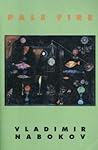
Review 671: Pale Fire

Pale Fire Pale Fire by Vladimir Nabokov
My rating: 5 of 5 stars


The format of the book is unusual, not your typical novel. All of it is fiction, where the form is a critical analysis book of a long poem. The long 99 line poem is called Pale Fire, by fictional American author John Shade. The bulk of the book is the commentary by Charles Kinbote, author of the foreword and editor of the poem. The commentary dissects the poem by lines, or sometimes just a word.

Kinbote was the neighbor, and “close friend” of the author in the last months of his life. Shade had just finished the poem when he died. Kinbote expected the poem to be about his country Zembla, where the king was overthrown, but escaped while being held captive.

The details of all this comes out in the commentary, which is not what the poem is about, but Kinbote misinterprets it, or adds all of his own details. It ends up being quite entertaining.

I even read the index entirely since there was humor found in those referenced notes. Nabokov writes so incredibly well. I love all the unique words he uses in his writing, makes for delightful reading.


Tuesday, December 30, 2025

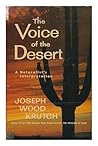
Review 652: The Voice of the Desert

The Voice of the Desert, a Naturalist's Interpretation.


My rating: 4.5 of 5 stars


In the decade or so before Rachel Carson wrote her seminal book, Joseph Wood Krutch started writing environmental literature. In this book Krutch describes in detail several plants and animals that are found living in the desert near his home in Tucson, Arizona. He starts with describing the desert in general terms then to what is a desert – the dryness. Then he starts with the animals, a desert toad that lives most of his life just under the surface until the summer thunderstorms when they come out to mate. Then onto the roadrunner.

In describing different cactus trees, and how it can grown into a forest, I was surprised to learn the saguaro is the quintessential cactus that symbolizes a desert with its upended arms. Despite that, the saguaros have limited range of where they grow.

The scorpion and tarantula are two unexpected animals described in the book. The scorpion is an ancient animal, one of the first animals to breathe air, and it hasn’t changed very much since those early days.

This leads Krutch into a discussion about evolution and contemplation of a guided approach. He leaves it mostly as questions. Going further he discusses if any animal has purposefully made a decision thus encouraging evolution a specific direction, as opposed to just purely nature making all movements and actions on the part of the animal. During this part Krutch was mostly talking about insects, such as a wasp.

Then there was the moments when he mentions the climate changing, which was a surprise to me for a book from the mid-1950s.

Overall this was a through provoking, packed book for under 225 pages, and included some black and white photographs. The author is not nearly as known, nor popular as other environmental writers, but I don’t think Krutch should be overlooked.


Sunday, December 7, 2025

Review 647: The Strange Case of Dr. Jekyll and Mr. Hyde

The Strange Case of Dr. Jekyll and Mr. Hyde The Strange Case of Dr. Jekyll and Mr. Hyde by Robert Louis Stevenson
My rating: 4 of 5 stars


Instead of writing some notes about the books I’ve read recently I went and read another one. Okay, this one is short, a novella, and better read around Halloween perhaps.

I won’t say much about this as so many others have done a great job, better than I could do…but one thing. I generally knew of the story going in, so the mystery of who was Mr. Hyde was already known. Yet I had the thought that this could be viewed as someone who becomes a meth addict, or drug addict of the chemical manufactured type.

Dr. Jekyll mixes up these chemicals, a white powder and some special salts, and he is transformed. In the story he is described as physically changed. There are some drugs where addicts become quite physically changed in appearance as well, thin, smaller, faces disfigured, and their personality changes as well, generally not for the better. Yet they do not usually go back to their old self, or perhaps only once they stop using, more or less. Perhaps not a perfect comparison but a thought of some similarities of today.

Happy to have finally read this classic. It's easily read in a day.


Tuesday, August 26, 2025

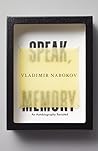
Review 614: Speak, Memory

Speak, Memory: An Autobiography Revisited Speak, Memory: An Autobiography Revisited by Vladimir Nabokov
My rating: 5 of 5 stars


Superb writing! The book is composed of essays written over many years, and previously published, yet the come together in one book quite nicely. They were all titled as published essays, but that was not retained in the book, which is a detriment.

The majority of the book covers Nabokov’s years growing up. An amazing amount of detail and description from when he was very young is contained in the first several chapters. He was born in 1899, and a brother soon followed less than a year later. Nabokov had five siblings, after the brother were two sisters and the last another brother. They were a family of the upper class, having a country estate and a house in town. They went abroad quite often.

The book is chronological, with an occasional hint at what is to come, particularly exile. Nabokov doesn’t go into a lot of detail the Russian Revolution, it was a tumultuous time, and his father was in the thick of it. But he does provide some information that I understand slightly better what was happening during the overthrow on the Tsar to the next regime.

Nabokov and his brother were taught by various tutors and learned to read English before he learned Russian. They were of the kind of Russian family that he says is now extinct.
Nabokov loved butterflies, well butterfly collecting, or Lepidoptera as its scientifically known. He started at a young age, and was determined to find a new species while he was still a young school boy. It wasn’t until much later, as an adult, he finally got a named butterfly: Plebejus (Lysandra) cormion Nabokov.

One of the later chapters Nabokov talks briefly about both of his brothers. It was quite moving, as by that point when we was writing both of them had died, and somewhat young. His sisters weren’t discussed. The last chapter ends in 1940 as Nabokov, along with his wife and young son, were granted passage to emigrate to the United States.

I really enjoyed his writing style. I may need to read one of his novels later this year.

Friday, May 2, 2025

Brief Review 578: The Time Machine

The Time Machine The Time Machine by H.G. Wells
My rating: 5 of 5 stars


I saw a movie version of this years ago, so I knew the story line. Still I found myself enthralled. I listened to the audiobook version narrated by Scott Brick. One of the rare times I listened to the entirety in one go, without stopping. It's short enough you can do that. What a classic!

Friday, April 25, 2025

Review 573: A Sand County Almanac: with other essays

A Sand County Almanac: With Essays on Conservation from Round River A Sand County Almanac: With Essays on Conservation from Round River by Aldo Leopold
My rating: 5 of 5 stars


Many years ago I read about half of this book, the first Part – A Sand County Almanac, for an Environmental Literature class while doing my undergraduate studies at University. The professor said the rest of the book wasn’t worth reading, as it wasn’t his best work. But I had always wanted to get back to the book and finish the rest of it. Now, I finally have.

Perhaps he was right in that the first portion is very good, but the other essays were very much worth reading.

Aldo Leopold died in 1948 and this book was first published shortly after his death, being over a decade before Rachel Carson’s Silent Spring. Leopold’s book then being the first to warn of the ecological damage.

The book is broken into 4 Parts:
Part I: A Sand County Almanac
Part II: The Quality of Landscape
Part III: A Taste for Country
Part IV: The Upshot

Each part is then divided into many more sections and subsections. Part I is broken down to each month, with some further subsections. Part II is divided by some geographic regions. Part III is the only one that doesn’t have subsections. The last two parts are essays, all with the same theme as the rest of the book. My print book is accompanied by line drawings throughout the book. Sometimes the bird or animal doesn’t quite match what is being discussed, but still it is a nice accompaniment.

I listened to an unabridged audiobook for much of this, but it was lacking many of the essays, such as the entire part 3 of my print book. Perhaps there are different versions of this book of what is included.

The author is a hunter, but you can see by the end of this book that he begins to think that taking photographs is perhaps a better way to hunt. Other than the pro-hunting aspects, this is an excellent book. There are many well-turned sentences and passages that make this one of those books you can return to time and again. I’m glad to have finally read the entire book.


Prior to this latest reading:
Read the first half - A Sand County Almanac portion, the other two shorter portions I haven't yet read: Sketches Here and There, and The Upshot. Keep meaning to get back to it.


Friday, March 21, 2025

Review 561: The Sound and the Fury

The Sound and the Fury The Sound and the Fury by William Faulkner
My rating: 4 of 5 stars


This was a challenging book, one which I would have appreciated more in a lit class. I had to look up notes to understand what was going on. It is a stream of consciousness book, which is a format I tend to not like. This book is a good literary example of the usage and has been influential in the literary world. Perhaps this was an experimental book at the time, and I can appreciate author’s stretching the bounds of the novel, but typically they are a challenge to read. While I may appreciate it, my enjoyment is another matter.

Add to this mix, I listened to a newly released recording of the book. It made the challenges in the book even more so. The editing and narration of this version perhaps may have helped. There are multiple narrators. The first part which is of Benjamin, or Benjy’s voice, is the most confusing. It truly is all over the place, in time, place and had many different characters, all of this to represent his diminished mental capacities. In the narration there were many voices in the book, so it did help to separate out some of this confusion.

In the written text Faulkner used clues, such as colored text or italics to help the reader understand the shifts that were going on. This is not possible in audio, so the route I took was the more difficult one, or perhaps I should admit to making a mistake.

I also found out there was an appendix Faulkner wrote many years later that he wished would be included with all subsequent editions. Some call this the fifth part, and it may help to understand the family and the dynamics that are portrayed in this book. This was missing from the audio.

This is a book that needs multiple readings to fully understand and appreciate. Had I known what I was attempting by reading the first time in audio, I would have not done so, would have opted for a text version. That said, I do think this newer version with the multiple professional narrators did an excellent job. If this book is one to be revisited or already a favorite, audio may be the way to go. Or just plan on relistening to passages multiple times.

Tuesday, December 3, 2024

Review 533: The Street

The Street The Street by Ann Petry
My rating: 5 of 5 stars


What a powerful book! According to the summary this was Ann Petry’s first book, which was published in 1946 and “hailed by critics as a masterwork”. Wikipedia says she was the first African-American woman author to sell over one-million books. So why does it seem like this author is forgotten?

This book takes place in Harlem in the 1940s. A young woman, now a single parent, is trying to make a better life for herself and her child. She's been working too hard, lost her husband to another woman for working too much. Her dad tried to help her but without working and selling home-made whisky wasn't a good environment to raise a boy.

The descriptions are quite detailed. The book opens up with Lutie Johnson walking down The Street looking for an apartment. The wind is bitterly cold and howling. She finds an apartment building, which has dark hallways and dark rooms, but the descriptions are so well written you can see it clearly. She takes it, as this is as good as any she will find, but resolves to move as soon as she can.

Without giving away everything that happens (I've hardly mentioned anything), Lutie is a smart woman, still young and attracts unwanted attention of men. She is focused on improving her situation, but is thwarted at every turn. She blames The Street, she blames the system, she blames whites. And the way the book is written you can’t blame her, nor what she ends up doing. The climax of the book a surprise, but not entirely.


I will definitely look for another book by this author.

Friday, November 22, 2024

Brief Review 531: Mrs. Dalloway

Mrs. Dalloway Mrs. Dalloway by Virginia Woolf
My rating: 3 of 5 stars


This book has made me realize I'm not a big fan of stream of consciousness style of writing. And particularly when it moves between various characters.

Thursday, October 31, 2024

Review 526: Dracula

Dracula Dracula by Bram Stoker
My rating: 4 of 5 stars


Finished reading this on Halloween, in time to close out October with a spooky read. Generally, I do not like horror books and Halloween is not one of my favorite holidays. But if one was to read a frightful book that is a good season if a reason was needed.

I’ve been exposed to many tales of vampires, mostly on television or movies. I don’t find them horrifying, at least what I’ve seen so far. Since this book is the original I couldn’t be certain this would be frightening, but honestly it wasn’t. It had all the familiar aspects already known to me. I do suspect this might have been somewhat horrifying to the people of the late 1800s, as they didn’t have so much horror media back in those days. One does tend to get desensitized to some extent.

The story itself I found well done, better than I expected for the age of the book. It was told mainly by diary entries from the main characters, along with some letters. There were hints of things that a modern reader one knows the meaning ahead of time. Had the feeling a bit of knowing an inside joke.

I felt the tension was adeptly written and overall, a book well worth the time to read.

Sunday, October 27, 2024

Review 524: Young Men and Fire

Young Men and Fire Young Men and Fire by Norman Maclean
My rating: 4 of 5 stars


This book is the story of what happened at the Mann Gulch Fire on August 5, 1949. Smokejumpers were a relatively new way to fight forest fires, and were the elite of the firefighters. On that day, the fire turned into a blow-up and killed nearly all of the smokejumpers.

Norman Maclean, a firefighter in his youth and grew up in the area was a bit haunted by that day and all those deaths. He wrote and investigated this tragedy for decades, but the book wasn’t finished, he had a hard time finding his way into the story. Instead it was published after his death.

It story repeats, the actions and what happened are gone over multiple times. There are different versions of what happened, what was in court cases, and what the two remaining survivors told Maclean. The language used was at times poetic, a literary language.

I’d wanted to read this book for a long while. Earlier this year I attended a webinar for the 75th anniversary of Mann Gulch Fire, my desire to read this book, and reminded me I still haven’t read Maclean’s book. Then I saw the unabridged version of the audiobook available but only for another week in the Audible Plus catalog that I was finally propelled to get to this one. I may even have rushed through the ending in order to finish before I lost access to the book.

Tuesday, August 6, 2024

Review 504: That Quail, Robert

That Quail, Robert That Quail, Robert by Margaret A. Stanger
My rating: 4 of 5 stars


A short book written in the mid-60's about a quail that became a pet. An abandoned quail egg hatched and the family attempted to send the quail back into the wild, but it was having none of it. They named the quail Robert and this book is about how its habits and human loving nature impressed many people.

At the time the news of Robert was spread about, made its way into newspapers and even a stint on a network channel. Robert had many visitors, people who loved animals, those of disbelief until they saw the quail, and all other sorts.

The author was not the family parents, instead a friend and nearby neighbor. An occasion came up where the family was going to Europe for several months to attend their son’s wedding, taking a steamer across the pond. They couldn’t take Robert, not leave the bird alone, so the author became the next home of Robert’s. Even during these three months the visitors kept coming.

The book relates Robert’s daily habits and preferences and those times of illness or troubles, rare as they were.

It is an adoring book. I used to live where there were coveys of quail around my yard all the time. I miss seeing them and this book helped fill that small hole, albeit temporarily.

Friday, July 19, 2024

Review 498: Kokoro

Kokoro Kokoro by Natsume Sōseki
My rating: 4 of 5 stars


This is a classic Japanese work of literature, published in 1914. The first part is about the narrator meeting and befriending a man who he calls Sensei. The narrator is a student at a university in Tokyo. Sensei becomes someone he is fascinated by, who was reluctant to open up to friendship. Slowly they do become friends and when prodded Sensei will not discuss his past. Sensei doesn’t work, has a wife and maid, and visits the gravesite of a friend every month. He is an intellectual and the two often discuss philosophical idea.

The second part is concerned with the narrator’s family. His father is ill and he has gone back home in the country several times to visit with his father. The summer months he also goes home to stay and visit. After graduation he returns to his home and this part is very concerned with his father’s health, particularly after the Emperor falls ill and dies. During these days the narrator gets a letter from Sensei.

This letter takes up the last portion of the book. It is a recounting of Sensei’s past. It has to be one of the longest letters in a book ever.

This is not a book of action, rather one of contemplation and character study. One can take moral reasoning from this book as well, but that is not fully understood until the last.

While listening to this book as an audiobook I thought it was all one narrative. Upon finishing I read more about the book and found that it is described as three short stories. Perhaps, but it is about the same characters and the time line progresses through these three stories. It is more like three parts within a larger work, although conserving each as a short story does help to explain the seemingly abrupt endings.

Monday, April 1, 2024

Brief Review 476: The Drowned World

The Drowned World The Drowned World by J.G. Ballard
My rating: 2 of 5 stars


 Didn't do much for me. I would have stopped reading if I hadn't listened to the audiobook and if it wasn't so short. Had higher hopes for this "classic".

Saturday, December 23, 2023

Review 452: The Christmas Hirelings

The Christmas Hirelings The Christmas Hirelings by Mary Elizabeth Braddon
My rating: 4 of 5 stars


Short Christmas related read.

A novella for the holidays. This is a classic, published originally in 1894 taking place in England. Sir John Penlyon decides that this Christmas some children should be around his lonely huge manor house. So a friend brings three children that were hired to have Christmas for a fortnight on the estate. 


Sir John Penlyon had casted his only daughter out to never accept her as his daughter and definitely not give her any money. She had the audacity to elope and marry beneath her station, which her father would not forgive. Thus, this many years later he is an old man missing children at Christmas.

His friend then brings three children in for the holiday. The youngest which was nicknamed Poppet is so smart and advanced for her young years of four and Sir John and her grow very close in no time. All the children enjoy their time, and gifts at the estate. They go out one day a few days after Christmas to enjoy and play in the snow. The next day Poppet had developed a cold. It gets worse, then even worse, to where they must call in the mother. Of course, the mother is the daughter that was cast out.  At this point Poppet was starting to recover, with her mother there, so Sir John leaves for London for a while. He still does not want to see his daughter, and realized by this point who the children were.


Thursday, December 21, 2023

Review 451: Storm

Storm Storm by George R. Stewart
My rating: 3.75 of 5 stars


This is a unique novel, in that it follows a storm over the course of twelve days, from it’s birth to death. The storm is a main character – Maria (pronounced like Ma-RYE-a). This is an old book, written in the late 1930s, published in 1941 and it feels old.

Instead of one main character, we see glimpses of various lives and how they deal with the storm.
We see men at their jobs – from road crews, telephone men, airplane dispatchers, to the weather forecasting bureau. The make sure the infrastructure continues to run smoothly, despite the effects of the storm. We start with the weather bureau, the Junior Meteorologist, with his new scientific methods such as using a slide rule. There is the Load Dispatcher who maintains the electric power and water, keeping track of the rising level of water making sure the dams don't overflow.

Many of the men aren’t named, just called by their titles, such as the Chief Service Office who directs the planes, The General Manager overlooking the rail lines. Everyone’s job is very important to keep people out of danger.

We get glimpses of something that happens with the effects later on, such as an owl that accidentally is electrocuted. Later the weakened wire breaks, the linemen are called out to go fix it, with the details provided.

Certainly these jobs are still being done today, but in different ways. Probably with less people with more monitoring done remotely. They had people out there visibly checking the rail lines, the roadways, the waterways, and today I expect there are cameras or other sensing equipment.

Somewhat interesting book even though it was old, and lots of details on meteorological storms and how they could behave. Every storm is unique.


Previously Read George R. Stewart books:


Thursday, August 3, 2023

Review 418: Scottish Journey

Scottish Journey Scottish Journey by Edwin Muir
My rating: 4 of 5 stars


While this is a travel journey around Scotland, it is much more. The book was written in 1935, about six months after the two-week journey described in the book. Being nearly 90 years ago now, one may look at this book as a historical look at Scotland rather than a travel book. And it is still more than that.

The frame of the book is Edwin Muir driving around the country for two weeks in an older car, and since these are early automobile days, of course it gave him trouble along the way. Instead of our typical travel descriptions, while sometimes is there, particularly when he reached the Highlands, he writes about the character of the people.

Such as in Edinburgh the people want to look at each other so take to walking about, although depending on class only walk in certain areas, “they turn back when they reach this invisible barrier”. The prostitutes are the only ones crossing these “barriers” with any ease and regularity.
In Glasgow Muir describes the slums and how industrialism has ruined the town and the countryside since many people moved for the jobs which now are nonexistent. There was a depression going on, shipbuilding he says is past its peak, unless another war breaks out (which it does, but he doesn’t know that).

Muir has lengthy passages of a political nature on several occasions. There’s quite a bit about Scottish people starving and suffering on unemployment. Every now and then he addresses the question of Independence and has some concluding thoughts in the last part of the book, which basically comes down to the question of economics.

Overall Muir provides a bleak look at Scotland, and perhaps it was at that time. I expect most of the world looked bleak as well. Although, certainly London, or England overall, was doing much better in comparison.

I found it curious that in the chapter titled Conclusion he states that one cannot know Scotland, even saying about his travels, “I could not find anything which I could call Scotland”. Muir himself is Scottish, first living in the Orkney Islands, then in Glasgow and elsewhere, although at that time was living in England. Curious.

Friday, July 14, 2023

Review 412: Glowrushes

Glowrushes Glowrushes by Roberto Piumini
My rating: 4 of 5 stars


A strange fairy-tale/fable type book for kids. Very sad actually as the main character, a kid, is dying from an unknown disease. He is allergic to nearly everything and must stay inside his room in the castle. 

Takes place in Turkey but written by an Italian, also old, a classic. 


Saturday, June 10, 2023

Review 406: Them

Them Them by Joyce Carol Oates
My rating: 4 of 5 stars

The setting is Detroit covering three decades from 1937-1967. Well, it starts in a unnamed town, moves to the county ending in Detroit with the riots.

The book is centered on a family that is poor, that has tragedy at every turn. Not always from drinking, but there is that too. Loretta’s dad is an alcoholic, but she doesn’t blame him. The Depression is what caused it, he lost his job and lost himself. At age 16 Loretta takes up with a guy, a boyfriend and loses her virginity, that night she awakes suddenly, and found him shot dead by her brother Brock.

In trying to fix this situation she runs into someone she knows from the neighborhood, happens to be a policeman but not on duty. He fixes it and takes her as a bride. They have three children, the first two, Jules and Maureen, who become the main characters of the book.

The writing is mostly exposition, not a lot of dialogue. The inner thoughts of these people are repetitive and somewhat hard to grasp at times. They seem to not think clearly but are smart, they don’t understand love or many feelings. They often are outside of themselves, it is all strange.
None of the characters are likable, their behavior unpredictable. Jules starts out as one destined to always be in trouble with the law. Maureen maybe unstable, being crazy is brought up a lot. Not just with her, it started with Loretta’s mother. People come in and out of their lives.

The language and mores of the book don’t fit with the times of today. It is a bit shocking at moments, but it’s a 50 year old book. It isn’t a pleasant book by any means, yet you want to find out what will happen to these people. I’m not sure I’m satisfied, there’s shifts in the book and the afterward the biggest shocker in my approach to the whole work.

The author’s note at the beginning frames this book as a semi-fictional book, taken from the life of a student she had one semester. The woman felt compelled to tell Oates her life story and this book is the result. Well, this too is a fiction, but I didn’t know that while reading and thinking about the book.

This was the first book by Joyce Carol Oates I’ve read, perhaps not the best place to start. I’m interested in other books of this "Wonderland" quartet, although all older and perhaps her later books are more enjoyable?


Previous Popular Posts