Sunday, September 27, 2026

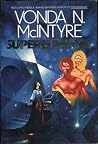
Review 742: Superluminal


SuperluminalSuperluminal by Vonda N. McIntyre
My rating: 4 of 5 stars


This book is one of those that sat on my bookshelves for several decades. I used to be drawn to science fiction more than I am these days. The other day I decided to try the book, see what I make of the beginning at least. Well, the story drew me in and ended up reading the book in about 24 hours.

The story starts out about a newly made pilot, Laenea Trevelyan, a brash woman. To be a pilot the doctors take out your heart and replace it with a machine which you need to control. This is done since people cannot stay awake during transit, which is faster than light travel. As crew you must be put into sleep pods. Laenea has a hard time sticking to the doctor’s orders, staying in the hospital even. When she ventures out, she goes to see her friends who are all crew, but they no longer want to talk to her. There becomes a hierarchy with pilots being looked up to and revered.

Later we meet Radu Dracul who Laenea becomes very friendly with, despite him being crew. Radu is new to earth, being raised on the planet Twilight. He doesn’t know the rules or at least how people are socially. They discover one reason why crew and pilots aren’t friends.

A third person becomes important to the story, Orca whose family has changed their DNA to become more similar to water mammals. They at least speak a common language.

There were some corny bits here and there, perhaps my rating is a bit high, but the story sustained me and I fairly enjoyed it. The book was published in 1983 during a time when there were fewer women writers of science fiction.
Sunday, September 20, 2026

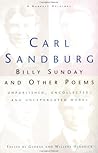
Review 741: Billy Sunday and Other Poems

Billy Sunday and Other PoemsBilly Sunday and Other Poems by Carl Sandburg
My rating: 4.25 of 5 stars


This book of poetry is organized into twelve parts. Nearly all of the included poems were previously unpublished. The title poem was one published before in 1916, but in a revised version and without naming the preacher. Most of the poems were written between 1910 to early 1930s.

The poems are generally easy to read, straightforward without a lot of abstraction. Sandburg wrote so the common person would be able to understand his meaning. And his meaning comes through clearly. He is one of the downtrodden, the working class, the poor. He is a socialist.

His words paint portraits of people. A few describe atrocities, such as WWI and the sinking of the steamship Eastland which resulted in the drowning of hundreds of people, workers and family on their way to a company picnic. There is a section of love poems as well, which are mostly tender or passionate.

I bought this book many years ago, before taking poetry classes in college. I do not remember what brought me to purchase this book of poetry, perhaps it was what just a random purchase of poetry as I did back then. And hard to say why I never picked it up until recently.

Thursday, September 17, 2026

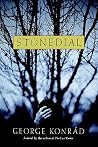
Review 740: Stonedial

StonedialStonedial by George Konrád
My rating: 3.5 of 5 stars


This book appears to be obscure, as there are only three other reviews and none in English. My English edition was published in 2000, which is before goodreads really became around, so perhaps that is why so few entries? I have discovered through goodreads this book is listed as a second in a series, although there is no indication of that in my book.

The book was a frustrating read, for at least the first half. I almost put it aside and DNF it multiple times but kept going since it’s not overly long and have owned the book for many years. In the end it was worth it to have kept going.

The book is a translation from a Hungarian, which might explain some of the awkwardness of the writing of the POV shifts, but I doubt it. There were history, future and present all going on at the same time, and with the POV shifts so it was fairly confusing. The main character, János Dragomán would be referred to in the third person, but sometimes in first person as the narrator. This shift would happen suddenly, and it took a while to figure out this was the same person being spoken about.

János Dragomán, an itinerant philosopher, professor and writer returns to Kandor to be awarded an honorary degree, and see his old friends. He is also a womanizer, which plays in the plot particularly in the later portion. The narration kept returning to 1956, when there was an attempt in Hungry to revolt against the Russian occupation. Dragomán was a student then and was active in this revolt.

In this present time Dragomán just discovers he has a daughter and grandson, which has him contemplating staying in Kandor. There is more, but I’d rather not reveal the entire plot.

A bit of a strange book, but glad I stuck with it. Most of the action was in the last quarter of the book, which was straightforward for the most part, unlike the prior portion of the book. I suppose this answers why there are so few reviews, I expect many would have given up as I nearly did.


Wednesday, September 16, 2026

Review 739: The Hemingses of Monticello


The Hemingses of Monticello: An American FamilyThe Hemingses of Monticello: An American Family by Annette Gordon-Reed
My rating: 5 of 5 stars


An incredibly detailed account of the Hemings family. Gordon-Reed places the Hemingses in the center of the narrative, how it was for them to live enslaved and without control over their life. Yet, with Thomas Jefferson some of the family had a greater degree of autonomy, they were treated better than the rest of his slaves. They were “privileged” within the slave community. Several generations of Hemings were from white masters and black slaves. Two of Jefferson’s offspring by Sally went on to live a life as a white person. All of their children were set free, eventually. It’s hard to imagine the mores of that time and place, that this was acceptable behavior.

Jefferson was careful in what was kept by his letters and writings. He tried to shape his historical image. Even at the time it was a scandal between himself and Sally, and still nothing was confirmed. Yet there are still facts, and of course now DNA evidence. He is quite the enigma.

Tuesday, September 15, 2026

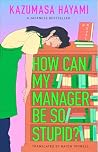
Review 738: How Can My Manager Be So Stupid?

How Can My Manager Be So Stupid?How Can My Manager Be So Stupid? by Kazumasa Hayami
My rating: 3.25 of 5 stars


Another fictional workplace book, this one about being a bookseller. Admittedly I was pulled in by the cover artwork.

The main character, Kyoko Tanihara works at Musashino Bookshop. She is frustrated with her job, the manager especially. She works in the literature department and is frustrated that publishers don’t send the books that she knows would sell. She orders the books, but they don’t arrive, or if they do only one or two copies, when they could sell many more. There are customers who complain that they want the hottest new book, but the store can’t get it. Although it’s the manager who Tanihara mainly complains about and how he runs things. His morning meetings he usually is glowing about a management book that everyone should read.

Through most of the book Tanihara is on the verge of quitting. She does have a lot of anger, but she is a book lover and is very involved in the dynamics of the job and even with an author or two. I was lukewarm through most of the book, but I liked how it ended up.


Thanks to Penguin Group Putnam/G.P. Putnam's Sons and NetGalley for an uncorrected electronic advance review copy of this book. However, I listened to a published audiobook copy of the book.

Saturday, September 12, 2026

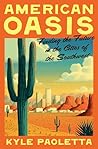
Review 737: American Oasis

American Oasis: Finding the Future in the Cities of the SouthwestAmerican Oasis: Finding the Future in the Cities of the Southwest by Kyle Paoletta
My rating: 2.75 of 5 stars


While the book was okay and I’m glad to have read it, I don’t think the premise of the book held up. The author profiled a few cities in the southwest looking mainly at: Phoenix, Las Vegas, El Paso and Albuquerque, with a few other cities being mentioned. All of these places are hot desert climates, having water issues and in the last several decades huge growth. Some history about these cities were discussed.

Yet, the author described many personal stories of individuals or families that seemingly had nothing to do with the topic, other than they live in that city. The opening described the author’s upbringing in New Mexico. While one story was about a man who lost his hands in 1946 as a boy while playing with explosives. Dealing with his disability ended up giving him some fame. First a newspaper article then later working in movies. Okay, but how does this relate to that particular city and the future? (not to mention this man had moved to another state.) There are many digressions and stories like this. Interesting characters, but not all that relevant.

The last part of the book seemed to regain focus and keep on topic. Water issues are a problem and will be more so in the future. Looking at these desert and drought-prone areas is a good idea for finding solutions for the future. One interesting piece of information was that despite all the growth in Las Vegas, through their water policies the amount of water consumed has stayed at the same level. I just wish the narrative had kept this at the forefront for most of the book.


Thanks to Knopf, Pantheon, Vintage, and Anchor/Pantheon and NetGalley for an uncorrected electronic advance review copy of this book. However, I read and listened to a published copy of the book, as it was published over a year before I finally got to the book. Apologies for the lateness.


Friday, September 11, 2026

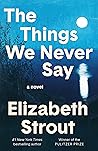
Review 736: The Things We Never Say


The Things We Never SayThe Things We Never Say by Elizabeth Strout
My rating: 2.75 of 5 stars


I understand why this book has such good ratings, but it didn’t work so well for me. Some aspects of the writing really bugged me, such as foretelling what would happen to a character several years in advance. Occasionally the story got to that time period as well. This forecasting happened quite often. I can see how the book could be polarizing as it delves into politics a bit in the middle to last portion of the book. I could have done without it too, as for fiction like this I want a mini-vacation from real life.


I read this book as part of a goodreads challenge. Looked like a book I might enjoy, and I did somewhat but the annoyance factor dropped the rating for me.

Tuesday, September 8, 2026

Review 735: On the Calculation of Volume IV

On the Calculation of Volume IV On the Calculation of Volume IV by Solvej Balle
My rating: 4 of 5 stars


This book is the fourth installment of this series. Next one is due out in November. Maybe it too will be released on November 18th, the day that is repeated for the characters in this series. In this one we have many more people. Coordination and organization seem to fill this book. The progression of days that are counted seem to jump forward frequently, another hundred here and there.

A couple of philosophical points came out at me while reading these books about how the need to work is no longer there. What do you do with your time if suddenly you have everything you need, whatever you want? What do you do with your days that repeat over and over?

I found that enjoyed this installment slightly less than the previous books in the series, but I’m fully invested and cannot wait for the next books to come out. I want to see how this all plays out.


Previously Read books in series:

Sunday, September 6, 2026

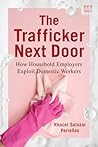
Review 734: The Trafficker Next Door

The Trafficker Next Door: How Household Employers Exploit Domestic Workers The Trafficker Next Door: How Household Employers Exploit Domestic Workers by Rhacel Salazar Parreñas
My rating: 4 of 5 stars


This is a fairly short book on a topic that could certainly use a longer treatment. The book starts by discussing one case in depth, which was revealed in the magazine The Atlantic in 2017. Eudocia Pulido was given as a “gift” at the age of 18 to Alex Tizon’s mother. (Tizon is the author of the article.) Pulido was essentially a slave for over 45 years. Pulido’s parents in the Philippines never knew what happened to their daughter, as they died before she was given any freedom or money, which occurred after Tizon’s mother died. She worked for many decades without pay, unable to contact anyone, without control over her own life.

Another chapter focused on domestic migrant workers in Singapore, Dubai and UAE, and how employment agencies exploit these women, such as charging enormous fees to the worker. Coupled with very low wages they could go six months to a year before seeing any money. Some of the employers, rich households, would monitor how much their domestic worker would eat, many losing 10-15% of their body weight in the first few months of employment. Employers also monitor their movements and communication, not allowing them to call home, or leave their house whenever they would like, as their working hours are nearly round the clock. They cook, clean, do laundry, take care of the children, whatever their employers demand and in return get very little, a place to sleep and not much else.

The last chapter looked at the employers, or exploiters. Often, they used excuses for their own behavior for trafficking these women. Even some of the employers were expats from western countries, one would hope they would do better, such as the author herself. Parreñas was living temporarily in Singapore and was able to hire a domestic worker but did not go along with the agency agreements for pay. She paid off the worker’s agency fees immediately, gave her worker more pay than the agency’s suggestion, fed her well, and gave her set working hours that were not overly long nor egregious. Once off the clock the employee had freedom to do as she pleased. This is one of those books that makes you wonder about humanity; how we can be cruel to others over and over again.

Thursday, September 3, 2026

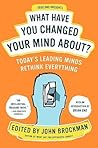
Review 733: What Have You Changed Your Mind About?

What Have You Changed Your Mind About?: Today's Leading Minds Rethink Everything – 150 Influential Thinkers on God, Love, and Evolution What Have You Changed Your Mind About?: Today's Leading Minds Rethink Everything – 150 Influential Thinkers on God, Love, and Evolution by John Brockman
My rating: 4 of 5 stars


This book came out of a question from the Edge website by John Brockman. A question per year with many responses making up the book. (The project has now ceased 2005-2018) This book was from 2008's question. I thought it was an interesting idea and realized now eighteen years later this book may be getting old and outdated. Yes, some of the answers are, but the majority were not.

There were 131 answers, or essays. Each entry was short, just a couple of pages. The answers come from a variety of people, but the majority were scientists. Also, the majority were associated with a university and had a book published. It was rare that an entry was written by someone without a published book. The few that weren’t were associated with a magazine or journal.

The scientists who contributed were from a variety of fields such as physics, computer science, biology, neuroscience, chemistry, and more. There was science adjacent, such as science writers and science historian There were mathematicians, psychologists, sociologists and philosophers. And for the random factor a musician, popular magazine editor and a few others not fitting into those categories. And, of course, there was overlap with 131 different people contributing to this book.

It can be a very thought-provoking book. I mean it was for me, but I did read it fairly quickly and probably would have been better to slow down and contemplate each entry more fully than I did. A few were a bit too deep into their field for me to fully understand what was being discussed. I could have stopped and looked up more information, but instead I just moved on. I only paused on a few that impressed me.


Tuesday, September 1, 2026

Review 732: The Anthropocene Reviewed

The Anthropocene Reviewed: Essays on a Human-Centered Planet The Anthropocene Reviewed: Essays on a Human-Centered Planet by John Green
My rating: 3.5 of 5 stars


I have never read anything by John Green before but have heard of him and his very popular YA books. But this book is not YA. Instead, it’s a collection of essays on topics that vary across the board. There are 49 of them, and each are fairly short.

Each topic seems to be personal to John Green, almost like a launching pad to discuss his own life, such as his anxiety or his kids. Yet they do return to the main topic. A few examples of the topics: Diet Dr. Pepper, Teddy Bears, The Internet, Sunsets, CNN, Goggling Strangers, and Plague. At the end of each essay Green then rates the topic ranging from 1 star for "Plague" and 5 stars for "The smallpox vaccine".

At the end of the book, I know a little about the author than I expected. Actually, the book is very different than what I expected, but it’s okay. It is not a book about climate change, nor about how humans have changed our biosphere and all that live upon it. Or it is about that, but also John Green. 

I give The Anthropocene Reviewed book 3.5 stars.


Previous Popular Posts