Showing posts with label Native People. Show all posts

Friday, April 10, 2026

Review 683: A Man Most Driven

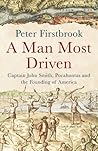
A Man Most Driven: Captain John Smith, Pocahontas and the Founding of America A Man Most Driven: Captain John Smith, Pocahontas and the Founding of America by Peter Firstbrook
My rating: 5 of 5 stars


I thoroughly enjoyed this biography of Captain John Smith. He led an amazing life, particularly for one who began life as a farmer’s son. His family had some means, as they had a servant and help with the farm, and Smith was sent to school, when poorer families needed the help at home. Early on Smith was interested in having “brave adventurers”.

The experiences of John Smith, particularly with establishing Jamestown in 1606 came from his writings. Smith wrote his own biography and several different accounts of what happened in Jamestown during his life. To go over all of the mishaps and many ways Smith narrowly avoided death would take too long.

Early on in his life he sought his adventurers by joining to fight against the Spanish in 1597, then a few years later trying to become a crusader fighting against the Turks. Not being Catholic only slightly dampened those “adventures” as he was involved in plenty of fighting. Enough to where the Prince of Transylvania awarded him a coat of arms and a small pension and rank of Captain. After being captured and enslaved, killing his master and escaping, Smith decided his adventures on the continent was enough.

Yet back in England he was not content to manage the farm, so he used his contacts in London to join the Virginia Company of London, or London Company and went to the new world in 1607. A good portion of the book is about this time, as it is very significant. Yet this is already getting long.

One of the aspects that I appreciated with this book is the author goes to lengths to determine if what Smith had reportedly done actually happened. Smith perhaps embellished and a braggart about his accomplishments and experiences.

This was a well written book. I started reading the print book, then realized I had bought an audiobook as well, and listened to a good portion of the book as well, as the narrator did an excellent job. However, there was material in the print copy you cannot get in audio with a few maps and images throughout.

Many things can be said about Captain John Smith, and one for certain is without him, Jamestown settlement would not have survived. He was crucial for the success of the first English settlement in the New World.


This will be one of my top reads for the year. 
Thursday, March 26, 2026

Review 679: The Escapes of David George

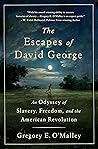
The Escapes of David George: An Odyssey of Slavery, Freedom, and the American Revolution The Escapes of David George: An Odyssey of Slavery, Freedom, and the American Revolution by Gregory E. O'Malley
My rating: 3.5 of 5 stars


David George was born into slavery and named Davy. He had his own mind about how he wanted to live his live and his master was not a kind one. In 1762 aged 19 he ran away, going south from the Virginia plantation. Davy managed to escape for a time.

David, as he now wanted to be called, was helped by white people several times during his initial escape. John Green, became a sort of friend, where David lived and worked for two years. It was not in Green’s best interest to harbor a fugitive slave but he did so, and when word came the slave catchers were after David, he ran again.

This time he was captured by the Creek Peoples and was a slave once again, but of an entirely different sort. While still trying to escape his original owner, the Chappells were hot on his heels during his time with the Creeks. David somehow managed be involved with the Nachez people, King Jack in particular. It appears that Jack had brokered a deal where David was purchased by John Miller, or George Gaulphin from the Chappells. David now lived in a trading post managed by John Miller, living here for about three years.

Now around 25 David told Mr. Gaulfin and he wanted to live with him in Silver Bluff. So David ended up choosing his master, not a typical situation by a slave.

Here in Silver Bluff David settled down, had a wife and soon children. During his time here David had a profound reaction to a comment about religion and he sought this out. Over a short period of time David started to become a preacher and chose the last name for himself of George.
When the American Revolution began David George sided with the British as a way to escape slavery. Joining their forces he found that he wasn’t escaping racism and so after the war he and his family moved to Nova Scotia.

In Canada David was emancipated and became a minister with a community. Although they were technically free racism and prejudice still abound. The blacks were blamed for whatever when wrong and at point a riot of the white peoples against the blacks broke out that that destroyed many black homes. Realizing they would never be completely free the community emigrated to Sierra Leone.

David George’s life while not entirely his own, was still formed by his own decisions time and again while trying to escape a situation that he did not like.

This is a fascinating story. The book was somewhat dry at times, although the facts themselves are quite compelling. Several times there is a repetition of what was already explained, even a summing up of what came before, which detracted from my overall rating. The book takes on the wider lens of history at that time, and seemed like the book was trying to be a primer of what slavery looked like in the mid-1700’s. For those unfamiliar with the history and situation the extra material will enhance the material.


Thanks to St. Martin's Press and NetGalley for an uncorrected electronic advance review copy of this book. However, I listened to a published audiobook copy of the book. This is not the ideal way to read this book, the narrator does not favors to the material.

Friday, May 30, 2025

Review 588: Two Old Women

Two Old Women: An Alaska Legend of Betrayal, Courage and Survival Two Old Women: An Alaska Legend of Betrayal, Courage and Survival by Velma Wallis
My rating: 4 of 5 stars


This oral story of the Gwich'in band, one of eleven groups in the Alsakan Athabaskan People. The story has been told for generation. Wallis felt the need to write it down and share with a larger audience. It was one story her mother told her of the many stories she shared. Wallis grew up as a Native person in the same area where this legend takes place.

The tale tells of a village of The People facing a particularly hard time of starvation and winter upon them. The chief makes the difficult decision to leave behind two old women while they move camp, leaving the women behind to die of starvation and cold. What the women do next perhaps surprises even themselves.

I've this print book for so long, over 20 years, that I’m not sure why I hadn’t read it until now. When I discovered my local library had an audio copy I decided to listen to it. Since it was originally an oral story I think this may have been the better way to read it. Except my print book did come with line drawings and a couple of maps that enhanced the text.

It is a short book, not much over two hours in audio and under 150 print pages. Again, I’m not sure why I overlooked this book on my shelves. Easily able to read this in one day, which I did. One thing the audio did not have was Editor’s note at the end. It shared briefly a little about the author but also explained how they had difficulty getting the book published in the late 1980s. One problem was the author was a women, the other that the native peoples thought the story made them look bad. Finally they were able to find funding to get the book published through a subscription model in 1993.

Monday, April 1, 2024

Review 475: People of the Morning Star

People of the Morning Star People of the Morning Star by W. Michael Gear
My rating: 4 of 5 stars


This is book #21 in the series North America's Forgotten Past as well as the first book in a sub-series: People of Cahokia.

In this book we are introduced to a huge city called Cahokia, located in the south. The people build huge mounds, with the elite living on the top of these mounds. People from all over, all languages, have come here to live near the miracle that happened with a living God being embodied in a human body. The bulk of the book is trying to figure out why the rulers are being attacked, killed or nearly. 

I will have to read the next in the series sooner than later, so I don't forget the story line.


March 25, 2024 – Started Reading
March 25, 2024 – 
page 21
 
 3.28% "read through introductory material, now beginning the story..."
March 26, 2024 – 
page 63
 
 9.84% "starting chapter 5 -- there is a plot to kill Morning Star, a resurrected Sky World soul into a human body. Also, Fire Cat Twelvekiller high war chief and three others from Red Wing Nation were captured and being brought to Morning Star as prisoners."
March 27, 2024 – 
page 140
 
 21.88% "starting chapter 15. Well, the first assignation attempt did not work. And Night Shadow Star has become inhabited by the Underworld spirit of Piasa."
March 28, 2024 – 
page 216
 
 33.75% "mid chapter 24 ....they are searching for the people who are attempting these assassinations, they did get kill one person, but two were caught just in time. Meanwhile we do get the killer's view point, very briefly and he's trying to rope in High Dance, leader of the House of Evening Star."
March 29, 2024 – 
page 249
 
 38.91% "starting Chapter 28: still on the hunt for who is attempting to create chaos and assassinate the leaders."
March 30, 2024 – 
page 341
 
 53.28% "starting Chapter 41"
March 31, 2024 – 
page 433
 
 67.66% "starting Chapter 54. Feels like the story just needs to wrap up, have the final confrontation. Yet so many pages left. (too many?)"
March 31, 2024 – Finished Reading

Thursday, February 29, 2024

Review 468: Copper Falcon

Copper Falcon Copper Falcon by W. Michael Gear
My rating: 3 of 5 stars


A short novel – in 1050 a father and son from a small town, several days down the river, go to the big city in the hopes of getting more warriors. Their town has constant border skirmishes and they need more people to fight the enemy back. Now at the canoe landing the son, Flint Knife Mankiller, finds out from his father, Red Mask, that he was banished from Cahokia and told if he ever returned he would be killed. Can they accomplish their mission and return back to the river before Morning Star or the Keeper realizes he is here? Can he escape his punishment?

The novella is short enough it could easily be read in a day, but it took me several weeks. The problem was not only that I wasn’t reading the book, but I had the eBook on my phone. This is definitely not my preferred reading format.

Saturday, April 15, 2023

Review 392: Jamie MacGillivray

Jamie MacGillivray: The Renegade's Journey Jamie MacGillivray: The Renegade's Journey by John Sayles
My rating: 5 of 5 stars

Begins with the Battle in Culloden and ends with the war between France and England in the New World (later called the French Indian War), with so much in-between.

We follow Jamie MacGillivray of Dunmaglas, and Jenny Ferguson of a crofter's home, just a young woman falsely accused of participating in the Jacobite uprising. Jamie, however, isn't quite so innocent but didn't participate in the battle (arriving late), although his older brother led a charge. The two meet just briefly, Jamie giving Jenny his mother's ring thinking he won't survive, but maybe she could use it when in need at some time.

They both get captured and sent to London prison for hanging, then somehow getting a reprieve on a slave ship to the new world. "Serve 7 years and you'll be free, but go back to England and you'll be hanged." Jenny is also sent on a slave ship, but hers end up liberated by a French privateer vessel and becomes a refugee, a free woman in Martinique. Although free she doesn't know anyone, the language nor has any money. Jenny must work, and is given to a French commander, who oversees the cannons on the island.

This is just barely the beginning. It is a long tale, but I don't think anything could have been cut out. It is well done, although I had somewhat of a trial with the Scottish accents printed on the page. After a while, I got used to it and the reading became easier. We also have a lot of untranslated French. My college French days came in handy, but occasionally had to use a translator to ensure I was getting everything being said.

I really enjoyed the way the ending brought around full-circle to what started in Scotland.


Many thanks to Melville House for sending me an advance review copy.


Thursday, February 23, 2023

Review 378: People of the Black Sun

People of the Black Sun People of the Black Sun by Kathleen O'Neal Gear
My rating: 5 of 5 stars


Book #20 in the series: North America's Forgotten Past, and book #4 in the sub-series: People of the Longhouse.

This is the last book in the sub-series, and it closes the loop for this group of characters, that were instrumental in bringing about peace in the last after decades of war.

While this is fiction, it is also historical and attempts to match the oral histories of the Iroquois how they went from blood feuds to peace, which influenced the United States.

This is a good conclusion to the series, the best book of the four, but if this was read alone I don’t think the power contained within would be as striking.

I do enjoy these books written by wife and husband team, that through their education, research and dedication bring historical novels of the people of the Americas past.


Thursday, February 9, 2023

Review 375: The Broken Land

The Broken Land The Broken Land by W. Michael Gear
My rating: 4 of 5 stars


People of the Longhouse #3
North America's Forgotten Past #19


This book wasn't nearly as dark as the previous two in the sub-series. The story takes up 12 years after the previous, when the stolen children are now adults and most in prominent positions in their clans. Despite being in different villages, even in enemy clans, they all are bound to each other. They will always be friends after what they went through.

War is taking over, due to illness sweeping through the land, and cold weather that provided a poor harvest. A huge war seems to be coming, can peace prevail? We don't know that really as there is another book in this series.

I enjoyed this book much more than the previous two in the sub-series. There is enough filling in of the past that one doesn't necessarily have to read the previous books. But where this one ends, you definitely want to read the next one. Hopefully I won't wait to long to get to it.


Tuesday, January 31, 2023

Review 373: The Dawn Country

The Dawn Country The Dawn Country by W. Michael Gear
My rating: 3 of 5 stars


People of the Longhouse #2
North America's Forgotten Past #18

This second book in the sub-series People of the Longhouse was not as dark as the first one. Yet, it still is darker than the typical books in the series overall: North America's Forgotten Past. These book I generally do enjoy but so far, not as much for this set. There are four books in this sub-series, so I'm half-way through. Going to continue on and hopefully they do get better.

This book is shorter than many other of the books in the series and continued just after the first book, that perhaps they should have been combined.

This story line is the rescued group of children along with a small group of warriors set out to find the evil witch that had held them captive. They want to rescue the rest of the children, and kill her. We also have the story of the other children that are still being held captive. Not much else happens except for this rescue operation. But it does set the stage for what happens next. 

Tuesday, April 19, 2022

Review 314: People of the Longhouse

People of the Longhouse People of the Longhouse by W. Michael Gear and Kathleen O'Neal Gear
My rating: 3 of 5 stars


People of the Longhouse #1
North America's Forgotten Past #17


This book in the series is a bit darker than those before it as at the center of the story involves children. They are kidnapped, then sold to others who rape them, or abuse them in other ways. The story is also about a group out to rescue the stolen children.

Despite the dark themes the book ends somewhat abruptly, to carry on with the next book. Of course, now I want to read that next one quickly. Good thing I already own it.


Tuesday, August 17, 2021

Review 241: Turtle Island

Turtle Island

Turtle Island by Gary Snyder
My rating: 4 of 5 stars


Not sure why it took me so long to read this small book of poetry.


I do not know enough about poetry, past nor present. It feels like this book of poems was revolutionary in a way, discussing nature and native peoples, but I can’t be certain. It did win a Pulitzer prize in 1975 the year after it came out, so it did get attention and people liked it.

It feels like a book I should have read many years ago. I did now, finally. Owned it for who knows how long, likely ten, no fifteen.


It was recommended to me a long while back, and they were right, something I would enjoy, although I wasn't blown over by the book either. 

There are a few essays in the last portion directly addressing environmental issues, on how to make the world a better place, for the environment mostly, but also on how to be better humans. It feels ancient and still relevant for today. Of course the suggestions would never work, too many people are stuck in the mind set of “Freedom” and “My Rights” and honestly, selfishness. No, too many people think of themselves not of society, at least in the United States. And funny enough in discussing population in the 70s there were too many, should be reduced, now it had nearly doubled, if not more.

Tuesday, May 4, 2021

Review 216: The Visitant

The Visitant The Visitant by Kathleen O'Neal Gear
My rating: 3.5 of 5 stars

This was a quick read for me, as the Gears know how to write a book that keeps your interest. I’ve read many from their main series (North America's Forgotten Past) and enjoyed most of them immensely. They are a pleasure read for me.

This book is a start of a three-book series. It is told in two timelines, one is the present (around 1990’s) the other in the long ago past during the time of the native people of the Anasazi, with most of the page length to the later timeline.

The current timeline has an archaeology dig team in the same location as the other story line. There is a personality conflict with two of the team members that draws some drama, maybe unnecessary. The team also consists of local native women who are overseeing the site and dig, which lends insight as well with their spiritual understanding of objects found.

The far past timeline is focused on a murder mystery, a great evil that killed mostly girls who were already sick. The main character is the War Chief, Browser who not only lost his sick boy but also his wife who was murdered, but then the body disappeared. He summons his great uncle to help in solving these crimes. Unfortunately as the book continues the evil that is sweeping across their town is not done.

Since the books focus on so much evil and murder, I don’t think I’m going to continue reading the series. It ends well enough for the one book that it’s not left open ended. I do like how it left off with the archaeologists, particularly the two that were not getting along.


Previously Read Kathleen O'Neal Gear books  - so many.  For now I'll just post a link to the series, as mentioned above.  

North America's Forgotten Past which was previously a series titled:  First North Americans
I've read books #1 - 16 in the series, although not entirely in order. Most with 4 stars, some exceptions.

Wednesday, December 9, 2020

Review 181: People of the Thunder

People of the Thunder People of the Thunder by W. Michael Gear
My rating: 5 of 5 stars


This is the second, and conclusion in the “Moundville Duology” that started with People of the Weeping Eye. Typically, the books in the “North America's Forgotten Past” series are standalone books. This one is book number 16. I’ve read 18 books in series. I do enjoy them. The series used to be called “First North Americans” but the new series name is more appropriate.

This book’s main plot is balancing of Power. There is white power that represents peace and trade. The red power, which represents mostly blood and war has been in ascendance and is coming to a head with a huge war with many of the peoples, lead by the War Chief Smoke Shield at Split Sky City of the Chikosi, or Sky Hand People. They have subdued and made slaves of most of the Albaamaha peoples, who are plotting an uprising. The Yuchi in the north and the Chata people are also potential foes ready to strike. The Chahta had recently been dealt a huge blow with the sacking of White Arrow Town.

In the center are two traders: Old White, also known as Seeker and Trader, who was Green Snake. Trader had fled Split Sky City ten years ago after killing his brother Rattle, but we know he survived and is now known as Smoke Shield. The two also have a contrary, Two Petals, who joins them on their journey and a dog Swimmer. The contrary is led by Power, she sees things in the future and thus lives her life in reverse. They are making their way along the river, trading with the different peoples and towns, heading to Split Sky City as power has directed, hoping to bring back balance to the red and white power.

It is a thickly weaved plot that did take two full books to develop. There are so many other aspects and characters to the story than the brief summary above. It had been so long since I read the first book of these two that I just about forgot everything that happened. I read a few summaries and the book itself had a few reminders added in to help the reader. The overall story came back to me as I was reading as well, but probably better to read the two books closer together in time. Happy that I finally read the book.


Previous Book:

Saturday, October 3, 2020

Review 165: 1491: New Revelations of the Americas Before Columbus

1491: New Revelations of the Americas Before Columbus 1491: New Revelations of the Americas Before Columbus by Charles C. Mann
My rating: 5 of 5 stars


A great book!  It changed my understanding of the Americas, how many people were living here and their accomplishments. Large cities flourished for hundreds of years. The Amazon area was man-made 

Wednesday, July 29, 2020

Review 151: People of the Canyons

People of the Canyons: A Novel of North America's Forgotten Past People of the Canyons: A Novel of North America's Forgotten Past by Kathleen O'Neal Gear
My rating: 4 of 5 stars


This book is magic based and mostly concerned with evil, witches and the dead. The leader of the Straight Path nation is known as evil cannibal witch. He used terror, force and witchcraft to rule, but now is old, nearing death. He dispatches his daughter Blue Dove to find a wellpot claimed to hold his enemy Nightshade’s soul, hoping it will free him to travel to the afterlife. At the same time there is a battle with religion, the old and new, though that is more in the background of the story.

Blue Dove searches out Maicoh known to be a powerful witch killer, taker of souls. She finds a few elder healers, Tocho and Crane instead. Then an albino joins who claims to be Maicoh. Mixed in with these is a young orphan girl Tsilu, who wants to save her adopted grandfather Tocho as he is being marched back to the Flowing Waters Town, the center of the Straight Path nation.

Most of the book leads up to the events when the party arrives in Flowing Waters Town. This is also where I think the book is the weakest. And the ending leaves things very primed for a follow-up book.

While reading this book some of the characters and history felt familiar. None of the summaries I read mentioned this book being a continuation of others, but one reviewer did mention it is a continuation from the book People of the River, which is book 4 in the series. It probably would help to read that book first, but it is not necessary. If you read it a long time ago like me, then you may want to refresh your memory of the story.

For readers new to the series of books, I’m not sure this is the place to start. But since it is mostly a standalone book you won’t be lost. I think there were some stronger books in the series. I always enjoy these books by the Gears. This book did not disappoint, but not my favorite either.


Thanks to Macmillan-Tor/Forge and NetGalley for an uncorrected electronic advance review copy of this book.


This is the latest book in the series at number 26.
Previously I've read (more or less in order) books number 1 through 15.
All rated 4 or 5 stars.

Wednesday, December 18, 2019

Review 96: The Book of Science and Antiquities

The Book of Science and Antiquities The Book of Science and Antiquities by Thomas Keneally
My rating: no rating

Not rating as I did not finish this book.

This book has an premise that intrigued me and with a writer of some note, with many books behind his name including some well known. This seems like a formula for a good book, if not great, so it was a disappointment that I could not get into this story.

It can be difficult to say exactly why a book doesn't work well. Something about the story or the writing, and in this case maybe it's just the age of the characters, being old and looking back, but I don't know, done well it could be an interesting read.  [see Our Souls at Night] Something here just didn't connect with me and after getting half-way through it looked to me like a chore. Reading should not be a chore.

I like to think that someday I will return to this book and give it another go, try again, as sometimes the book fits better at a different point in your life, or a different mood. Yet, there are so many other books waiting, but who knows. For now, I'm moving on to something else.


Thanks to Atria Books and NetGalley for an uncorrected electronic advance review copy of this book in exchange for an honest review.


Also note, I purchased the audio version of this book, tried that format and while I got further along in the book it didn't help enough.


Wednesday, November 13, 2019

Review 88: The Clan of the Cave Bear

The Clan of the Cave Bear The Clan of the Cave Bear by Jean M. Auel
My rating: 3 of 5 stars

This book is a classic, I've heard about it for years, was recommended to me to read it, and finally have read it. I found it difficult to get into the book, was ready to stop, but around the half-way mark I gave into the story and started to enjoy it, yet...

The story is of a young girl who lost her clan, then found by another, but of another type of people. This is so long ago we are talking about pre-homo sapiens girl (Ayla) being found by a Neanderthal clan. She is born of "the others" and looks ugly, huge, and has all sorts of differences, but she eventually is accepted. Her differences, and acceptance, is a major problem with Broud, the next in line to be clan leader. The story is about her growing up, exploring the differences between her and the adopted clan.

The story, plot and characters were interesting enough. My problem became the writing style. So often I was taken out of the story by modern words and descriptions that these ancient humans would have no understanding, no comprehension. Take for instance: a totem piece added to Ayla's bundle, called a fossilized gastropod cast or a fossil cast of a gastropod. That is modern language. Then there's calling a baby born dead as still born, or the elderly having bouts of rheumatism. just to name a few examples.

This type of language peppered the story and every time I was taken out of the suspension of belief. This makes me not want to continue the story. I feel like I've read enough. I like the idea behind the story, just not the way it was told.


Instead of continuing Auel's series, I'm going to stick with a series I've enjoyed, while not quite as long ago, it has some of the same underlying features of ancient peoples, living in their world: North America's Forgotten Past The series of books, authored by husband and wife team of anthropologists, take you into their world and you live in it.

Wednesday, September 25, 2019

Review 73: Call Upon the Water

Call Upon the Water Call Upon the Water by Stella Tillyard
My rating: 4 of 5 stars

This historical novel is set in the mid 1600’s in two locations, England and the New World. This book is told mostly from the point of view of a Dutch engineer Jan Brunt, writing, to you. Jan starts the book in New Amsterdam as he is writing in his diary. We soon find out who this you is, not to the reader, but one of the native fens woman, Eliza. They had a secret romance.

Water abounds and the Dutch engineer is there to control it, change the land, hold the water at bay, bend it to their needs. So these fens, the wetlands, will be drained made into the Great Level, so the land could be made useful for the English. The native, fens people had already sabotaged a prior attempt to alter the natural landscape.

Much of the book was enjoyable, but it was a slow paced novel. It is not long, but it took a long while to read it. The writing is good, the story is mainly interesting, but there is lingering. I wavered during the relationship parts, and that seemed to take over the entirety of the novel, yet not quite. There is a bit more.

It was an odd choice for the author, Tillyard, to only give the reader Eliza’s point of view towards the later part of the book. Then we return to Jan’s briefly once more, and it is odd that this back and forth wasn’t for the entire book. After completing the book entirely you can understand more of each character, yet part of me desires that the entire book was just one point of view. In any case, the choice didn’t ruin the book at all, just a little different with the structure. Also, I didn’t feel the voice of Eliza’s writing was much different from Jan’s, it is only the author telling us this is which character.

I did enjoy the historical aspect of the book, the turning of the city from the Dutch to British with New Amsterdam becoming New York. Even saw a different side to Virginia.

Book rating: 3.5 stars


Thanks to Atria Books and NetGalley for an uncorrected electronic advance review copy of this book in exchange for an honest review


View all my reviews

Friday, August 2, 2019

Review 55: In the Valleys of the Noble Beyond: In Search of the Sasquatch

In the Valleys of the Noble Beyond: In Search of the Sasquatch In the Valleys of the Noble Beyond: In Search of the Sasquatch by John Zada
My rating: 3.5 of 5 stars

Here's a book with a great cover. The title fits the image and perks my interest, then we get to the sub-title...Sasquatch? Well, why not. My personal belief is much like aliens visiting Earth, so not likely. We would know if any of this was real, the cover-up is too much. I don't like conspiracy theories too much either. Anyway, I thought the book might be a fun read.

As I read the book it felt like we, reader and author, are sitting around a camp fire and he was telling stories. Zada has a lot of stories. This book is a collection of those tidbits her learned and he also writes of how he got those stories. The book has these short exciting stories, between longer periods of what's going on with the author and the people he meets.

The book takes place nearly entirely in the Great Bear Rainforest, which is located in British Columbia, on the west coast near the central and northern coastal region. It is one of the few areas where old growth still exists. There are small towns populated by people of different First Nations who have lived in the area for thousands of years. This area has the most Sasquatch stories, but also it is part of the oral history for the people.

Zada goes into the project with an open mind, trying to truly determine if Sasquatch is real or not, despite his boyhood fascination with the subject. There is only a little review of the history of "Sasqualogy" and some of the most important "Sasquoligists." Perhaps Zada believes people reading this book already knows all that came before. I didn't, but it doesn't really matter too much.

The book was entertaining enough, the writing well done. The story line got a little distracted and sometimes not very focused. For myself, the most interesting parts of the book to me where of the landscape and the First Nations people.

Book rating: 3.5 stars


Thanks to Atlantic Monthly Press/Grove Atlantic and NetGalley for an uncorrected electronic advance review copy of this book.

Wednesday, June 12, 2019

Review 41: A Death in the Rainforest

A Death in the Rainforest: How a Language and a Way of Life Came to an End in Papua New Guinea A Death in the Rainforest: How a Language and a Way of Life Came to an End in Papua New Guinea by Don Kulick
My rating: 5 of 5 stars

I was captivated by this book, and still am. To be honest, before I started reading it I thought it might be a tad boring. Boy was I wrong. This book I could honestly say is non-fiction that reads like fiction.

There was a very small portion early in the book that went over some language nerdy stuff, but it was brief and didn’t drag down the book at all. Kulick stated this book was written for the layperson, not an academic endeavor like his first book. Here he wanted to give to the world an insight on what life is like for the villagers in a small, very remote village, deep in the rainforest in Papua New Guinea. And Kulick wanted to tell the story of why their native language is dying, as it speaks to a larger issue of the world today, and of the past.

The village is Gapun and Tayap is the dying language Kulick studied. The villagers are now speaking Tok Pisin (a form of Pidgin English) instead. Papua New Guinea has more diverse languages than any other country; nearly every village has its own language. And they aren’t variants or dialects either, completely different language, and most spoken by about 500 people or less. It is their way of differing themselves where they came from.

Kulick tells a good story here. He intersperses action with explanations. He strings the reader along, and you don’t mind. There are some moments where you laugh, and some you cringe, and there are moments of disbelief.

Kulick states somewhat near the end of the book that there are no undiscovered tribes left. First contact can never be again, as that is now all in the past. It reminds me of Bill McKibben’s book The End of Nature, which the premise is that all nature has been affected by humans, and this goes as well for “wild” humans as well.

I could keep going, but this review is already getting long. I hope this book will be read, it’s well written, entertaining and informative. And to learn about this dying culture is important. It is the least we can do.


Thanks to Algonquin Books and NetGalley for an uncorrected electronic advance review copy of this book.

Previous Popular Posts