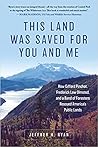
 This Land Was Saved for You and Me: How Gifford Pinchot, Frederick Law Olmsted, and a Band of Foresters Rescued America's Public Lands by Jeffrey H. Ryan
My rating: 4 of 5 stars
This book provides the history of how land in the United States became preserved for future generations. Nothing in the book addressed deserts, it was very tree oriented.
U.S. Forest Service, National Parks, Wilderness Preserves, and other public lands have a history, and part of that history is told in this book. Its focus is on some of the men that fought the land and forests.
The book begins with Frederick Law Olmsted, managing a mining operation in the California Sierra Nevada. Needing a break, he wanders to the Yosemite area and is astonished by its beauty. Olmsted realizes this land needs to be protected before it is destroyed by commerce, either mining, clear-cutting timber or some other extraction method that destroys beautiful landscapes.
There are more biographical details of Olmsted for the page length of this book than he deserves. I didn’t mind too much since I’ve been interested in learning more about the guy. Yet it did detract from the premise of this book.
From Olmsted the book discusses Gifford Pinchot. I found it interesting that Pinchot was groomed by his father to become a forester, and good thing he liked it. Pinchot saw opportunity to make his mark with forestry. Like all early foresters he got his forestry education in Europe, then back to the United States, first working with Olmsted then quickly becoming the lead man on forestry management.
At this point there was a lengthy discussion about the development of schools for forestry and development of an agency within the federal government. Pinchot was quite influential with both aspects, even being underhanded towards people he previously worked with.
Pinchot’s view towards forestry was that forests were to be used, not preserved, and this viewpoint became very influential in managing forest service lands. He not only headed the new agency he also trained many foresters for many years.
Further in the book discusses other men who saw that needed to be preserved as wilderness, untouched by humans for the future. They believed that wilderness helped humans reconnect with nature and was good antidote for city life.
The book had many interesting points and yet it also was too large of a topic to be adequately cover everything for a book of under 250 pages. It also seemed to miss quite a bit as well, such as neglecting to mention any women who also helped in the fight to protect lands.


No comments:
Post a Comment