Saturday, September 12, 2026

Review 737: American Oasis

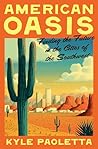
American Oasis: Finding the Future in the Cities of the SouthwestAmerican Oasis: Finding the Future in the Cities of the Southwest by Kyle Paoletta
My rating: 2.75 of 5 stars


While the book was okay and I’m glad to have read it, I don’t think the premise of the book held up. The author profiled a few cities in the southwest looking mainly at: Phoenix, Las Vegas, El Paso and Albuquerque, with a few other cities being mentioned. All of these places are hot desert climates, having water issues and in the last several decades huge growth. Some history about these cities were discussed.

Yet, the author described many personal stories of individuals or families that seemingly had nothing to do with the topic, other than they live in that city. The opening described the author’s upbringing in New Mexico. While one story was about a man who lost his hands in 1946 as a boy while playing with explosives. Dealing with his disability ended up giving him some fame. First a newspaper article then later working in movies. Okay, but how does this relate to that particular city and the future? (not to mention this man had moved to another state.) There are many digressions and stories like this. Interesting characters, but not all that relevant.

The last part of the book seemed to regain focus and keep on topic. Water issues are a problem and will be more so in the future. Looking at these desert and drought-prone areas is a good idea for finding solutions for the future. One interesting piece of information was that despite all the growth in Las Vegas, through their water policies the amount of water consumed has stayed at the same level. I just wish the narrative had kept this at the forefront for most of the book.


Thanks to Knopf, Pantheon, Vintage, and Anchor/Pantheon and NetGalley for an uncorrected electronic advance review copy of this book. However, I read and listened to a published copy of the book, as it was published over a year before I finally got to the book. Apologies for the lateness.

Friday, September 11, 2026

Review 736: The Things We Never Say


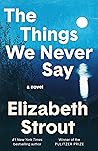
The Things We Never SayThe Things We Never Say by Elizabeth Strout
My rating: 2.75 of 5 stars


I understand why this book has such good ratings, but it didn’t work so well for me. Some aspects of the writing really bugged me, such as foretelling what would happen to a character several years in advance. Occasionally the story got to that time period as well. This forecasting happened quite often. I can see how the book could be polarizing as it delves into politics a bit in the middle to last portion of the book. I could have done without it too, as for fiction like this I want a mini-vacation from real life.


I read this book as part of a goodreads challenge. Looked like a book I might enjoy, and I did somewhat but the annoyance factor dropped the rating for me.

Tuesday, September 8, 2026

Review 735: On the Calculation of Volume IV

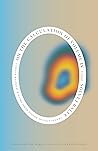
On the Calculation of Volume IV On the Calculation of Volume IV by Solvej Balle
My rating: 4 of 5 stars


This book is the fourth installment of this series. Next one is due out in November. Maybe it too will be released on November 18th, the day that is repeated for the characters in this series. In this one we have many more people. Coordination and organization seem to fill this book. The progression of days that are counted seem to jump forward frequently, another hundred here and there.

A couple of philosophical points came out at me while reading these books about how the need to work is no longer there. What do you do with your time if suddenly you have everything you need, whatever you want? What do you do with your days that repeat over and over?

I found that enjoyed this installment slightly less than the previous books in the series, but I’m fully invested and cannot wait for the next books to come out. I want to see how this all plays out.


Previously Read books in series:

Sunday, September 6, 2026

Review 734: The Trafficker Next Door

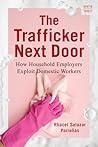
The Trafficker Next Door: How Household Employers Exploit Domestic Workers The Trafficker Next Door: How Household Employers Exploit Domestic Workers by Rhacel Salazar Parreñas
My rating: 4 of 5 stars


This is a fairly short book on a topic that could certainly use a longer treatment. The book starts by discussing one case in depth, which was revealed in the magazine The Atlantic in 2017. Eudocia Pulido was given as a “gift” at the age of 18 to Alex Tizon’s mother. (Tizon is the author of the article.) Pulido was essentially a slave for over 45 years. Pulido’s parents in the Philippines never knew what happened to their daughter, as they died before she was given any freedom or money, which occurred after Tizon’s mother died. She worked for many decades without pay, unable to contact anyone, without control over her own life.

Another chapter focused on domestic migrant workers in Singapore, Dubai and UAE, and how employment agencies exploit these women, such as charging enormous fees to the worker. Coupled with very low wages they could go six months to a year before seeing any money. Some of the employers, rich households, would monitor how much their domestic worker would eat, many losing 10-15% of their body weight in the first few months of employment. Employers also monitor their movements and communication, not allowing them to call home, or leave their house whenever they would like, as their working hours are nearly round the clock. They cook, clean, do laundry, take care of the children, whatever their employers demand and in return get very little, a place to sleep and not much else.

The last chapter looked at the employers, or exploiters. Often, they used excuses for their own behavior for trafficking these women. Even some of the employers were expats from western countries, one would hope they would do better, such as the author herself. Parreñas was living temporarily in Singapore and was able to hire a domestic worker but did not go along with the agency agreements for pay. She paid off the worker’s agency fees immediately, gave her worker more pay than the agency’s suggestion, fed her well, and gave her set working hours that were not overly long nor egregious. Once off the clock the employee had freedom to do as she pleased. This is one of those books that makes you wonder about humanity; how we can be cruel to others over and over again.

Thursday, September 3, 2026

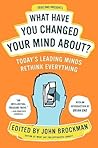
Review 733: What Have You Changed Your Mind About?

What Have You Changed Your Mind About?: Today's Leading Minds Rethink Everything – 150 Influential Thinkers on God, Love, and Evolution What Have You Changed Your Mind About?: Today's Leading Minds Rethink Everything – 150 Influential Thinkers on God, Love, and Evolution by John Brockman
My rating: 4 of 5 stars


This book came out of a question from the Edge website by John Brockman. A question per year with many responses making up the book. (The project has now ceased 2005-2018) This book was from 2008's question. I thought it was an interesting idea and realized now eighteen years later this book may be getting old and outdated. Yes, some of the answers are, but the majority were not.

There were 131 answers, or essays. Each entry was short, just a couple of pages. The answers come from a variety of people, but the majority were scientists. Also, the majority were associated with a university and had a book published. It was rare that an entry was written by someone without a published book. The few that weren’t were associated with a magazine or journal.

The scientists who contributed were from a variety of fields such as physics, computer science, biology, neuroscience, chemistry, and more. There was science adjacent, such as science writers and science historian There were mathematicians, psychologists, sociologists and philosophers. And for the random factor a musician, popular magazine editor and a few others not fitting into those categories. And, of course, there was overlap with 131 different people contributing to this book.

It can be a very thought-provoking book. I mean it was for me, but I did read it fairly quickly and probably would have been better to slow down and contemplate each entry more fully than I did. A few were a bit too deep into their field for me to fully understand what was being discussed. I could have stopped and looked up more information, but instead I just moved on. I only paused on a few that impressed me.


Previous Popular Posts