Sunday, October 26, 2025

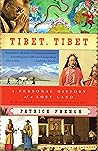
Review 636: Tibet, Tibet

Tibet, Tibet: A Personal History of a Lost Land Tibet, Tibet: A Personal History of a Lost Land by Patrick French
My rating: 5 of 5 stars


While this book is a bit of a travelogue of Patrick French traveling through nearly every corner of Tibet, it really is more of a history of the country. French was the director of the UK organization Free Tibet Campaign. It had been about ten years since French had been to Tibet and decided it was time to return and see what the situation was like first-hand.

French travels extensively throughout Tibet and talks to people of all kinds, various age groups, rankings, in cities or very rural areas. He tries to cover everywhere and everyone it seems like, quick thorough.

For this trip he decided not to go through official channels, as part of a media person or using his office connections. So while the book is factual, he does not reveal anyone’s real name, nor does he use stories that may be too specific to identify someone. While in Tibet, talking to people, he doesn’t want the PSB (Public Security Bureau) to take interest in anyone associated with himself. It’s obvious French is a foreigner.

The stories and history of Tibet are what make this book. It’s quite horrifying to read some of what happens to people, how Mao/Beijing used force to change people from their traditional ways. There several very difficult periods, first being the actual fighting and loss for Tibet. Then quickly after came the Great Leap Forward (started in1959) which resulted in mass starvation, later The Cultural Revolution (beginning late 60s) which in Tibet had in part smashing up monasteries and religious artifacts. Many of the personal stories are from these eras, but not all.

There is much more here, such as the history and relationship of Tibet and China through the centuries. The relationship of the Dalai Lama to the people of Tibet. I found the book very informative. The book is now two decades old, have been many substantive changes since the book was published? Tibet is still not free, not autonomous despite the name of the region. The people are tightly controlled, have been since Mao took over. Good book to understand Tibet.

Thursday, October 23, 2025

Review 635: Trust

Trust Trust by Hernan Diaz
My rating: 3.5 of 5 stars


The book has a unique way of telling this story. It has different versions, which I found confusing at first. I didn’t know this going in. The further into the book goes the more “truthful” is the story, but it is all fiction.

Interestingly, the first two sections are told by men, the last two are by women. The third one was the longest and held more interest for me, the story was more developed. This is one of those books that you really need to read to the end and not give up on.


Tuesday, October 21, 2025

Review 634: Whale Fall

Whale Fall Whale Fall by Elizabeth O'Connor
My rating: 3 of 5 stars


Taking place in 1938 on a small island 5 miles off the coast of Wales, a whale washes up on the shore. The villagers try to get it back to the sea, but it does not work. The story is told from Manod’s point of view. She is 18 this summer and expected to get married, but there are only one or two boys. Manod says she needs to take care of her sister, who is 7 years younger, they are motherless, but really Manod is not sure she wants to be a wife.

Two researchers come to the island to record their way of life. They take photographs, write down the stories and record their songs on a phonograph. Manod is hired as an assistant since her English is good and can help translate from Welsh. She wants to go back with them when they leave, they even lead her to believe they will take her.

The book highlights the diminishing population of the small islands around the British Isles. The younger ones may not want to continue the traditional way of life, mostly fishing. Then the researchers who portray this life don’t get it quite right either, sometimes purposefully. It’s a short book, could be read in just a few hours.

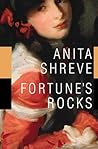
Review 633: Fortune's Rocks

Fortune's Rocks Fortune's Rocks by Anita Shreve
My rating: 3 of 5 stars


Lately (past year or so) I've been reaching deep into my shelves of unread books that have been sitting there for decades. This book was one of them. Despite the length of the book it was a fairly quick read, and I suspect I would have enjoyed this book more back when I got it.

This is a fictional book very slightly based on historical fact. It takes place in the early 1900s when social mores were different than today. The main character, Olympia Biddeford is 15 and comes from a wealthy family who are summering at the seaside coast of Fortune’s Rocks. This summer Olympia turns quickly from a girl to a woman and falls in love with a much older man. Unfortunately, he is married and has several children, and very unfortunately he also falls for this teenager. Thus a love affair begins.

The age difference is more astonishing for today’s standards, and although it was an issue then it wasn't the main cause for scandal and ruin, which was being an unmarried woman and a married man. Of course, their secret love affair gets found out and ends in disaster.

The result of this is a baby born out of wedlock. Later in the book a court case is over the custody of this baby. This section is what is pulled from history, or at least the basis, as the case where a ruling was decided based on “the best interests of the child”.

The writing style was good, although the sections of the court case were a little stiff.

Thursday, October 16, 2025

Review 632: Neither Here nor There

Neither Here nor There: Travels in Europe Neither Here nor There: Travels in Europe by Bill Bryson
My rating: 2.5 of 5 stars


Bryson goes to many different countries across Europe, mostly revisiting places he had been to before with a friend of his several decades earlier.

He tries for humor, it mostly doesn't work with me. The exaggeration for comedic effect was overdone. All that is okay. My main gripe with his writing is how the exaggeration was often done as a way to denigrate the place, or generalize the people. Of course, there is also the suffering of Bryson.

As I was nearing the end of the book I was starting to wonder if I will ever read another of his books. Maybe. The last couple places he visits had tipped in his favor. So often he was describing his everyday experiences, mostly complaining, but with the last couple of places he visited, there is a small amount of history.

These locations were part of the USSR that broke up when the soviet communism collapsed. When Bryson was in Sofia, a city in Bulgaria, the people were struggling; inflation was rampant and there was practically no food to be found, except for the few tourists in the only hotel in the city. This chapter he treated with a bit more humanity than I would have expected based the previous 90% or so of the book. But it did take him a minute to get there. It’s hard to be a comedian when faced with such dire circumstances.

I’m not unhappy I read the book. Bryson visited many countries I visited while on a brief European tour of my own a couple decades ago and this book reminded me of my own experiences, which does improve my impression.

Previous Popular Posts