Thursday, March 12, 2026

Review 673: More Than Enough

More Than Enough More Than Enough by Anna Quindlen
My rating: 3.25 of 5 stars


Had a hard time connecting with this story in the beginning and considered not continuing, but pushed on and by the end was happy I stuck with it.

The novel is told from a first-person point of view and is almost a stream of consciousness type writing. There are all these people in Polly’s life at first it was hard to keep it all straight who and what was going on, as there are multiple threads.

One main theme is the infertility issues Polly and her perfect husband Mark are going through. A second is the DNA test she recently took that showed a close relative, a niece, but it couldn’t be. Her gay brother didn’t have any children. She obsesses with this while meeting with her book club and friends, visits to her father in a care facility for his dementia. Her mother just couldn’t take care of him any longer, which didn’t help Polly with her somewhat chilly relationship with mom. This is not all that’s going on either.

The book is about life and things that are thrown your way. For the most part it is not a happy story, but there are happy parts and it isn’t written in a depressing way at all, instead very upbeat.


Thanks to Random House and NetGalley for an uncorrected electronic advance review copy of this book. However, I listened to a published audiobook copy of the book.
Friday, March 6, 2026

Review 672: Black-Owned

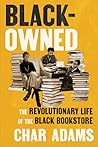
Black-Owned: The Revolutionary Life of the Black Bookstore Black-Owned: The Revolutionary Life of the Black Bookstore by Char Adams
My rating: 4 of 5 stars


A history of black-owned bookstores, starting with the very beginning in the 1830s with David Ruggles and his pushcart selling books at a time when many blacks were enslaved and forbidden to read. Then the turbulent 60's and 70's, and through the decades to today. There are only a few people and stores profiled. The book could not be comprehensive for all stores that existed at one time

In the late 60s there weren’t many black-owned stores, and the FBI kept tabs on those that did exist. Unfortunately, they were also targeted. Drum and Spear was one such store and worker Ralph Featherstone was killed in a car bomb likely planted by the FBI. Another store, Liberation, had been sent a package of dynamite that killed a bookstore employee and injured the owner Una Mulzac.

Later, in the aughts Karibu Bookstore was profiled as the chain of stores didn’t last long. Among other problems, it also was up against what all bookstores have a problem with, the big box stores and the online giant amazon.

More recently black-owned bookstores had a surge of sales for a while when the Black Lives Matter protests and movement was started. That surge has since eased off back to the usual level of bookselling and activity.

Listed in the back of the book are over 50 black-owned bookstores by state and around 40 online stores that were once brick and mortar stores. This type of list can only be a snapshot in time. Likely more stable is the list of 10 books black booksellers want everyone to read.


Monday, March 2, 2026

Review 671: Pale Fire

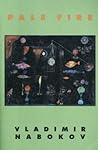
Pale Fire Pale Fire by Vladimir Nabokov
My rating: 5 of 5 stars


The format of the book is unusual, not your typical novel. All of it is fiction, where the form is a critical analysis book of a long poem. The long 99 line poem is called Pale Fire, by fictional American author John Shade. The bulk of the book is the commentary by Charles Kinbote, author of the foreword and editor of the poem. The commentary dissects the poem by lines, or sometimes just a word.

Kinbote was the neighbor, and “close friend” of the author in the last months of his life. Shade had just finished the poem when he died. Kinbote expected the poem to be about his country Zembla, where the king was overthrown, but escaped while being held captive.

The details of all this comes out in the commentary, which is not what the poem is about, but Kinbote misinterprets it, or adds all of his own details. It ends up being quite entertaining.

I even read the index entirely since there was humor found in those referenced notes. Nabokov writes so incredibly well. I love all the unique words he uses in his writing, makes for delightful reading.


Saturday, February 28, 2026

Review 670: Buckeye

Buckeye Buckeye by Patrick Ryan
My rating: 3.75 of 5 stars


A moving fictional account of several people, two families really, over several decades. It starts with Margaret, a baby abandoned at an orphanage and ends with her child Thomas Salt.

The book’s title comes from the nickname of the child - Thomas Aquinas Salt, so perhaps the book is more about him than anyone else, but the book starts with his parents and stays there nearly for the entirety.

A good portion of the book takes place during WWII, but the war is not front and center. We remain mostly stateside, in the small town of Bonhomie, Ohio.

Another long section is later, during the Vietnam war era. Some years are glossed over, described in quick sentences, but with such a long time frame all can't be detailed out. The book is well written, engaging and very moving.

I listened to the audiobook which was narrated quite well, with emotion and emphasis that adds a little extra to the story


Friday, February 27, 2026

Review 669: Inventing a Nation

Inventing a Nation: Washington, Adams, Jefferson Inventing a Nation: Washington, Adams, Jefferson by Gore Vidal
My rating: 2.75 of 5 stars


This year, the 250th anniversary of my county’s beginning, I want to read a few history books, particularly of the beginning era, starting with what I already have on my bookshelves. I know the basics, but the specifics have been left far behind in my school years. And despite where the country is right now (and how much I want to leave it right now), knowing history can’t be a bad idea.

But starting here may have been a bad choice. Gore Vidal did not write this book in a cohesive manner. The book was meandering and very much not linear, which caused much confusion for me. Since I’m only vaguely aware of the history this book discusses I didn’t gain very much, just bits and pieces here and there. One more familiar with the topic may get more out of it than me. Generally it describes the beginning of the nation and some contributions by three major figures of George Washington, John Adams and Thomas Jefferson. There are many asides and off-topic discussions though.

One can tell this was written shortly after the September 11th tragedy, as Vidal refers to the aftermath a few times. It is that lens of where the country was this book was written.

Book rating: 2.75 stars


Previous Popular Posts